
in this issue
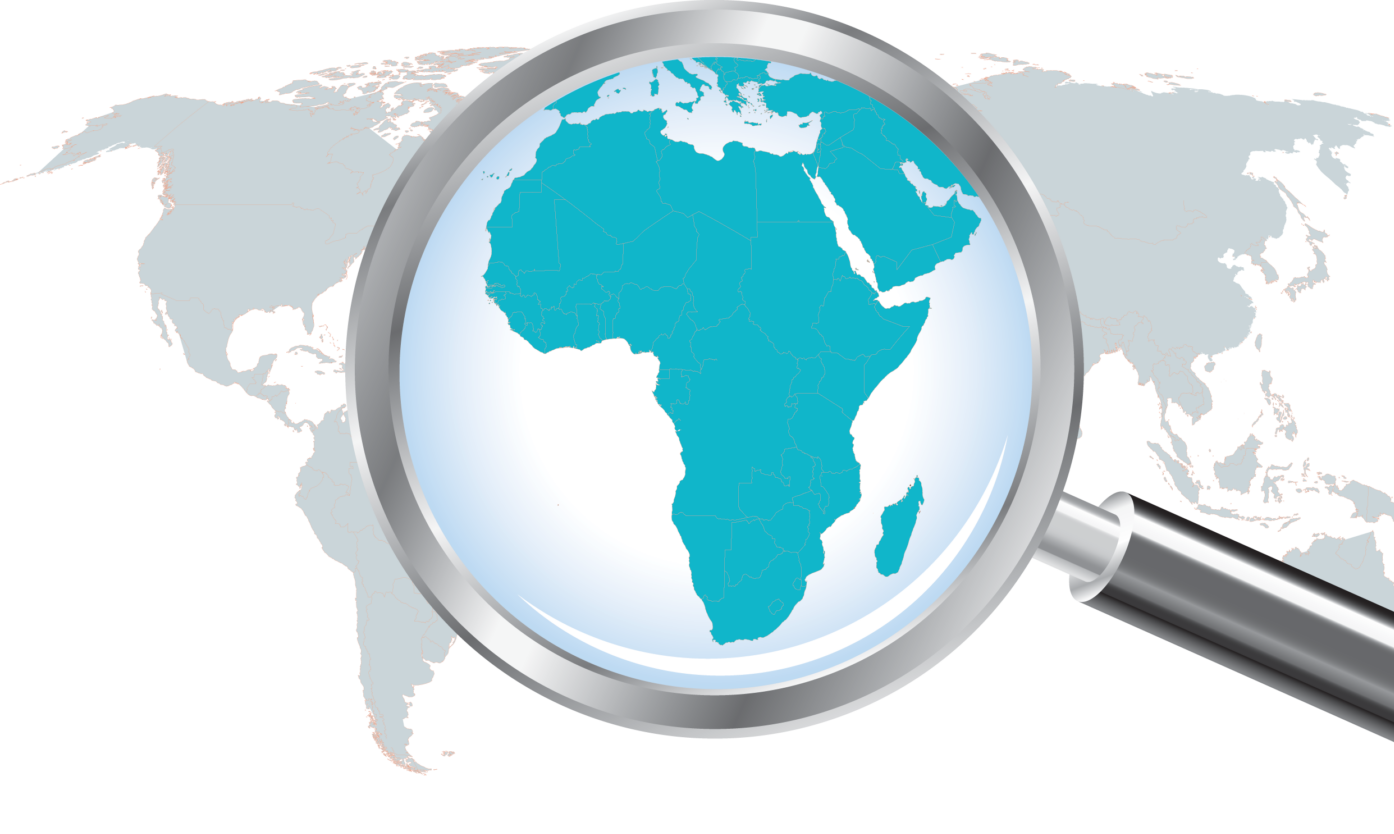
Outsourcing to Africa: Top Countries for BPO
Africa is leading the geographic diversification “revolution” with competitive BPO solutions.
By Nick Jiwa, Founder and President, CustomerServ
The global business process outsourcing (BPO) market is currently valued at over $260 billion and is expected to exceed $500 billion by 2030, according to Grand View Research. Mature outsourcing markets like the Philippines and India are well-established, but saturation and intense competition for labor are growing concerns.
Next-generation “hot spots” will continue to emerge as brands seek untapped markets and emerging suppliers with talented workers. Africa is leading the geographic diversification “revolution” with competitive BPO solutions.
Let’s delve into the emergence of African outsourcing.
Why Is Africa Rising?
Africa has been previously overlooked for several reasons, including infrastructure,
geo-political, and slow market development.
Over the past 10-20 years, various African countries have made great strides in tech-enabled services, including BPO. One of Africa’s greatest assets is a skilled, yet underutilized talent pool.
According to the African Development Bank:
- There are roughly 420 million youth in Africa between the ages of 15 and 35.
- Africa is the world’s youngest region, with a median age of 25.
- There is a high rate of unemployment and underemployment in many African countries.
- Over 12 million African youth enter the job market annually.
- Available workers can face prolonged unemployment and underemployment.
- Without meaningful career prospects, skills can atrophy, leading to regressive societal issues.
Perceptions of Africa vs. Reality

There has been a perception that African countries are playing catch up in tech-enabled services. Let’s address perception vs. reality.
Misperceptions:
- Poor infrastructure, underdeveloped countries
- Low wages and worker exploitation
- Data security and customer experience risks
- Market immaturity in the BPO sector
- Limited knowledge of U.S. brands and a lack of cultural affinity
- Geo-political issues and corruption
Reality:
- Improving infrastructure, rivaling first-world cities leading the BPO industry
- Call centers have supported European, Australian, and African companies for 20+ years
- Progressive BPOs have transitioned to supporting U.S. clients with great effect.
- Broader adoption of Africa as a “go-to” offshore market
- Highly skilled, tech-savvy, educated, and motivated workforce
- Strong English communication skills—spoken and written
- Minimal weather-related events compared to other offshore markets
Why Is Africa an Attractive Market for BPO?
Since the onset of offshoring, we have always eyed “the next best outsourcing region.” For English language support, brands can continue to over-index headcount in current markets or look to newer, competitive destinations.
For corporate brands seeking a burgeoning option for outsourcing, Africa offers many advantages, including:
-
- Competitive costs – On par with other offshore markets and more competitive than most nearshore locations.
- English language – The first or second language in many African countries.
- Talent pool – An abundance of young, educated, tech-savvy, trainable workers vying for a career in BPO.
- Unsaturated markets – Access to an untapped labor pool, less competition for talent, and more selective hiring.
- Impact sourcing – Brands can invest in socially conscious practices enabling job creation and career opportunities for persistently unemployed and disadvantaged individuals.
- STEM-focused education – The African Union is committed to STEM — Science, Technology, Engineering, and Mathematics — education systems grooming future business leaders among African youth.
- Government support – Governments and Non-Governmental Organizations (NGOs) are investing heavily in the sector by offering financial incentives for job creation.
- Risk mitigation – Africa offers the opportunity to de-risk and diversify from over-concentration in other markets.
What Are Some of Africa’s Leading Countries for BPO Services?
Leading North African Markets
Egypt – The most populous country in North Africa, with 102 million people, a 7.5% unemployment rate, 51.2% of Egyptians under age 25, one of the most youthful populations in the world, IT-enabled services industry estimated $3.26 billion, 95,000 call center workers, over 500,000 graduates per year, multi-lingual BPO hub for English, French, Spanish, German, Arabic, Italian, and other languages.
Morocco – A population of 37 million, an 11.2% unemployment rate, 29.5 years median age, the only African country to have a free trade agreement with the U.S., the 5th largest GDP in Africa, and an estimated 100,000 call center workers in captive and BPO operations supporting EMEA (Europe, Middle East Africa) and North America. Multi-lingual BPO hub for English, French, Spanish, German, Arabic, Italian, and other languages.
Tunisia – A population of 12.3 million, a 16.82% unemployment rate, 10,000 IT engineers graduating annually, expanding BPO sector estimated at $2 billion currently, digital services contribute to 7% of GDP and nearly 300 foreign companies with business interests in the country.
Leading Sub-Saharan Africa Markets
South Africa – The Sub-Saharan region’s most mature market for BPO services, 61 million population, the only African country in the G207, among the three largest economies in Africa, estimated 300,000 + call center employees, and a 35% average unemployment rate. Most call centers are in Durban, Cape Town, and Johannesburg.
Kenya – A population of 54 million, one of the largest economies in East Africa, English official language, is among the most neutral English accents. The British education system, free and accessible primary education, and 130,000 university graduates annually. Kenya is poised for expansive international BPO growth. Most call centers are in Nairobi.
Ghana – A population of 33 million, services sector largest contributor to GDP, third-largest U.S. exporter in Sub-Saharan Africa, over 70% literacy rate, over 20 captive and BPO call center operations primarily servicing local African CX market, expanding to support North America and Europe. The main hub for call centers is Accra, the capital.
Ethiopia – A population of 115 million, an annual GDP growth rate of 10% in the last 10 years, a median age of 19.5 years, a government transforming country from agriculture to a services-based economy, among the largest recipients of foreign investments in Africa, growing tech and BPO sectors.
Rwanda – A population of 13.7 million, one of the world’s fastest-growing economies, traditionally an agriculture-based economy, shifting to tech, energy, financial services, and hospitality. The nascent BPO industry is not as scalable as other Sub-Saharan countries but well poised for growth.
Nigeria – A population of 215 million, 9% unemployment, $1.1 trillion GDP, largest economy in Africa, 16,000 BPO agents and growing, largest ICT (Information and Communications Technology) sector in Africa, over 91 million internet users (among highest in Africa), 53 million population between 18-35, an abundance of multi-lingual speakers.
Differences Between BPO Vendors in Africa
 Outsourcers in Africa range from very small operations to mid-sized providers to global conglomerates. As with any geography, vendor selection is critical. The market is poised for significant growth, hence why many BPOs are seeking entry.
However, a BPO’s presence in Africa alone is not a differentiator. A key factor is the BPO’s commitment to Africa as well as its long-term plan and vision. Is the vendor, or site, an “African-born” enterprise or a satellite location? What is the BPO’s foundation in Africa? What is the BPO’s understanding of the African market? These and other considerations are essential in choosing your partner(s).
U.S. market experience is critical! If you’re considering BPOs in Africa for U.S. customer support, deep U.S. brand experience is essential. Your BPO should not “learn” how to support U.S. clients on your dime.
Avoid the joint-venture structure! Some BPOs seek market entry by establishing joint ventures with African call center operators. Such models have great risk, hence why so many brands decline the joint-venture arrangement. The preference is for the BPO to be the “owner and operator” of the site, not a sub-contractor.
Job creation is not enough! Africa offers a wonderful opportunity for brands to create jobs but the customer experience, meeting and exceeding performance, staffing, and contractual KPIs are paramount. Please refer to our article, “Impact Sourcing Requires Impact Performance,” where we delve into this topic.
Careful due diligence is required! Brands seeking vendor relationships in Africa must scrutinize the company and site operations to ensure the best alignment for a long-term partnership. For the best customer experience, look to higher echelon BPOs that should be on par, if not better than the best BPO operations in the world.
Concerns with African BPOs
While most African BPO markets are a long way from saturation, this is always a concern. However, given the level of unemployment and the sheer number of individuals applying for BPO positions, we predict that saturation will not be an issue in most African BPO markets for several years — possibly longer.
A bigger concern is the ability of African BPOs to groom leadership talent, given the newness of the market and current growth trajectory. African BPOs must invest heavily in management training programs, ensuring that frontline operations leaders, client services personnel, and trainers meet and exceed client expectations.
What Services Do African Outsourcing Firms Provide?
BPO is among Africa’s fastest-growing sectors for job growth, encompassing customer service and other call center functions:
Services Offered by BPOs in Africa Include:
-
-
- Content moderation
- Customer service
- Data annotation
- Data entry and back office Email
- Help desk
- Live chat
- Member services
- Outbound Retention
- Sales
- SMS
- Software development
- Technical support
-
Who Is outsourcing to Africa Today?
-
-
- Airlines
- Automotive
- BFSI (Banking, Financial Services, Insurance)
- Consumer electronics
- Food delivery
- Healthcare Hospitality
- Retail
- Ride share
- Social media
- Technology
- Telecommunications
- Wellness
-
Summary
As the BPO industry expands globally, diversity will become a greater source of competitive advantage. Newer labor markets are characterized by some of the best talent available in the global BPO community, along with improving education and career development standards.
Africa is poised for significant growth, as evidenced by the influx of new outsourcing contracts to African BPOs over the past 12-36 months from some of the most sought-after brands.
Africa is just beginning its expansion into BPO, and the region has high potential to become a preferred and even dominant outsourcing destination.


Founder and President, CustomerServ

Nick is an outsourcing industry veteran of 36 years and the founder of CustomerServ. He advises and guides leaders at Fortune 500 brands and companies of all sizes maximize “people performance” by outsourcing smarter with better-matched BPO partners and more successful outsourcing strategies. Nick is a founding member of the business process outsourcing (BPO) industry, a thought leader, matchmaker, CX champion, and impact sourcing advocate.
CustomerServ is a BPO industry pioneer, thought leader and matchmaking ecosystem that helps brands outsource smarter.
Go Back to All Articles. Have a story idea? Submit to [email protected].
Want to get this publication in your inbox? Subscribe here!