
in this issue
Making A County Feel Like a Home
By: Execs In The Know
An interview with Brigitte Bailey, Director, Customer Experience and Solutions at Fulton County Government
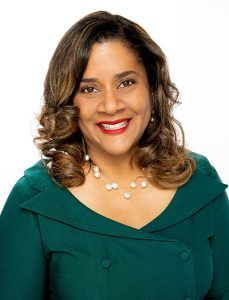

Brigitte Bailey has been a part of the Fulton County Government family for more than 20 years, focusing exclusively on customer experience for the past four years. In late 2019, we spoke with Brigitte in the creation of a Know It All (KIA) Online Community Member Spotlight feature. Now, more than a year later, we were able to catch up with Brigitte once again to find out how things are going and learn about the exciting things she and her team have in store for Fulton County citizens, visitors, and employees.
EXECS IN THE KNOW (EITK): Thanks for making the time to talk to us again, Brigitte. For those who may have missed your previous feature, can you set the stage for our readers? Can you tell us a little about Fulton County Government, and what your role is at the organization?
Brigitte: Sure. Fulton County Government is located in North-Central Georgia and is home to 15 cities, including Georgia’s capital city, Atlanta. Over one million residents call Fulton County home, and these residents are served by over 5,000 county employees spread over more than 40 departments, including things like emergency services, state and local courts, community development, and libraries.
My role is with the Customer Service Division where I serve as Fulton County Government’s thought leader and change agent, responsible for driving customer value and county-wide service delivery and operations. I oversee county-wide customer service initiatives, departmental customer service performance metrics and surveys, and management of the County’s employee recognition program — in addition to managing special projects under the direction of the County Manager and Chief Operating Officer. The work of myself and my team stretches across all areas of government.
Believe it or not, residents and employees alike are served by myself and a team of four dedicated agents, handling about 13,000-14,000 interactions per quarter. In fact, as a whole, Fulton County Government is committed to customer service excellence. My team and I stand at the forefront of this mission, working everyday to deliver efficient, high-impact service to every resident and visitor of Fulton County, as well as each and every one of our Fulton County employees.
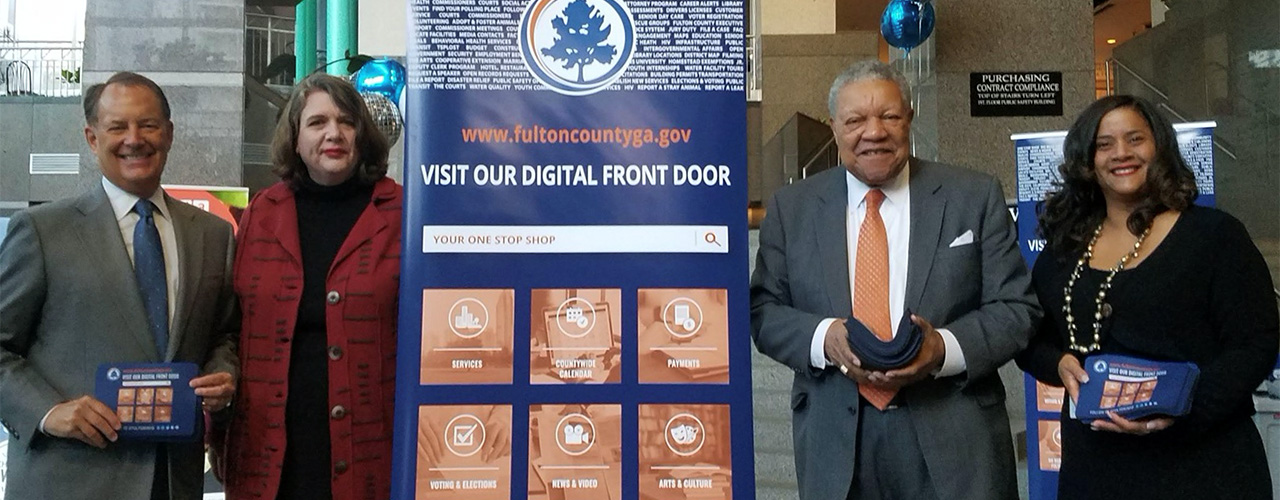
Fulton County Government launches a new website.
EITK: How would you describe your customer, and what sort of an obligation does your organization have to your customers?
Brigitte: Our customers are everyday citizens, just like you and me, looking to obtain services or solve a problem. At Fulton County, we are committed to providing five-star customer service where we look to get it right the first time. We have added customer service into our overall model of performance, so it is important for us to ensure our customers are provided with efficient and expedited service, all with a smile. We realize the service we provide is not only tied to our government’s reputation, but also to how customers might perceive Fulton County as a whole in terms of where they want to live, work, and play. As an organization, we have made investments into our infrastructure, people and performance metrics, all toward the aim of making sure we hit the mark in providing excellent customer service.
EITK: Since we last spoke in December 2019, the world has been transformed by the COVID-19 pandemic. How prepared was Fulton County Government for this first-time event, and what has been the specific impact on you and your team?
Brigitte: I think Fulton County Government, like every other organization, was taken by surprise by the pandemic. However, with the investments already being made in our infrastructure, emergency management operations, and contingency plans, the County was well prepared to effectively deal with the crisis at hand. We immediately began to identify ways to continue service to our customers who not only expected it but needed the services we have to offer. We did this while keeping our employees safe as well.
Being an organization with so many arms, our executive leadership team, department directors, and elected officials went to work right away, adjusting wherever necessary to ensure there would be no gaps in service. As an organization, we had to pivot (and pivot quickly) from not only providing in-person services, but also providing virtual services in some areas. This required us to leverage technology to respond to the most immediate needs. We provided COVID-19 information and testing for our citizens and for our county government, doing so in collaboration with other agencies. We established COVID-19 testing sites throughout the county, as well as a COVID-19 call center where citizens could obtain information related to the pandemic, and its impact on them and other Fulton County residents.
Through our Information Technology (IT) Department, the County was able to provide access to more online services for citizens, facilitating business across various departments. More specifically for my customer service team, technology played a major role. Through the use of software already within the County’s reach, we were able to transition our in-person call center staff within 48 hours to an at-home call center set-up, whereby staff could work from home, effectively answering calls and providing direction to customers. In addition, with our enhanced technology, the County was able to provide the ability for many other employees to telework during the height of the pandemic without having a decrease in service offerings. For employees who had to report onsite, the County provided personal protective equipment (PPE) and implemented additional precautions such as temperature screenings, new physical barriers, hand sanitizing stations, and an increased cleaning schedule — all in an effort to reduce the spread of infection.
Whether it was providing court services, emergency rental assistance, water services, classes, conducting elections, ensuring senior care, library, or other services where available — the County answered the call with a well-planned and well-defined roadmap that we are still operating under today.
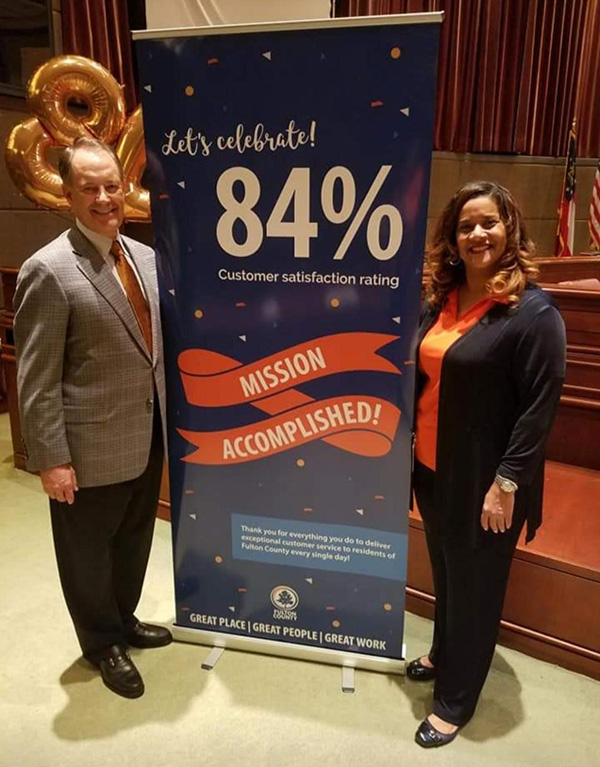
Brigitte Bailey celebrates with Fulton County Manager, Dick Anderson.
EITK: Like everyone else, we’re sure you’re eager for a return to normal. But the changes brought on by the pandemic have highlighted what matters most to people. Recognition is one of those things. Can you talk a little bit about how Fulton Country Government recognizes moments of excellence among its employees?
Brigitte: We recognize employee excellence through a program called the Fulton 100 Customer Service Legend Program. It doesn’t matter if an employee is interacting with a Fulton County resident, visitor, or employee, the program is all about catching someone in the act of doing something exceptional. When an employee is recognized as a part of this program, they join the Fulton 100, and are celebrated in a variety of ways.
The Fulton 100 is recognized before their peers as a part of a special annual luncheon with giveaways, swag bags, and games, as well as more frequent and informal events like dessert-filled social hours. At the annual luncheon held in October during National Customer Service Week, the Fulton 100 Customer Service Legend of the Year is awarded to the employee who best demonstrated exceptional customer service in the prior year. Members of the Fulton 100, and their amazing deeds, are also frequently highlighted within the Fulton
County Newsletter.
In addition, the County also hosts the Fulton F.O.C.U.S. Awards employee recognition program. This program recognizes employees, or a team of employees, that have significantly improved Fulton County operations benefitting customers, improved the image of the County, made a significant impact on service delivery and safety, exhibited courage voluntarily by risking their lives to save another, created innovative problem-solving techniques utilizing state of the art technology, and demonstrated vision and/or strategic thinking — all to ensure professional excellence in support of the County’s core functions.
These employees are recognized quarterly with a framed certificate, a gift card (budget permitting), and a written description of their achievement. They are also eligible to receive the Annual F.O.C.U.S. Award, presented at the Annual F.O.C.U.S. Award Ceremony held in December. Year-end winners are provided a cash prize funded through the Employee Service Fund.
EITK: During your 2019 interview, you highlighted the rollout of kiosks to collect real-time data on customer satisfaction. With the impact of the pandemic aside, can you share a little bit about how this initiative has been going? Which areas currently have kiosks, what insights have been generated, and are any additional kiosks planned for the future?
Brigitte: The Satisfaction Kiosk Pilot Program was created to allow customers to provide a satisfaction rating via a kiosk immediately following service delivery from a test group of departments. This pilot program was rolled out in February 2020 with four of our forward-facing partner departments. These included:
- Customer Service
- Clerk of Superior Court
- Senior Services
- Finance Department-Treasury Division
This method of surveying allows the County departments to be able to isolate fluctuations in service levels, track and manage performance, and provide validity for recommended improvement actions where deficiencies may exist.
The Satisfaction Kiosks contain a three-question survey that takes less than 60 seconds to complete, even in the instance where a negative review is given and feedback from that review is input into the kiosk. It’s very simplistic, but simplicity, in some instances, can give you the outlook you need to make immediate adjustments in service levels. Following a transactional service, customers are asked to rate their level of satisfaction using a smiley face rating scale that represents excellent, good, mediocre, or poor service. In an instance where a customer rated their experience as good or excellent, the survey literally takes less than 10 seconds. In the instance where a mediocre or poor rating is given, customers are given the option to provide feedback utilizing pre-selected choices, or they have the option to type in additional information. They are also asked to provide their name, email address, and/or phone number, which is completely optional, so that a manager is able to contact them to address (and hopefully correct) a negative experience.
By adding this new evaluation initiative into our customer service framework, we hope to be able to have a more direct impact on the overall customer experience, further improve our satisfaction ratings, and better align the needs our citizens with services provided by our agencies. Unfortunately, due to the pandemic, this pilot program was placed on hold. That said, plans are underway to reintroduce the pilot program during the third quarter of 2021 in all the same departments, as well as the addition of Fulton County libraries.
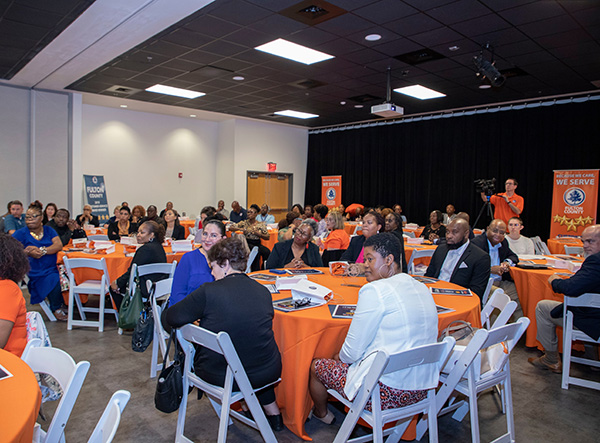
Fulton County employees celebrate success with a special annual luncheon
EITK: Consumer behaviors have undergone significant change over the past 12 months, yet some things remain the same. Can you talk about any shifting expectations you’ve observed, either among residents or employees, and what remains the same for you and your team?
Brigitte: For Fulton County residents, I feel comfortable in saying our customers expect the best, and we have to commit to rising to the occasion to give them that. They deserve nothing less. That hasn’t changed. The expectations remain the same: be ready, be available, and be willing to serve. We are constantly looking for ways to improve our service delivery efforts, and we do this by engaging with our customers. We talk to our customers to see what we can do better. We conduct departmental surveys, and we conduct an annual County Resident Survey, both of which give us very good insights into the needs and wants of our customers. The results from this surveying is used in a variety of ways, including preparation of our County’s strategic plan. One important thing we do is we hear our customers. We listen to what they have to say and we act on it. We are all public servants, working for Fulton County Government to serve, and that’s something we take very seriously. My customer service team is what I like to call, the “Face of Fulton.” We are, in most instances, the first contact for a citizen or visitor, so it’s important that every person feel valued and important.
EITK: You have implemented a lot of innovative initiatives in your four years, all focused on improving customer service for Fulton County residents, visitors, and employees. What is the next area of focus for you and the county? Which initiatives have you excited for the balance of 2021 and beyond?
Brigitte: We have been successful in implementing several new customer service initiatives within the last few years, including the implementation of a customer service policy, establishment of two information desks, the creation of a customer service training program for employees, the establishment of customer service performance metrics, the implementation of a signage and wayfinding project, and a total overhaul of our website. We’ve been blessed to have these efforts recognized by way of two awards: the National Association of Counties Achievement Award and the National Customer Service Association All-Star Award. Although we’ve accomplished a lot, I like to think of this as just the start.
Looking forward to the second half of 2021, I’m excited to reintroduce the Customer Satisfaction Kiosks within other county departments, and I hope to work with our Training and Development Division and the Department of Diversity and Civil Rights Compliance Department, ADA Division, to develop a training module on how to provide customer service to customers who may be disabled. We want to be sure that every citizen and visitor to the county receives the same level of service, and that our employees are given the resources to provide
that service.