
in this issue

Four Post Pandemic Trends of 2021
By: Bobby L. Matthews, Jr – Senior Vice President, Sales, and Marketing, Skybridge Americas, Inc.
Reshaping Consumer Expectations and Shaking Up the Customer Contact Center Industry
“COVID-19 threw inflexible brick-and-mortar contact center facilities into a desperate state of flux, impairing customer experience, and damaging brand perception. In 2021, astute brand managers are demanding more agile operations from their customer care partner.”
Andrew J. Bosko – Chief Executive Officer, Skybridge Americas
What every corporate leader must know today in-order-to sustain, let alone advance, a competitive edge among radically altered post-pandemic consumer behaviors!
IS YOUR CUSTOMER CARE TEAM READY FOR WHAT COMES NEXT?
For customer contact centers around the world, 2020 was a year of upheaval, unforeseen challenges, and fluctuating consumer needs. But the truth is, most of the changes we saw in 2020 had been set in motion years earlier.
A LONG TIME COMING
By 2019, a contact center revolution was already well underway, driven by technology innovation, a shifting market, and changing customer needs. Many North American brands had begun to expect greater agility and responsiveness from their customer care providers.
A handful of outsource contact centers recognized these trends early, investing heavily in the technology and infrastructure necessary to handle increasingly unpredictable call volumes and caller needs.
An even smaller handful of innovators tackled a call center sacred cow, abandoning the brick-and-mortar call center facility in favor of at-home agent staffing models.
THAT WAS BEFORE THE PANDEMIC
Once COVID-related shutdowns began, North American contact centers were forced to make split-second decisions to minimize risks. In the rush to temporarily move agents home, critical success factors were ignored such as enhanced IT security, management training, and employee engagement.
For innovative customer care operations, 2020 was a year of reaping returns on previous investments. These innovators are now poised to transform the notion of “customer care.” Those who did not are facing an existential crisis: adapt quickly or perish.
What must YOU do next? Here are four trends certain to reshape essential customer care practices.
Click Here to sign up to receive your copy of the new Skybridge Americas book, The Post Pandemic Contact Center Enabling the New, At Home Customer Care Workforce
I. Understanding, Predicting, and Exceeding Customer Expectations
Consumer Demand Patterns Are More Volatile and More Emotion-Driven Than Ever
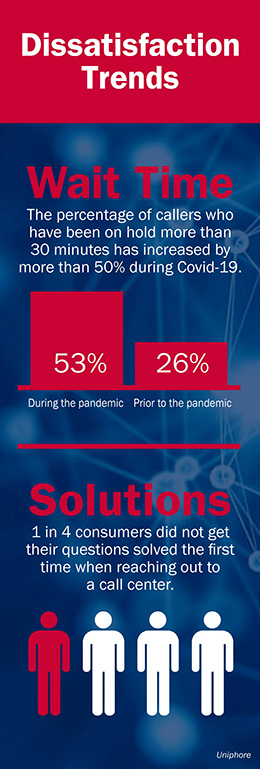 The extreme uncertainties of the first half of 2020 led to what Forrester describes in their Consumer Energy Index as consumer “isolation, distrust, and vulnerability.” For these customers, each call to the contact center had become a “high stakes, often emotion-driven,” interaction. But for call centers scrambling just to move their agents to home, calls were handled more like widgets on a racing conveyer belt than human beings reflecting a human connection to a brand.
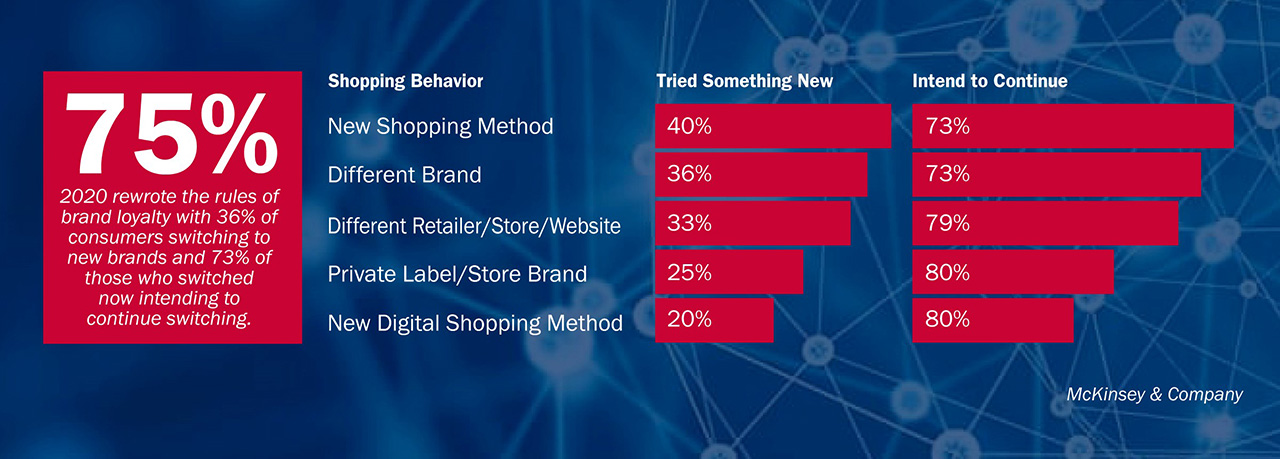
Many failed to give customers what they needed most: empathy, reassurance, connection, ease of access, and a sense of stability. Not surprisingly, these failures contributed to more than 75% of American consumers to shop around for something better.
II. Customer-Centric, Cost Effective, and Geographically Unlimited
Technology Innovations Empowering Tomorrow’s Contact Centers
With telephony and agent desktops moved to the cloud, there is no longer the need for rows of cubicles in a costly, fixed brick-and-mortar facility susceptible to a finite supply of local qualified talent.
Geographically unbound, the cloud-based customer care center is free to recruit from across the continent, not just within a short radius of headquarters. This allows these centers to identify the very best and brightest agents and supervisors, with abilities that match success profiles tailored to a client’s specific needs.
Game Changing Power of Conversational AI
Artificial Intelligence remains surprisingly under-appreciated. According to a Global Contact Center Survey by Deloitte, roughly one third of contact center leaders still have no plans to embrace AI technology. In fact, AI empowers call centers to handle unexpected tsunamis of customer calls, delivering extremely high customer experience, across multiple channels.
This fact was driven home by COVID, as so many North American brands – and their customers – suffered long hold times, disappointing agent responses, and other consequences of their AI resistance.
III. The End of the Revolving Door and the Rise of the Super Agent
While most brands now recognize that customer experience (CX) drives brand success, the truth is, very few contact centers have the agent and supervisor teams in place to reliably deliver superior CX.
Those that do, did not get there by accident.
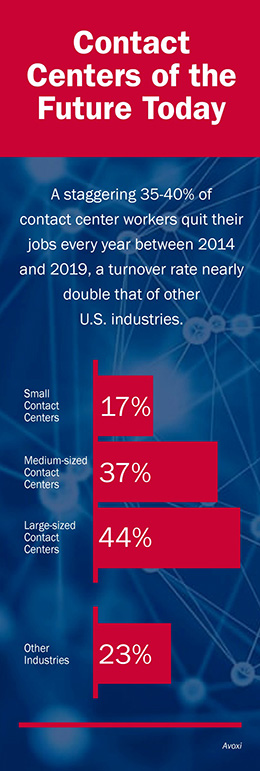
Rather, they radically redefined — and heavily invested in — every aspect of their human resources model, from recruiting to onboarding, to coaching and nurturing talent. As a result, today there is a small but growing group of customer care centers that have cracked the code on attracting and retaining the talent who can deliver brand boosting CX.
Increasingly, we see discerning brands demanding that their customer care centers demonstrate an ability to recruit, onboard, coach, recognize, develop — and retain this new breed of Super Agents capable of delivering positive brand experiences, gathering, and reflecting on customer feedback, and offering recommendations with their leadership team.
This is an inaccessible vision for brick-and-mortar, community-based call centers, saddled with the limited realm of qualified talent. Only a customer service center that fulfills the vision of unlimited access to talent can deliver a vision of excellence for the future.
 IV. What will it take to keep up with the next waves of change?
It has been a period of enormous cultural transformation for the customer care industry. Collectively, we have learned more, overcome more, and created more than anyone could have predicted.
Yet, we are just touching the tip of the iceberg — and we don’t expect the pace of innovation to slowdown any time soon. That’s the good news. But for the contact centers still trying to play catch up since COVID — and the brands they support — it begs the question: what will it indeed take to keep up with the next waves of change?
Our Vision is comprised of six initiatives.
- Eliminate costly on-shore brick-and-mortar facilities and establish an “Agile Operations Profile” whenever and where-ever possible.
- Replace inhouse, fixed IT infrastructures with an outsourced, PCI Level 1, “ever-fresh” IT Platform.
- Deploy an “Agents Anywhere” initiative in lieu of limited, typically exhaustible, agent populations located in proximity to any fixed, brick-and-mortar, call center facility.
- Ascertain an “ideal Agent Profile” to align with each brand’s distinct requisites.
- Introduce a robust “HR Engagement Enterprise” to achieve enviable agent retention rates.
- Optimize the use of Artificial Intelligence to displace the financial rationale for offshore call center services.

Bobby L. Matthews, Jr. |
About the Author:Since joining Skybridge Americas’ in 2017, Bobby has been leading the company through a dramatic brand and revenue growth transformation. He is one of the most trusted voices in the customer care and contact center industries with more than 25 years of experience in sales, marketing, product management, and operations. Thanks to his rich experience across multiple verticals (including government, retail, non-profit, e-commerce, |

Skybridge Americas helps North American companies improve every aspect of their customers’ experience. We’re a team of highly skilled, customer-focused problem solvers, providing world class Omni Channel Customer Contact Services.
Learn more:
To learn more about what we can do for you, call Bobby Matthews at (224) 717-1939 or email [email protected]
Click Here to sign up to receive your copy of the new Skybridge Americas book, The Post Pandemic Contact Center Enabling the New, At Home Customer Care Workforce