
Day One
CustomerCONNECT: Welcome & Opening Remarks
THIS SESSION IS NOT AVAILABLE
ON-DEMAND
A Global Pandemic and Cloud Acceleration Require Scale and Innovation
THIS SESSION IS NOT AVAILABLE
ON-DEMAND
Are you running a customer care operation or a digital customer care operation?
- Low touch and “digital-only” customer engagement
- Scaling actionable insights and enterprise feedback
- Securing permanent work-from-home strategies
- Enabling digital staffing models and agent empowerment
Call Deflection Masterclass: Deliver Superior CX While Reducing Costs
- Integrate VA, Live Assist, asynchronous messaging, and proactive engagement to deflect more calls
- Give agents powerful tools and real-time guidance to accelerate resolutions and handle more engagements
- Deliver a superior customer experience while dramatically reducing costs
Humans and Technology Intersect at the Future of Customer Service
- Overcoming the challenges of taking advantage, in real time, of the massive amounts of data generated by call centers
- How AI-powered automation can be used to support your customer service teams
- The positive impacts of automation when applied alongside, not in replacement of, humans
Strategies for Ensuring Successful CX Transformation
THIS SESSION IS NOT AVAILABLE
ON-DEMAND- Which types of transformation can have the most positive impact on the customer experience
- Igniting and stoking a desire for change within your organization
- Common pitfalls that can sabotage your transformational efforts
- Techniques for breaking the cycle and creating meaningful, lasting change
A Global Pandemic and Cloud Acceleration Require Scale and Innovation
THIS SESSION IS NOT AVAILABLE
ON-DEMAND
The digital revolution hit warp speed when the world went into lockdown due to COVID-19. Seemingly overnight, companies needed to connect with an almost entirely remote workforce. For the most part, these employees have remained at home creating an even greater need for access to Microsoft applications and files anytime and from anywhere. A transition to the cloud was no longer a consideration for many of Microsoft’s customers — it was a requirement.
Microsoft is faced with continuing to deliver on our customer experience at scale with consistently higher volumes. A digital transformation to harness the capability of artificial intelligence (AI), machine learning, and other technologies was already in motion in an effort to increase our self-serve capabilities and deliver personalized, assisted support. Rapidly innovating at scale across our support delivery is now a necessity.
Join Bryan Belmont, Vice President, Customer Service and Support at Microsoft, to hear how his brand is harnessing capabilities across our People, Process and Technology to meet the changing needs of our customers.
View Details
Are you running a customer care operation or a digital customer care operation?
Companies operating in the cloud had a major head start digitizing their customer experience (CX) and contact center operations, while also keeping people safe and working from home. As we look to the post-COVID-19 future, organizations need to further accelerate investment in cloud services as a critical enabler for accelerating innovation, de-risking technology investments, and driving growth.
Join Kathy Juve, EVP, Customer Experience Technology & Insights Division at Concentrix, to see how cloud services are helping address critical CX and operations pain points, including:
Whether you’re just starting your cloud journey or looking for more ways to fast-track your CX modernization, this session is for you!
View Details
Call Deflection Masterclass: Deliver Superior CX While Reducing Costs
Despite implementing chatbots, virtual assistants (VAs), and chat solutions, a lack of integration means that most enterprises aren’t seeing the reduction in call volumes they expected. But it doesn’t have to be this way.
Research shows most customers increasingly prefer using digital channels versus calling. Nuance has developed not one, but four call deflection strategies that enable our customers to deflect more calls while delighting more customers. Plus, when customers want to speak to someone, agents need to have the tools to resolve issues quickly and prevent repeat calls.
Join Abhay Prasad, Senior Director, Intelligent Engagement Product Management at Nuance, as he demonstrates how taking an AI-first, digital-first approach to call deflection can help you increase VA containment and agent productivity — and realize cost savings of 40% or more. In this session, you will discover how you can:
View Details
Humans and Technology Intersect at the Future of Customer Service
Recent headlines argued that coronavirus would usher in the death of the call center. But even today, non-voice channels like email, chatbots, social media, and self-service still account for only a portion of customer service interactions. When customers cannot resolve issues through non-voice channels, they turn to agents because people solve problems for other people.
Hear from Jen Lee, Chief Strategy Officer at Intradiem, as she shares why solving the call center data problem is crucial for improving the customer experience. During this session, you will learn more about:
View Details
Strategies for Ensuring Successful CX Transformation
THIS SESSION IS NOT AVAILABLE
ON-DEMAND
The velocity and trajectory of transformation within customer experience (CX) operations have increased exponentially in the past 5 years, as have consumer expectations of what good service looks like and feels like. In order to be best positioned, both now and the future, it is imperative that organizations apply the right approach to their transformational efforts. Without a bold strategy, a unified vision, and a solid plan for managing change, many organizations will struggle to realize the benefits of their transformational journey.
Come hear Jared Benesh, Director, Client Experience Capabilities at H&R Block, as he shares his decades-long experience in steering successful CX transformations across a variety of organizations. Discover the components critical to success, and learn how you can change minds and implement a manageable, step-by-step plan for a successful transformation.
During this session you’ll hear about:
View Details
Day Two
CustomerCONNECT: Opening Remarks
THIS SESSION IS NOT AVAILABLE
ON-DEMAND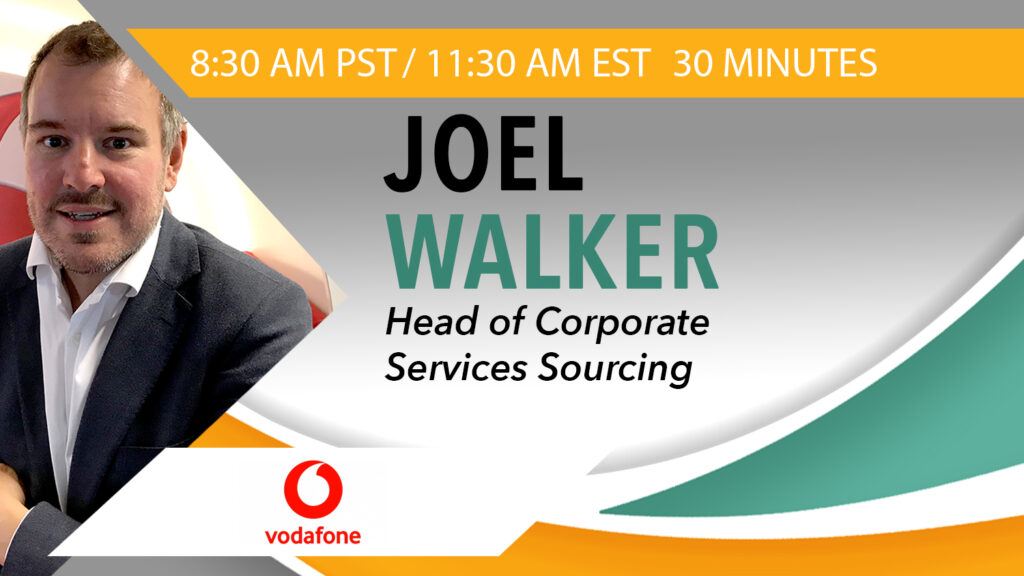
Prioritizing and Protecting the Mental Health of Agents
THIS SESSION IS NOT AVAILABLE
ON-DEMAND- Addressing the increased mental health risks specific to call center agents
- Taking practical steps toward improving as leaders and an organization
- Developing new wellbeing standards between both itself and its partners
Using Technology to Improve Relationships Between Team Members and Clients
- The Big Bang Effect- when geo-diversity and flexibility come together
- Customizing technology and infrastructure to creatively maximize results in program delivery
- Speed and agility for real-time CX delivery
- How processes, not red tape, drive performance
- The itel Way – Solid EX that nurtures a culture of innovation & experimentation
- System Connectivity – Solving the great technology puzzle
- Using technology and processes to maintain growth through crisis
Leveraging Emotion to Improve CX & Elevate Contact Center Performance
- Why emotion is a key driver for developing strong and lasting customer relationships
- How talent and technology investments can pay dividends in customer loyalty
- Understanding the differences between sentiment and emotional measurement
- The benefit of “getting emotional” with your frontline agents
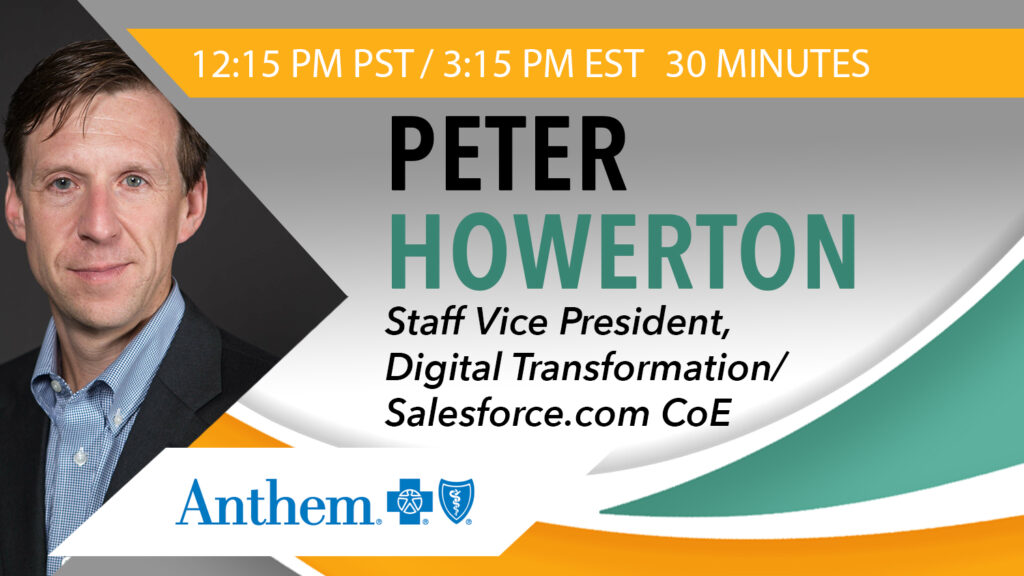
The Digital-First Opportunity – Anthem’s Transformation for the Future of Care and Experience
THIS SESSION IS NOT AVAILABLE
ON-DEMAND- Learn about Anthem’s new, customer-centric & digitally-enabled plan
- Discover the value of a Touchless Experience
- Get an insider’s view of Anthem’s Center of Excellence Incubator Lab
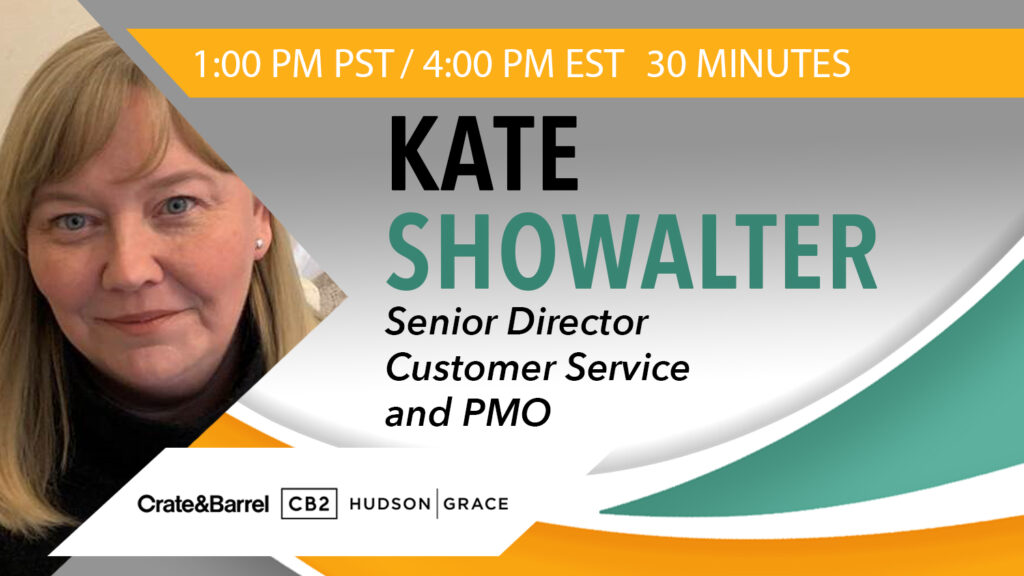
Creating a Strategic Roadmap for Change
THIS SESSION IS NOT AVAILABLE
ON-DEMAND- Universal agents in an omnichannel model
- Prioritizing the conversation over the transaction
- Re-prioritizing metrics and measures of success to support quality
- Empowering the supervisor to own their team, the role of the day-to-day leader
- Associate engagement at home
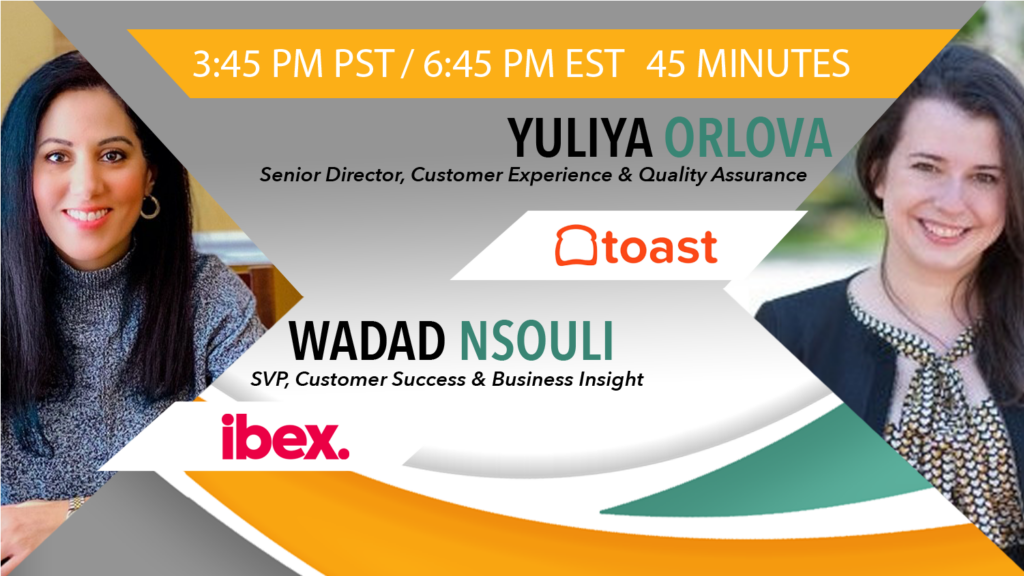
Performance Management & Complexity Mapping for Data-Driven CX
- Map drivers of the end-to-end customer lifecycle
- Build a Complexity Study
- Use Complexity Studies to drive channel strategy
- Act on the results and leverage automation
Prioritizing and Protecting the Mental Health of Agents
THIS SESSION IS NOT AVAILABLE
ON-DEMAND
Given the turbulent times we have faced over the last 12 months, protecting the mental health of our call center agent population is more important than ever. To be effective, organizations must first begin with awareness, and then develop a plan to act.
Join Joel Walker, Global Head of Corporate Services Sourcing at Vodafone, and learn how one of the world’s biggest Tech Coms providers is working to protect and improve the wellbeing of agents across its global call center operations. Specifically, discover how Vodafone has built action plans around:
View Details
Using Technology to Improve Relationships Between Team Members and Clients
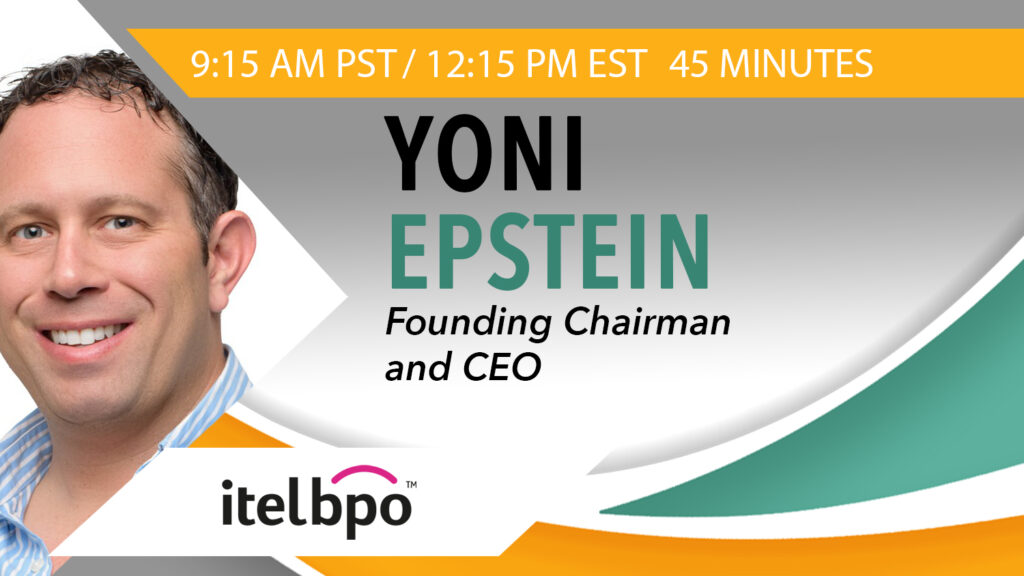
In today’s environment, when you’re looking to mitigate risk while outperforming the competition in customer experience (CX) delivery, moving quickly to adapt to change is critical. At the heart of it all is a people-first approach that is aligned with technology to improve relationships between team members and clients, drive efficiencies, and reduce costs. By taking a simplified approach, the road to CX success is faster, more joyful and more sustainable.
Join Yoni Epstein, Founding Chairman and CEO of itelbpo, as he shares his insights on how client relationship management is being redefined through flexible and customized use of technology that empowers employees to reach their full potential, and nurtures true partnership with clients.
View Details
Leveraging Emotion to Improve CX & Elevate Contact Center Performance
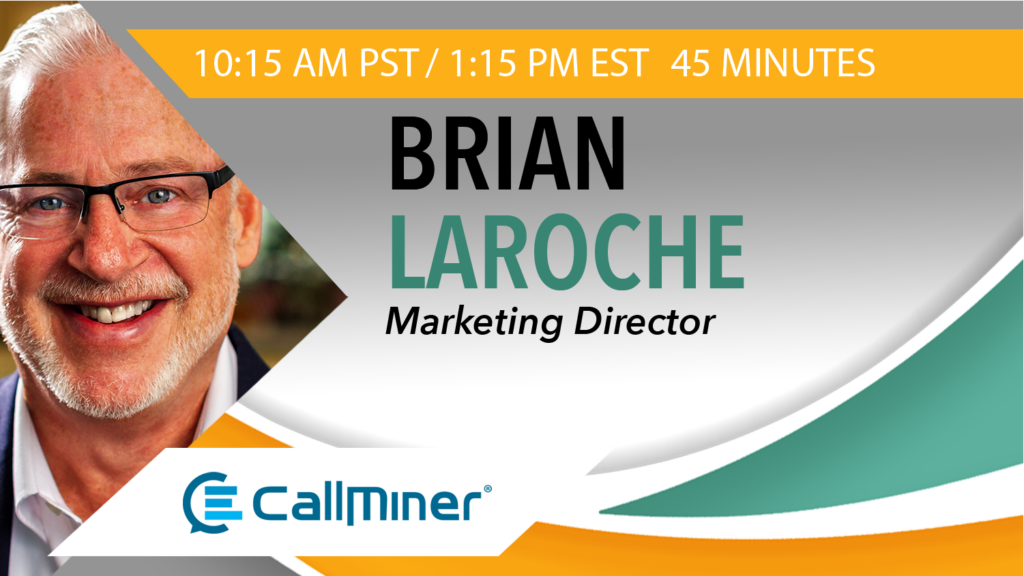
Brands are officially doing business in what Forrester calls, “The Age of the Customer.” In this new era, customer experience (CX) is the battleground in which organizations win and lose. In order to compete effectively in The Age of the Customer, brands need to elevate their approach to CX and that journey starts in your organization’s contact/customer engagement centers.
Join Brian LaRoche, Marketing Director at CallMiner, as he provides an overview of the keys to delivering five-star CX experiences in contact centers through the understanding and actioning of insights derived from customer’s emotional engagements with your organization. During this session, you’ll hear about:
View Details
The Digital-First Opportunity – Anthem’s Transformation for the Future of Care and Experience
THIS SESSION IS NOT AVAILABLE
ON-DEMAND
Healthcare works better for consumers when all its parts work together. When data and services are interoperable, healthcare becomes simpler and easier. A platform approach lets leaders and innovators address challenges with more speed and agility than before. Connected systems allow an exchange of data, information, and insights across partners, internally and externally, facilitating a nimbleness that leads to innovation and healthier lives.
Join Peter Howerton, Staff Vice President, Staff Vice President, Digital Transformation/ Salesforce.com Center of Excellence (CoE) at Anthem, as he shares the transformation brought about by Anthem’s Digital First strategy. Learn how Anthem had to first redefine itself as a digital-first enterprise before it was positioned to use digital technologies to make healthcare simpler, faster, and smarter for stakeholders. During this session, you will:
View Details
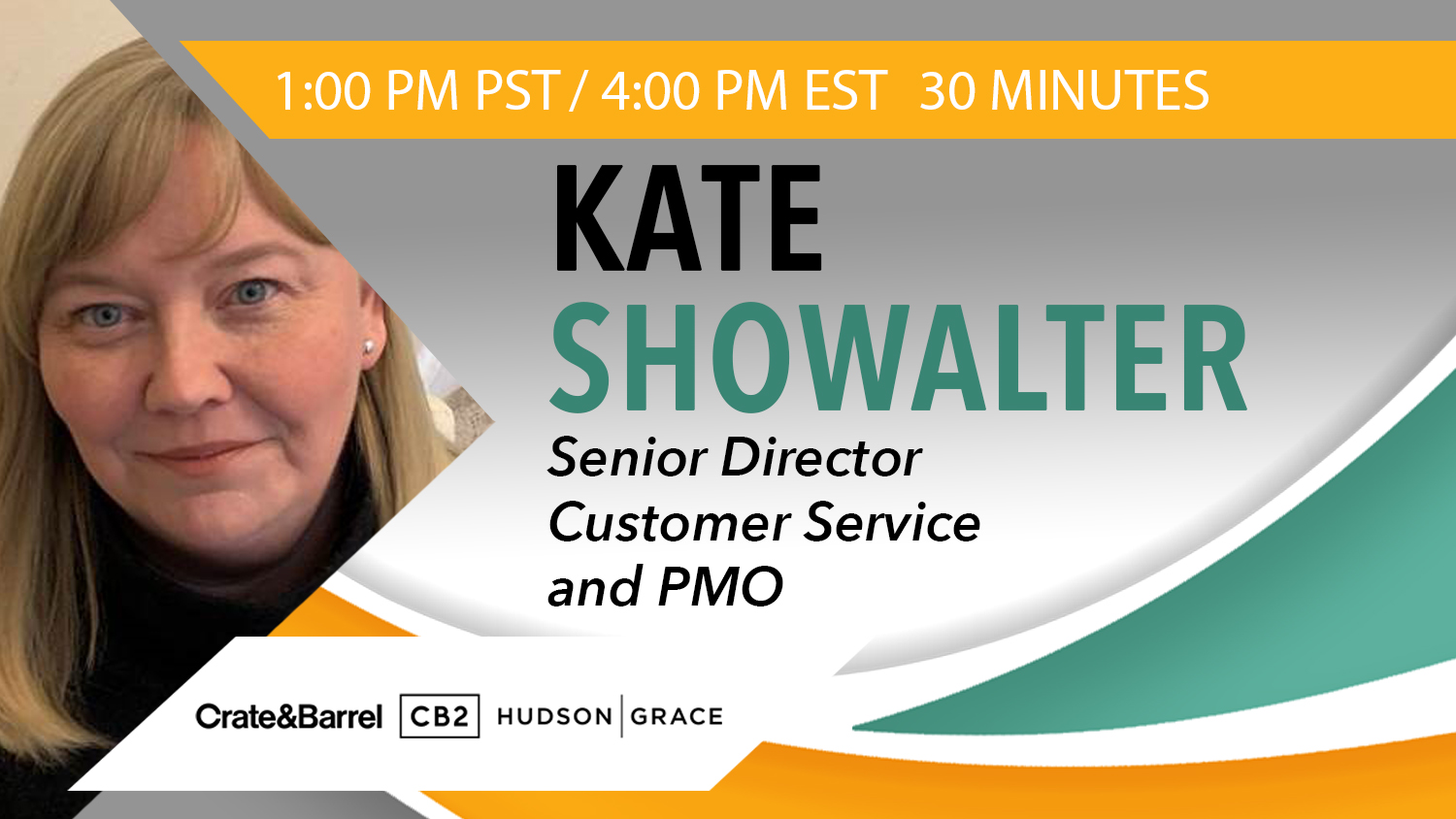
Creating a Strategic Roadmap for Change
THIS SESSION IS NOT AVAILABLE
ON-DEMAND
Customer service has shifted its role within organizations from operational support to becoming a critical data and revenue driver. The ways in which customers shop has shifted to digital, and fulfillment options are constantly evolving. Customer needs continue to shift and expand on two ends of a spectrum: high touch support and efficient responsiveness. Finding talent and managing associate engagement has moved online with Zoom interviews and virtual gatherings. In other words, the only constant in customer service is CHANGE, and the key to successful change is creating an adaptive service model that measures success by accountability to the customer experience.
Join Kate Showalter, Senior Director, Customer Service and PMO at Crate and Barrel, as she shares how to build an adaptive customer service organization, one that’s able to prioritize the customer experience by shifting to meet ever changing expectations. Listen as Kate discusses:
View Details
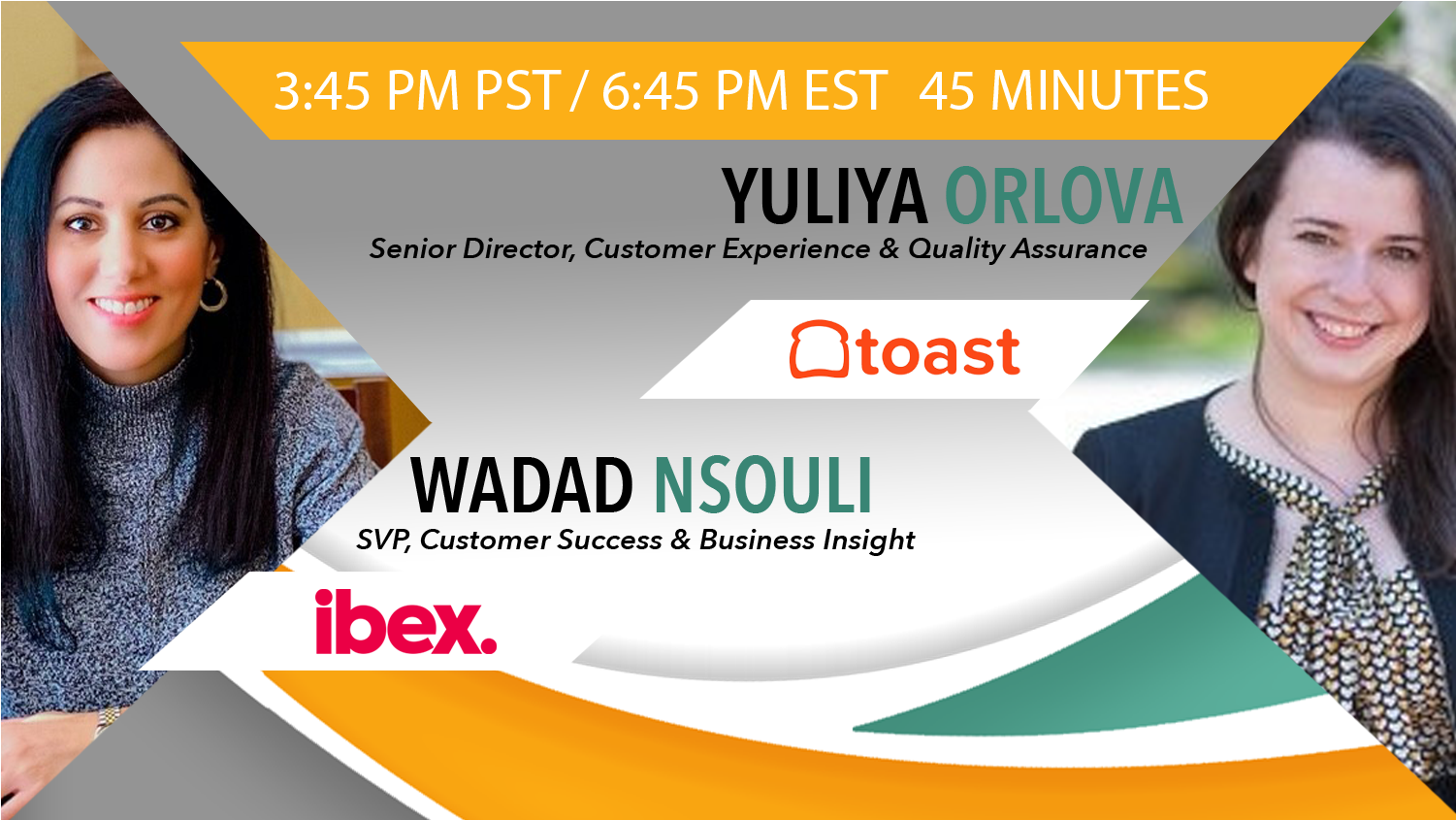
Performance Management & Complexity Mapping for Data-Driven CX
With omnichannel consumer expectations on the rise, CX complexity is outpacing organizational execution. Understanding and managing complexity is critical to building optimized customer experiences and is fundamental to every brand’s ability to layer strategic insight and automation across key CX touchpoints. Using Complexity Studies to analyze omnichannel contact drivers, issue types, support performance, and post-interaction satisfaction, brands can build rigorously tailored support programs, leverage key automations, discover new efficiencies, and meet specific customer needs across any channel.
Join Wadad Nsouli, SVP of Customer Success and Business Insight at ibex, as she talks with Yuliya Orlova, Sr. Director of Customer Experience and Quality Assurance at Toast, to unpack the data and detail that goes into mapping complexity and turning insights into action. In this session, you’ll learn how to:
View Details
Our Expert Partners





CX Knowledge & Engagement

By continuing to browse this site, you agree to our use of cookies.
BEYOND PERSONALIZATION: HOW AI POWERS ANTICIPATORY SERVICEIn today’s AI conversation, the focus often centers on efficiency, automation, and cost reduction. But in luxury hospitality, where every detail, emotion, and personal connection matters, the greatest opportunity may be something far more powerful: using AI to help each guest feel more deeply known. The Ritz-Carlton Yacht Collection is approaching AI through this distinctly customer-first lens. Rather than using technology simply to streamline interactions or replace human touchpoints, the organization is leveraging AI to uncover richer insights, recognize individual preferences, and empower employees to create experiences that feel thoughtful, personal, and highly considered. In this keynote, Tracy Sedlak, Director, Contact Center Operations & Analytics, will share how her team is using AI to better understand guest personas, identify motivations, and expectations earlier in the customer journey, and equip advisors with the intelligence needed to deliver the anticipatory service that defines The Ritz-Carlton Yacht Collection. |
Reach Qualified CX Decision-Makers
Your profile will be distributed through Execs In The Know’s highly engaged community of CX professionals, including:
45,000+ engaged corporate CX practitioners
1,500-member KIA community members
87% Director-level and above audience
Enterprise and mid-market CX leaders actively researching solutions
EITK event attendees, subscribers, and community members
TURNING SUPPORT INTO STRATEGY: ZILLOW’S APPROACH TO SMARTER SELF-SERVICEWhen customers can’t find answers, they don’t just get frustrated — they lose trust in your brand. For Zillow Group, that risk was hiding in plain sight: numerous separate help sites, four technology platforms, and twelve support silos, each inherited through years of acquisitions. On paper, the support infrastructure existed. In practice, it looked like Zillow’s org chart — not its customers’ journeys. In this keynote, Phoebe Schultz, Vice President of Customer Experience Operations at Zillow Group, shares how a fragmented support ecosystem became the unlikely catalyst for one of the most consequential CX transformations in the company’s history. What started as a consolidation project became a fundamental rethinking of what a help experience can be — not a cost center to minimize, but a product to design, a friction detector to mine, and a precision router to get the right customer to the right human at exactly the right moment. Join this session to discover:
|
Green Metrics, Red Flags: Redefining Trust in the Era of AIOn paper, the dashboards look perfect. CSAT is strong, operationally, the marks are being hit, and the metrics are green. Yet across the industry, leaders are waking up to a challenging reality: a profound disconnect often exists between what the data says and what customers actually experience. In this keynote, Julie Weingardt, Chief Operations Officer at Turo, explores the critical tipping point where traditional “Satisfaction” breaks down and “Trust” becomes the true currency of customer loyalty. It highlights the reality that a meaningful share of consumers now bypass traditional feedback channels entirely and go directly to social media when trust breaks. Ultimately, this session serves as a vital framework for the modern CX leader navigating the push for AI cost-efficiencies while preserving the indispensable value of human empathy, speed, and context. Join this session to discover:
|
Mental Athlete: Leadership in a Dysregulated WorldWhat if the leadership principles and attributes that built your career are now liabilities? What if your instincts, once indispensable, quietly hold your team back? What if your strategies are shaping outcomes in unseen ways? With three decades of operational leadership, and difficult chapters in his own personal journey, Todd argues the next frontier isn’t just operational; it’s internal. As AI transforms roles overnight, teams aren’t just adapting; they’re questioning value and future. What they need most isn’t a strategy deck, it’s a steady leader. A dysregulated leader cannot calm a dysregulated team. The cost of getting this wrong is real: high performers leave without telling you why, fear-based decisions replace clear thinking, and morale decays invisibly — until it collapses. The separation between an effective leader and a destructive one isn’t whether they carry anger, pain, or pressure. It’s whether they make their people pay for it. Join Todd as he explains why the Mental Athlete isn’t the one who pushes hardest. It’s the one who knows themselves well enough to lead from clarity rather than fear and creates the kind of safety where others can do the same. Come ready to look inward and lead differently because of it. |
The Rise of Multimodal Customer Experience: Are We Moving Too Fast?Omnichannel was promised as the solution to a fragmented customer journey. While it delivered in many ways a new paradigm is taking shape, one defined by multimodal experiences powered by AI, automation, and real-time context. Customers can now move fluidly between voice, chat, video, and digital channels, often without a visible transition. For some, this represents the ideal journey. For others, it can feel as though the human element of customer care is slipping away. As organizations race to innovate, many are unintentionally creating gaps, not just between channels, but between themselves and key segments of their customer base. With varying levels of digital fluency and generational differences, and varying expectations, a one-size-fits-all approach to CX no longer scales. So, the question becomes: In our pursuit of the future, are we leaving parts of our customer base behind? In this candid and forward-looking discussion, CX leaders will explore:
|
CX Livewire: Consumer Voices, Real-Time ReactionsCustomer expectations are constantly evolving, and understanding how consumers perceive service, support channels, and emerging technologies is critical for shaping effective CX strategies. In this fast-paced and interactive session, panelists will explore key insights from Execs In The Know’s latest research findings, capturing the perspectives and expectations of CX leaders and consumers. Throughout the discussion, panelists will react to both the research findings and live polling of the CRS audience, creating a dynamic comparison between what consumers say they want and how organizations are currently approaching service delivery. These real-time insights will allow attendees to benchmark their own thinking against the room, while panelists share practical perspectives from inside their organizations on how they interpret, and respond to, shifting consumer expectations. Expect candid reactions, engaging audience participation, and thought-provoking contrasts between consumer sentiment and operational reality. This high-energy session is designed to spark conversation, challenge assumptions, and highlight where CX leaders may need to adapt in order to meet the evolving demands of their customers. |
Agent-Facing AI for CX: Through the Eyes of the AgentFor decades, contact center agents have been expected to act as human search engines navigating complex knowledge bases, policy documents, and fragmented systems to find the right answer for customers. But the emergence of agent-facing AI is beginning to shift that paradigm. Instead of simply retrieving information, modern AI tools can now interpret context, surface relevant guidance, and recommend next-best actions in real time. This panel will explore how CX leaders are deploying AI to transform the agent role, and what this experience is like from the agent’s perspective. Panelists will discuss how tools such as AI copilots, real-time knowledge synthesis, contextual assistance, automated summarization, and predictive assistance are helping agents navigate complex conversations more effectively while reducing cognitive load. At the same time, organizations must carefully balance automation with human judgment, ensuring agents remain empowered decision-makers. Panelists will also address the operational and cultural challenges of introducing AI into the agent workflow including trust, training, governance, and change management. Attendees will hear practical insights (and hopefully firsthand feedback from agents) on what’s working, what’s not, and how agent-facing AI can simultaneously improve efficiency, enhance employee experience, and deliver better outcomes for customers. |
The Next Gen CX Business Plan: Preparing for the Next 3–5 YearsFor years, organizations have piloted AI-powered support, automation, proactive service models, and intelligent self-service. Now, the industry is reaching an inflection point: what happens when these capabilities mature into the standard operating model? The question for leaders is no longer if these technologies work, but how to architect a business plan that thrives once they are fully integrated. Moving from pilot to scale requires a fundamental shift in how we lead. It demands a roadmap for workforce evolution, a commitment to data integrity, and a new definition of “success” that balances efficiency with the human connection customer still crave. What does workforce strategy look like when AI handles a significant portion of interactions? How do roles evolve? What investments must be made now in data quality, governance, and systems integration to support intelligent, proactive service? How is success measured? How do organizations deliver the trust, clarity, and the confidence that define Customer Assurance? In this discussion, CX leaders will explore:
|
Customer Assurance: A Leadership Decision, Not a DepartmentCustomer Assurance is not a department or a checklist. It is the confidence customers feel when they know a company will show up with clarity, competence, and care. It is built through leadership decisions that shape how the organization communicates, operates, and responds when something matters most. In an era defined by automation, AI, and no-reply emails, customers are tired of simply being processed. They are asking deeper questions: Do I feel safe doing business with you? Do I trust this experience? Do I believe this company will take care of me when it counts? True assurance is what turns a transaction into trust. It requires more than strong service design. It takes leadership alignment, clear decision-making, and systems that make confidence possible at every stage of the customer journey. That includes how expectations are set, how issues are owned, how employees are empowered, and how technology is used to support rather than distance the customer relationship. In this discussion, CX leaders will explore:
|