
in this issue

Putting Simplicity At The Center Of Exceptional Experiences
By: Execs In The Know
KIA Online Community Member Spotlight: Julie Weingardt


Julie Weingardt believes the most important customer interaction is the one that happens next. This belief has evolved from her incredible depth of experience, including 30 years of experience traversing both sides of the business, leading operations both as a provider and a client. Regardless of which side of the table she sits on, Julie has always been moved by the idea that every customer touchpoint is an opportunity to strengthen a relationship, and to build a brand, no matter the channel or issue at hand. But it all starts with simplifying the experience.
In early February, we met with Julie, capturing her thoughts in a number of areas including her philosophy on managing operations, Turo’s future plans, and what gets her most excited about her job.
Julie serves as Vice President, Operations at Turo, the world’s largest peer-to-peer car sharing marketplace. Turo is where guests go to book any car they want, wherever they want it from a vibrant community of trusted hosts from across the US, Canada, and the UK.
EXECS IN THE KNOW (EITK): Julie, your career has taken you to both sides of the table, from provider to client. Can you share how these experiences have shaped your view of what customer experience (CX) success look like, and how the measuring stick of success may have changed over the years?
JULIE: Customers have gotten more and more savvy over the years. They expect to be able to self-serve to resolve moderately easy problems. When customers have to contact support, their expectation is to quickly reach a knowledgeable person on the other end, who has at least a baseline understanding of who they are. Quick service levels and first contact resolution used to be the measuring stick. The new measure is level of effort. Expending a lot of effort to get a resolution is the nemesis of a positive customer experience.
EITK: In your opinion, which ingredients are essential in order for a brand to outshine in the eyes of customers? What are some CX “must-haves,” and even some CX “nice-to-haves,” especially as they apply to disruptors and other marketplace creators like Turo?
JULIE: The brands who support the customer experience the best have set the bar for everyone else. “Must-haves” include a balance of self-help and live support options. Customers who have to really search to find support become really frustrated. They will either find a way to reach you or they will end up leaving you. Having multiple live contact channels are quickly moving from the “nice-to-have” category to the “must-haves”. Customers want to interact with support in the channel(s) they prefer, whether that is phone, chat, or text. YouTube has been a game changer for ‘how-to’ information. Providing short, video solutions to address customer needs can reduce contacts in a way that customers have become accustomed to using. The biggest challenge is keeping the video content up-to-date if your policies or processes change frequently.
EITK: Based on your impressive resumé, it’s clear you are laser-focused on operations and processes changes to improve operations. In your opinion, what is the one operational process that is often neglected, but if shown a little love, can have a direct and positive impact on the customer experience?
JULIE: This answer actually applies to all processes. Keep it simple. Processes tend to grow more complex over time. This is especially true now that AI is handling easier contact types. Take time to helicopter up and look across your workflows to make sure they aren’t overly complicated. I’m a firm believer that a straightforward agent experience translates to a better customer experience.
EITK: This past year saw a total reshuffling of priorities for obvious reasons. Aside from the shift to WFH, which projects gained new urgency at Turo? How have those projects faired?
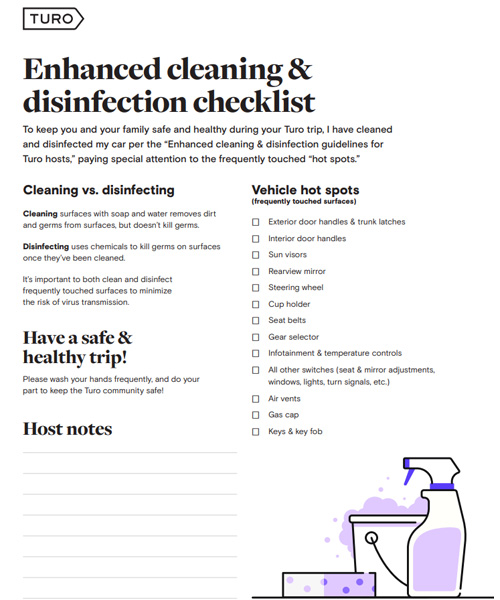 JULIE: Turo had to urgently address the safety of our host and guest communities with the outbreak of the virus. We built trust by defining and documenting sanitization standards, educated hosts about how to protect themselves and their guests, plus provided them resources such as access to hard to locate cleaning supplies. We verified host agreements to comply with the new standards and made cleaning ‘badges’ visible to guests in the booking process. A cleaning and sanitization checklist within the product is to be carried out by every host before the start of a trip and the completion of that checklist is visible to the guest. If, for any reason, a guest is worried about the cleanliness level of a vehicle upon check in, they are able to cancel ‘worry-free’, without penalties.
Turo also added sanitization to track the execution against these standards. Our immediate and effective responses to COVID 19 averted customer dissatisfaction and cost overruns.
After reducing both our internal and BPO partner teams, operations put a lot of focus on regrowing support thoughtfully. We have efforts underway to simplify, reduce, and streamline our software toolset, while simultaneously building a modern, integrated customer experience.
EITK: What are some of the exciting things you have planned for 2021? Which initiatives do you foresee having the most positive impact on your customers?
JULIE: As mentioned above, we are very focused on transforming the customer experience by realigning support from functions (billing, vehicle quality, listings, etc.) to personas (host and guest) to provide a faster, better support experience to our community in the channel of choice, including the ability to do channel blending. As part of this initiative, Operations, Product and Design are working together to enhance the in-app support experience.
We’re also in the midst of redesigning our agent tool stack. This initiative goes hand-in-hand with what I mentioned earlier: in order to provide a great customer experience, we’ve got to first provide a great agent experience. In my mind, it all starts with simplification. Our future plans truly embrace the omnichannel narrative, with plans to provide agents with the complete context of a customer conversation across all channels. We’ll also be implementing a SMS text link solution that will allow users to upload video and images during a voice call, an incredibly useful solution for our business. We’re targeting rollout of these and other features in the Q4 2021/Q1 2022 timeframe.
EITK: What gets you most excited about this line of work, and what do you look forward to most in your day-to-day? What’s your favorite part of the job?
JULIE: JULIE: Getting to be part of a tech start-up has been incredibly delightful and fulfilling. There is always something new to be learned. I’m proud to be part of a company which is also leveraging the Turo marketplace to economically empower Black hosts. The Turo Seed Initiative pilot was launched in November in partnership with Kiva, an international nonprofit focused on expanding financial access to help underserved communities thrive. Through the initiative, aspiring entrepreneurs can secure an interest-free loan to start building a small car sharing business and pave their own path towards financial wellness, and Turo has committed up to $1 million for the pilot to help kickstart their entrepreneurial engines and help address the wealth inequality at the root of many social issues here in the US. What I look forward to every day, and the favorite part of my job, is truly the people at Turo and the values they all embody: supportive, down-to-earth, pioneering, and efficient.

EITK: Although you are fairly new to the KIA Community, your involvement and familiarity with the Execs In The Know community has been growing for some time now. Can you share what EITK has meant to you so far, and what do you hope to gain from the community in the future?
JULIE: After 25+ years on the provider side, switching to the client side has presented different operational challenges. I’ve really appreciated the support the KIA community provides, whether it is answers to simple questions or insights into more complex issues. KIA members are truly knowledgeable and always willing to help. It has been my pleasure to participate in events and learn from and with others in the community. I look forward to continued engagement with EITK and the KIA community in advancement of all facets of the customer experience.
“I’ve really appreciated the support the KIA community provides, whether it is answers to simple questions or insights into more complex issues.” – Julie Weingardt, Turo