
It goes without saying that our industry will experience lasting impacts from the events of this year, and all aspects of customer experience (CX) operations are under the microscope to ensure short and long-term success. An organization’s sourcing strategy is always strategically important, but even more so now given the global economy and the challenges experienced due to the pandemic. Join us for an in-depth discussion among these CX leaders to learn how they are working to address the critical questions related to their sourcing strategies in the current environment, including:
This session promises to be an interactive and valuable discussion for organizations who outsource some or all of their CX operations and outsourced partners.

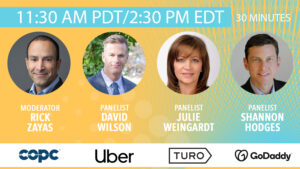
Rick is a senior business executive with extensive experience in operations management, process design/optimization, training development/delivery, organizational change, and leadership development/coaching. He has more than two decades of experience in business and IT, having led and consulted for organizations of various sizes and complexity.
He has successfully led performance improvement engagements and delivered training designed to equip clients with the knowledge and skills needed to sustain these improvements.
Prior to joining COPC Inc., Rick held executive leadership positions with ClientLogic (now Sitel), Blue Cross Blue Shield of North Carolina, and American Family Insurance. Throughout his career, Rick has demonstrated a passion for the customer experience and service center performance. His teams have consistently met tough client and regulatory requirements, maintained high levels of customer satisfaction and service, and improved operational efficiencies leading to lower costs and better quality.
Education/Related Training
Rick has a BS degree in Operations Management from Syracuse University, and holds certifications in several key industry frameworks, including: ITIL V3 Expert, HDI Support Center Director, Lean Six Sigma, COPC Customer Service Provider, and COPC Vendor Management Organization.


Julie is an operations executive who believes the most important customer interaction is the one that happens next. Julie strives to transform customer touchpoints into powerful relationships and brand-building tools through the use of highly efficient business practices, whether consumers choose phone, chat, SMS, email, social, or self service. With 30 years of operations and contact center experience, she is particularly skilled at developing and executing omni-channel operational solutions across a wide variety of verticals using combinations of internal and outsourced teams. In addition to Turo, her career background includes executive operational roles at Startek, Sitel, and Sykes.

Since 2017, Shannon has led International Care atGoDaddy. Prior to joining GoDaddy, Shannon was VP, Customer Care for Sirius XM Radio and has 15+ years of experience in technology. He lives in the Dallas/Fort Worth with his family, and enjoys reading non-fiction, running, and time with family and friends when he’s not working.
The Rise of Multimodal Customer Experience: Are We Moving Too Fast?Omnichannel was promised as the solution to a fragmented customer journey. While it delivered in many ways a new paradigm is taking shape, one defined by multimodal experiences powered by AI, automation, and real-time context. Customers can now move fluidly between voice, chat, video, and digital channels, often without a visible transition. For some, this represents the ideal journey. For others, it can feel as though the human element of customer care is slipping away. As organizations race to innovate, many are unintentionally creating gaps, not just between channels, but between themselves and key segments of their customer base. With varying levels of digital fluency and generational differences, and varying expectations, a one-size-fits-all approach to CX no longer scales. So, the question becomes: In our pursuit of the future, are we leaving parts of our customer base behind? In this candid and forward-looking discussion, CX leaders will explore:
|
CX Livewire: Consumer Voices, Real-Time ReactionsCustomer expectations are constantly evolving, and understanding how consumers perceive service, support channels, and emerging technologies is critical for shaping effective CX strategies. In this fast-paced and interactive session, panelists will explore key insights from Execs In The Know’s latest research findings, capturing the perspectives and expectations of CX leaders and consumers. Throughout the discussion, panelists will react to both the research findings and live polling of the CRS audience, creating a dynamic comparison between what consumers say they want and how organizations are currently approaching service delivery. These real-time insights will allow attendees to benchmark their own thinking against the room, while panelists share practical perspectives from inside their organizations on how they interpret, and respond to, shifting consumer expectations. Expect candid reactions, engaging audience participation, and thought-provoking contrasts between consumer sentiment and operational reality. This high-energy session is designed to spark conversation, challenge assumptions, and highlight where CX leaders may need to adapt in order to meet the evolving demands of their customers. |
Agent-Facing AI for CX: Through the Eyes of the AgentFor decades, contact center agents have been expected to act as human search engines navigating complex knowledge bases, policy documents, and fragmented systems to find the right answer for customers. But the emergence of agent-facing AI is beginning to shift that paradigm. Instead of simply retrieving information, modern AI tools can now interpret context, surface relevant guidance, and recommend next-best actions in real time. This panel will explore how CX leaders are deploying AI to transform the agent role, and what this experience is like from the agent’s perspective. Panelists will discuss how tools such as AI copilots, real-time knowledge synthesis, contextual assistance, automated summarization, and predictive assistance are helping agents navigate complex conversations more effectively while reducing cognitive load. At the same time, organizations must carefully balance automation with human judgment, ensuring agents remain empowered decision-makers. Panelists will also address the operational and cultural challenges of introducing AI into the agent workflow including trust, training, governance, and change management. Attendees will hear practical insights (and hopefully firsthand feedback from agents) on what’s working, what’s not, and how agent-facing AI can simultaneously improve efficiency, enhance employee experience, and deliver better outcomes for customers. |
The Next Gen CX Business Plan: Preparing for the Next 3–5 YearsFor years, organizations have piloted AI-powered support, automation, proactive service models, and intelligent self-service. Now, the industry is reaching an inflection point: what happens when these capabilities mature into the standard operating model? The question for leaders is no longer if these technologies work, but how to architect a business plan that thrives once they are fully integrated. Moving from pilot to scale requires a fundamental shift in how we lead. It demands a roadmap for workforce evolution, a commitment to data integrity, and a new definition of “success” that balances efficiency with the human connection customer still crave. What does workforce strategy look like when AI handles a significant portion of interactions? How do roles evolve? What investments must be made now in data quality, governance, and systems integration to support intelligent, proactive service? How is success measured? How do organizations deliver the trust, clarity, and the confidence that define Customer Assurance? In this discussion, CX leaders will explore:
|
Customer Assurance: A Leadership Decision, Not a DepartmentCustomer Assurance is not a department or a checklist. It is the confidence customers feel when they know a company will show up with clarity, competence, and care. It is built through leadership decisions that shape how the organization communicates, operates, and responds when something matters most. In an era defined by automation, AI, and no-reply emails, customers are tired of simply being processed. They are asking deeper questions: Do I feel safe doing business with you? Do I trust this experience? Do I believe this company will take care of me when it counts? True assurance is what turns a transaction into trust. It requires more than strong service design. It takes leadership alignment, clear decision-making, and systems that make confidence possible at every stage of the customer journey. That includes how expectations are set, how issues are owned, how employees are empowered, and how technology is used to support rather than distance the customer relationship. In this discussion, CX leaders will explore:
|