
in this issue
|
How Carrier Enterprise is Balancing AI and Human Connection in CX
|

Michael Luyster
Director, Customer Experience
|

Explore why customer choice, consistency, and trust matter more than ever in today’s service experience.
|

CX leaders face rising pressure to deliver service that is fast, dependable, and still deeply human. As expectations rise, the challenge goes beyond more channels and faster responses. It’s about making every interaction easier, more consistent, and more trustworthy using technology to strengthen relationships, not weaken them.
In this KIA Spotlight, Michael Luyster, Director of Customer Experience at Carrier Enterprise, offers a practical view on balancing AI and human expertise. He discusses blending technology and people to support customers across a complex service network. This conversation explores building strategies grounded in trust and customer choice, showing how to evolve service without losing the essential human touch.
Execs In The Know (EITK): As Director of Customer Experience at Carrier Enterprise (CE), how do you define great customer experience in a business where reliability, responsiveness, and trusted relationships matter so much?
Michael: Great customer experience means making it easy to do business with us. As a customer-first organization, we listen to evolving needs and invest in the right tools and solutions. It’s not just about systems. It’s about trust. When contractors call us, they want reliability, responsiveness, and support to help them grow. That is our foundation.
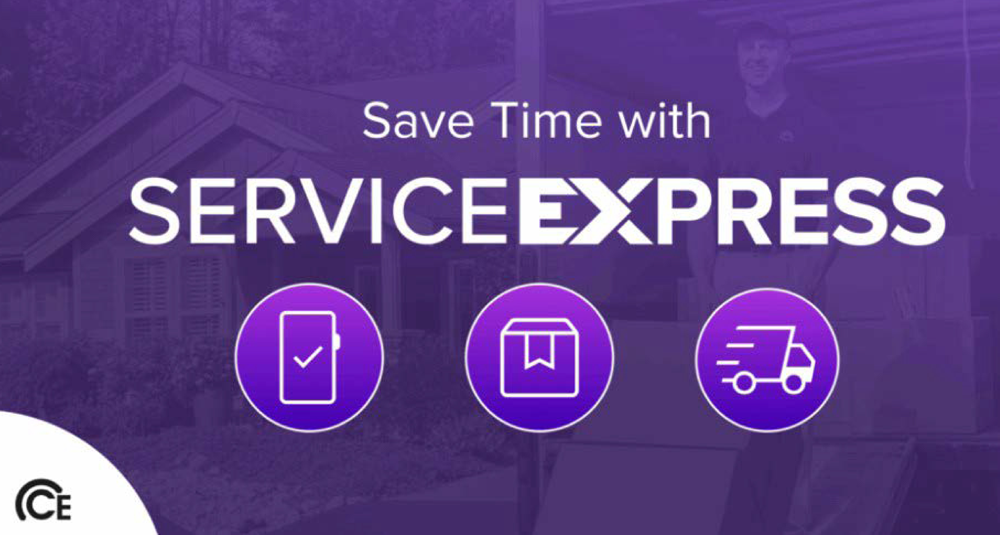
Service Express embodies this commitment to our customers. It delivers a comprehensive suite of last-mile services to support our HVAC contractors quickly and flexibly. We’ve built a platform powered by people and technology that they have come to trust and rely on when on the road or at a customer’s home.
EITK: Your role brings together customer experience transformation, digital innovation, and augmented intelligence. How are you balancing technology and human connection to improve the customer journey?
Michael: We’ve built a hybrid strategy that blends automation, AI, and human expertise. Customers choose their preferred engagement. Some inquiries are suited to AI-driven support; others require a person. We always include a human, so customers can rely on technology or request expertise. The interaction adapts to whatever support level they need.
EITK: Carrier Enterprise serves customers across a wide geographic footprint and a large branch network. How do you and your team work to create a more consistent and dependable experience across so many locations and markets?
Michael: In 2021, we created a unified live chat support team that had previously been managed by separate regions. As our HVAC contractors grew their businesses and expanded across multiple regions, we recognized they needed a more consistent, dedicated support function rather than a different experience depending on where they were calling from. Our approach is continuous assessment, evaluation, and iteration to stay current and accurate. We measure Voice of Customer (VOC) and Voice of Employee (VOE) data, and that feedback loop is what drives meaningful improvements across the entire enterprise. This model provides our contractor customers with the maximum possible support coverage, available online any time, as well as support in CE’s 190 branches across the U.S.
| EITK: What does your customer experience team focus on most today, and where do you see the biggest opportunity to make an impact for both customers and the business?
Michael: Our CX team manages a broad set of high-impact activities: new account setup and onboarding, eCommerce order support, specialty account management for high-value or complex accounts, and warranty support, including exception resolution and training. The biggest opportunity ahead is the strategic implementation of AI across our CX functions. AI-driven support, virtual assistants, and predictive analytics can enable personalized service across millions of interactions, but only if we deploy them in a purposeful, customer-centric way that keeps the human element at the center of our strategy. The greatest opportunity to improve customer satisfaction and business performance at CE is to strategically implement an AI program across advanced CX functions and the organization. Deploying AI purposefully and with customer focus lets us address diverse needs at scale. AI-driven support, virtual assistants, and predictive analytics enable personalized service for millions while keeping the human element central to our strategy. EITK: In an industry like HVAC, where timing and service can be critical, what are customers expecting most from CE right now, and how is your team evolving to meet those expectations? Michael: Customers expect immediacy and seamless first-contact resolution. And here’s what’s really changed: they no longer compare us to other HVAC distributors. They benchmark us against the best service experience they’ve had in any industry. That sets the standard. We’re meeting it in three ways: by integrating advanced AI, reinforcing technical expertise, and constantly refining service processes. These steps ensure we deliver the speed and quality customers expect everywhere. |
 |
EITK: How are you thinking about the relationship between technology and human contact center agents, and what does the right balance look like at CE?
Michael: When evaluating the relationship between technology and human CX associates at CE, the objective is to achieve a balance that capitalizes on the strengths of both. Technology, especially AI-driven tools, can efficiently manage routine activities like processing pre-qualifying information, routing inquiries, and analyzing customer sentiment.
That frees our agents to focus on the more complex or intricate matters that demand emotional understanding, nuanced judgment, and real problem-solving. We identify low-risk AI interactions through direct customer feedback, while more complex issues still rely on our team’s historical, intuitive knowledge and greater analytical skills.
But, regardless of how much technology is involved, the customer can always reach a human. That’s non-negotiable. The HVAC industry is rooted in personal, authentic relationships; striking the right balance between technology and our people is crucial to maintaining trust in those relationships.
EITK: As technology continues to reshape service, where do you see human contact center agents adding the most value in the customer experience?
Michael: Our team has embraced the understanding that AI is not primarily a cost-reduction tool. Deploying AI will likely require us to increase head count and invest in upskilling and training to teach the system, measure its performance, audit its outputs, and continuously enhance the AI experience.
Many colleagues remain on the front line because they value direct customer contact, and so do our customers. Customers can choose not to use AI or automation. Honoring this choice completes our customer-first approach.
EITK: How does the contact center support the broader CE brand experience, and what role does it play in building customer trust and long-term loyalty?
Michael: Rather than a traditional contact center model, our CX team takes a more dynamic, comprehensive approach to supporting our customers across every channel, leveraging a robust suite of digital solutions, tools, and resources to meet their daily business needs.
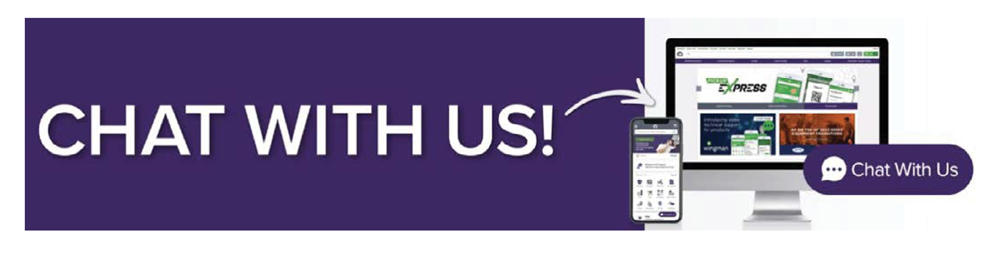
Our mobile app, “CE HVAC Pro+,” gives customers in the field instant access to everything they need, including refrigerant calculators, order management, warranty support, live chat, Service Express, and technical product assistance via our Wingman link. This ensures our customers are never without the support they need, wherever they are.
We build relationships with intention. Every interaction has purpose. Partner customers in CE Rewards get elevated access and top-tier support. We recognize their commitment through our partnership, products, and resources. This personalized service builds loyalty and long-term trust.
EITK: You have a background spanning advertising, marketing, sales, and CX strategy. How has that cross-functional experience shaped the way you lead customer experience today?
Michael: That diverse background built a curiosity in me to understand the customer’s entire business and goals, not just the service interaction. It’s helped me break down organizational silos and take a holistic view of the customer journey, which is essential for empathetic, data-driven decision-making.
When advertising, marketing, sales, and CX teams collaborate seamlessly, you get a unified experience that not only meets, but anticipates, customer needs.
Treating CX as a companywide responsibility, not a department, is what makes that possible.
EITK: When you think about the strongest customer-centered cultures, what does that look like inside CE, and how are you helping build that mindset across teams?
Michael: The strongest customer-centered cultures start from the inside out, and that means actively involving the teams who engage with customers every single day. Those frontline voices carry invaluable insight, and building a culture that listens to them is just as important as listening to customers directly.
To build that mindset across teams, I focus on several key pillars:
 |
Voice of the Customer (VoC) Events: Hosting dedicated sessions where customer feedback, accolades, pain points, and patterns are brought to the forefront. These events create shared ownership of the customer experience across teams, not just within CE. |
|
Active Feedback Loops: Continuously capturing and elevating customer feedback, both praise and friction, so teams can learn in real time and course-correct quickly. |
|
Marketing Journey Insights: Leveraging marketing journeys as a data source to better understand customer behavior, intent, and sentiment, providing a fuller picture of the customer experience end-to-end. |
|
Human-in-the-Loop AI Engagement: Ensuring that every AI-driven customer interaction has a human oversight layer. This is not just a quality safeguard; it is a trust safeguard. Customers deserve to know there is accountability behind every touchpoint. |
|
Continuous Learning Culture: Embedding a mindset of ongoing education and curiosity, so teams are always evolving their understanding of who our customers are and what they need. |
Regarding AI specifically, it is worth noting that not all customers have a bias against it. In fact, for certain sensitive situations where a customer may fear embarrassment or judgment from a human interaction, AI can offer something uniquely valuable: an anonymous, consistent, and safe space to get solutions, resources, and support. Protecting the customer’s dignity and concern is part of the experience, and AI, when deployed thoughtfully with human oversight, can be a powerful tool to do exactly that.
EITK: What are some of the biggest lessons you’ve learned about leading CX transformation, especially when driving change across people, processes, and technology?
Michael: We’re at a pivotal moment where we have to learn to protect our uniquely human strengths while embracing the inevitability of AI. It’s not new, and it’s not coming. It’s here. So, our focus must shift from ‘”if” to “how” — ensuring that coexistence with AI enhances rather than diminishes our human nature.
Our responsibility as leaders is to steer this integration thoughtfully within our organizations. A prior colleague shared insight that stuck with me: AI should function as a supportive collaborator rather than a commanding authority, a silent partner that offers assistance only when requested. My team has embraced this concept. AI isn’t about cutting costs. It’s about augmenting what we do. And, for the people on our team who thrive on direct customer interaction, that’s not going away. Customers have the right to choose a human, and we respect that fully.

EITK: Looking ahead, what excites you most about the future of customer experience at CE, and where do you believe your team can continue raising the bar?
Michael: The most exciting thing is the opportunity to reimagine how we support both our customers and our internal associates. By grounding every initiative in a people-first culture and positioning AI and automation as supportive collaborators, we can build a service model that’s both highly personalized and exceptionally efficient.
We’re working toward a choice-driven approach where every interaction begins with a clear, respectful invitation for the customer to choose the level of AI involvement, and intelligent routing delivers that experience without friction.
Trust and comfort are the pillars. The customer and the associate must feel confident that technology is honoring their relationship, not diminishing it. To raise the bar, we’re empowering associates with real-time analytics, knowledge-based integration, and AI-driven recommendations that enable faster, more personalized resolutions.
The result is an environment where trust, collaboration, and a shared mindset define every interaction, and where both customers and associates thrive together.
EITK: As a member of the KIA Community, what value have you gained from being part of a peer network of customer experience leaders, and how has that shaped your thinking or approach?
Michael: The KIA Community has been a space that reduces the isolation that comes with leadership. It’s a sounding board for validating strategies, a way to access the best practices quickly, and a genuine network of people who share knowledge and care about each other’s growth.
It’s shifted my thinking from reactionary problem-solving to proactive, strategic leadership. Having a judgment-free setting where you can share challenges and leverage shared experiences is rare, and it’s made a real difference for me. I also see how I can lend my knowledge and expertise to support others at any stage of their journey.

| Thank you to Michael for his leadership, participation, and insights. To connect with Michael or participate in the wider conversation, consider joining the “Know It All” (KIA) Community. The KIA Community is a private, online community designed exclusively for CX Leaders at consumer-facing brands. Come learn, share, network, and engage to innovate.
Want to learn more about the KIA Community? Click here. |