
in this issue

Are You Measuring CSAT for AI?
As AI becomes the face of more customer interactions, a critical question emerges: how satisfied are customers with their AI experiences, and are companies even measuring it?
by Execs In The Know
Artificial intelligence (AI) has shifted from a back-office enabler to the frontline. Whether it’s through virtual assistants, chatbots, or intelligent routing systems, AI is now a significant part of how customers experience a brand.
But as these touch points scale, a key question emerges: Are we measuring the quality of those experiences in a way that reflects their growing impact?
Customer satisfaction (CSAT) has long served as a guiding metric in service organizations. Yet many companies still assess it primarily through human-assisted interactions: calls, chats, or emails handled by agents. In contrast, AI-led interactions often fall outside the measurement framework. Not because leaders are neglecting them, but because the methodology is still catching up to the moment.
This isn’t a matter of right or wrong. It’s a reflection of where many brands find themselves: navigating new ground, exploring how to measure value in emerging digital channels, and asking the right questions along the way.
Rethinking What “Good” Looks Like
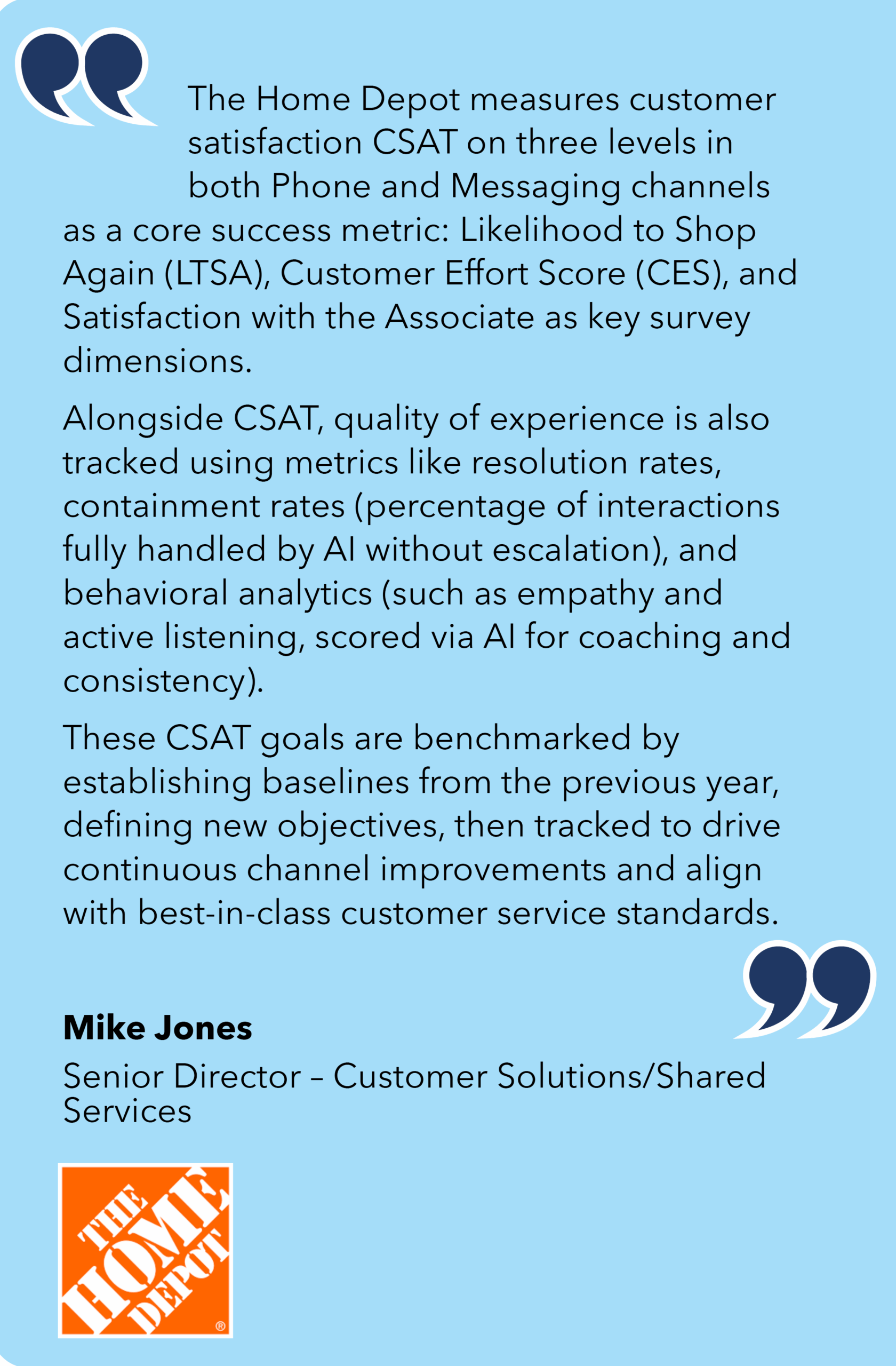
When AI was first introduced to customer experience (CX), its success was largely defined by operational wins, including reduced handle time, containment rates, and cost savings. These metrics are still important, but they tell only part of the story. A system can be efficient and still fail to meet customer expectations.
Measuring CSAT for AI isn’t about checking a compliance box. It’s about creating a fuller view of experience, one that includes emotion, effort, and trust. And there’s no single playbook for how to do that. Some organizations are experimenting with post-interaction surveys specific to AI. Others are exploring conversation analytics, open-text insights, and sentiment data as proxies for satisfaction.
The takeaway? Quality can be measured in many ways. What matters most is having a system in place that allows you to listen, learn, and iterate.
Legacy metrics like CSAT and net promoter score (NPS) were built for a different era, one where human interactions dominated and surveys captured the bulk of feedback. But as AI takes over routine tasks and reshapes the contact mix, these tools are starting to show their limitations. According to CX Today,1 analysts are calling for a new generation of metrics.
Predictive tools like expected NPS (xNPS) allow AI to estimate how satisfied a customer likely is, even without a survey response. Platforms like Salesforce are rolling out “Customer Success Scores” to flag where friction exists and where teams can take action before the customer even complains. It’s a shift from static scoring to dynamic insight, and it reflects a broader truth: you can’t optimize what you’re not measuring, and you can’t measure AI the same way you measure a person.
Why Measurement Matters, Even If It Looks Different
Customer expectations around AI are rising. In 2023, many customers were curious. In 2025, they’re discerning. They know when they’re interacting with AI, and they have a sense of what “good” should feel like, whether that means speed, clarity, or a graceful escalation to a human. This evolution creates both opportunity and pressure. If AI is the first point of contact, then it’s also the first impression. Measuring the experience isn’t just about accountability. It’s about influence and understanding how AI shapes perceptions of your brand.
Some brands now apply CSAT in the same way across all channels, including AI. Others take a more differentiated approach. What’s consistent across high-performing organizations is a commitment to insight: finding ways to hear the customer, however the interaction unfolds.
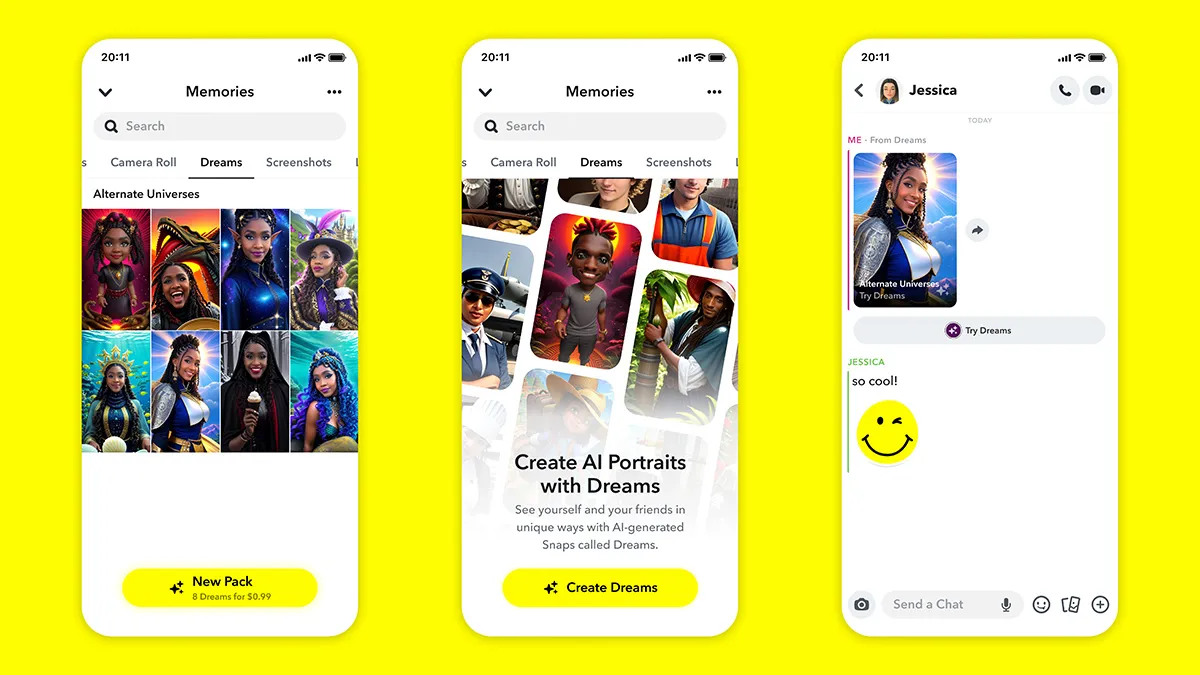
When AI experiences are implemented without considering customer perception or measuring satisfaction, the consequences can be swift and severe. Take Snapchat’s 2023 launch of My AI, a generative chatbot pinned to the top of users’ chat feeds. Rather than delighting users, the unremovable feature sparked backlash, with many describing it as invasive or unsettling. App store ratings plummeted, and searches for “delete Snapchat” surged by nearly 500% in the months following the release.
The problem wasn’t just the presence of AI; it was the absence of customer insight guiding the implementation. As Harvard Business Review2 points out, assuming AI will automatically add value without listening to users can erode brand trust and trigger reputational damage. Measuring how AI is experienced is essential not just for optimization but for risk mitigation.
From the Frontlines: AI Satisfaction and the Experience Gap
 If AI is becoming the face of your brand, then your customers’ satisfaction with AI deserves the same rigor as any other channel. But the data from our 2025 CX Leaders Trends & Insights: Consumer Edition report3 in partnership with Transcom shows a disjoint. In 2025, 78% of consumers reported using self-help tools — a jump from just 55% the year prior. Adoption is up. Expectations are up. And yet, self-help solutions ranked dead last in consumer perception of experience quality, even trailing behind social media support.
The misalignment between usage and satisfaction highlights a growing “Experience Gap,” a term the report uses to capture the widening divide between what consumers expect from AI-driven CX and what they actually get. Most troubling? When self-service fails, it doesn’t just frustrate; it drives churn. Nearly half of consumers say they’ve stopped or slowed doing business with a company due to poor customer support, with difficulty reaching a human being topping the list of frustrations.
The lesson here isn’t to pull back from AI. It’s to measure its impact with the same precision as human-led channels.
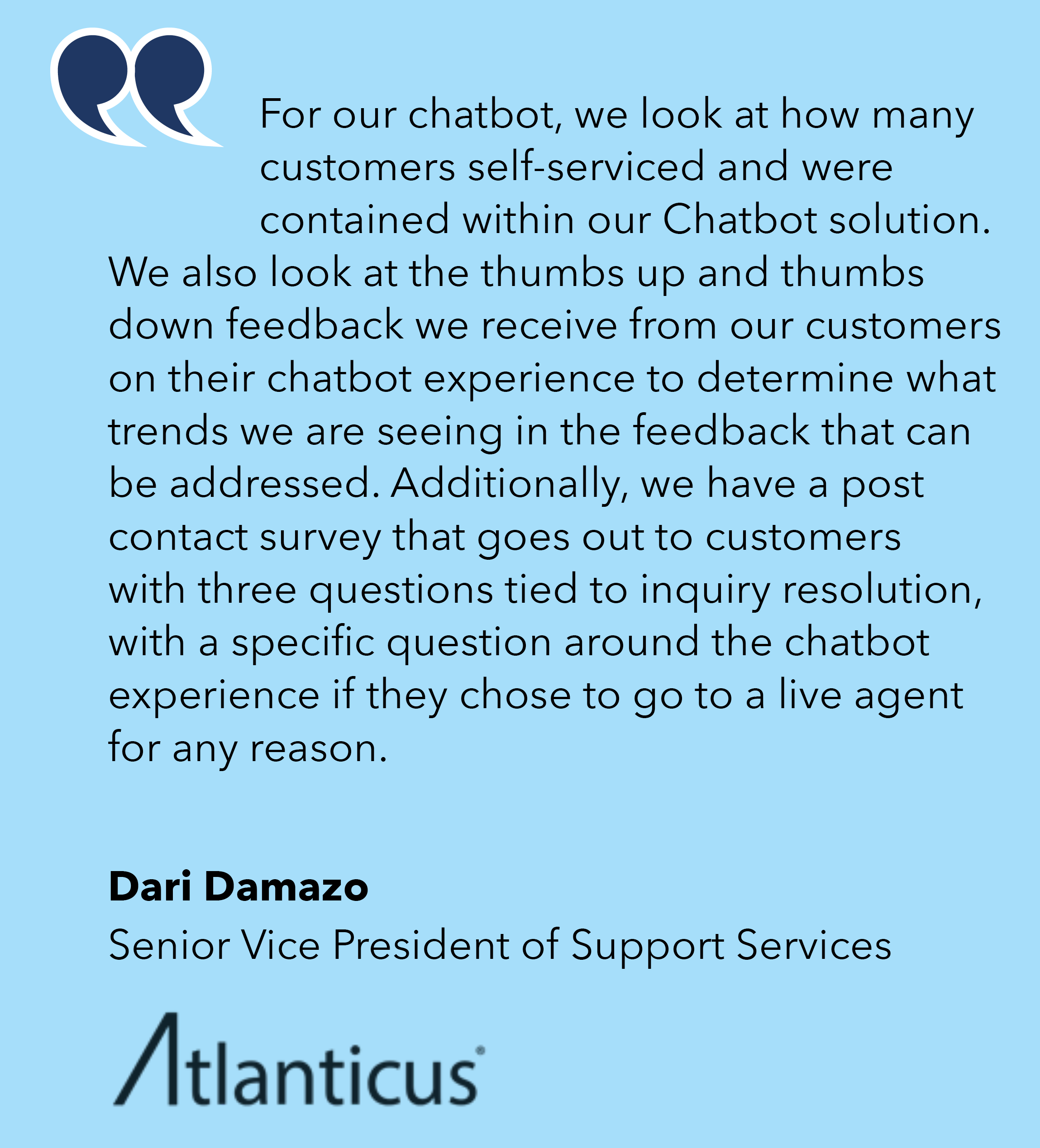 This is a Strategic Conversation
Leaders know that metrics aren’t just numbers; they’re signals. When we measure something, we’re saying it matters. Customer satisfaction for AI isn’t a niche metric. It’s a lens into how automation is serving your customers, supporting your people, and advancing your strategy.
This shift calls for alignment across teams. Technology, CX, and operations leaders must collaborate to define what success looks like for AI and how it will be evaluated. And that definition may evolve. A single score won’t capture everything, but a thoughtful mix of CSAT, sentiment, effort, and trust metrics can provide a more complete view.
Questions Worth Asking
As the conversation around AI satisfaction gains momentum, these questions may help spark productive dialogue within your organization:
- Are we measuring CSAT (or other satisfaction metrics) for AI interactions separately from human ones?
- How do we currently define success for our AI experiences, and does that definition include the customer’s voice?
- Do our measurement tools capture resolution, emotion, and ease?
- Are we tracking satisfaction trends over time and across channels?
- How does feedback from AI experiences flow into our governance, product, and training teams?
These are not just tactical questions. They are leadership questions. And the answers will shape not only how AI is used, but how it’s experienced.
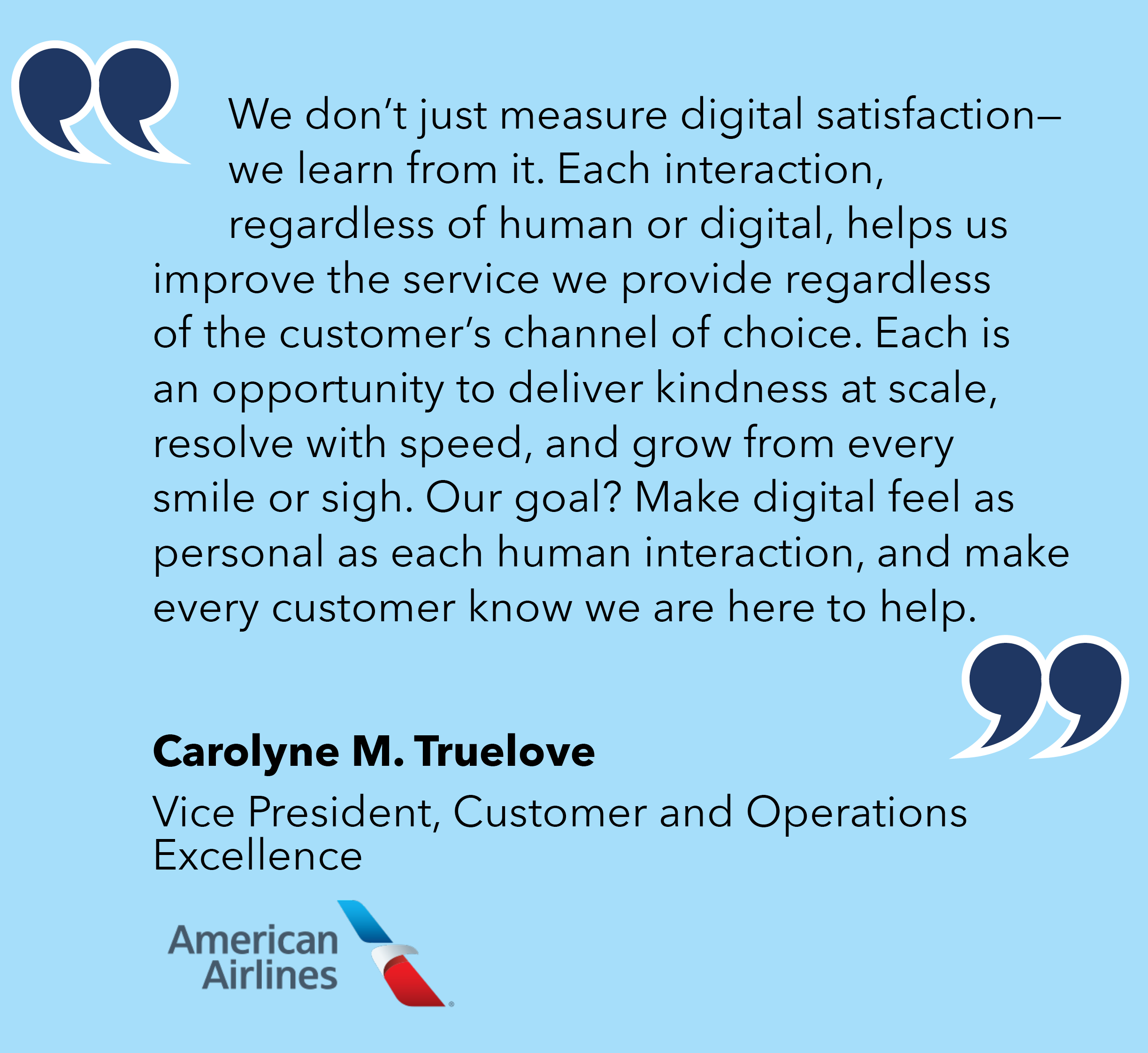 The Role of the Back Office in AI Satisfaction
AI experiences don’t operate in a vacuum. Behind every virtual assistant and intelligent bot lies a maze of back-office processes, including escalations, ticketing systems, and fulfillment workflows that can either reinforce or erode customer trust. Yet, most companies still measure AI in isolation, overlooking the broader operational ecosystem that makes or breaks the customer journey.
In our CX Without Silos: Bridging Front- and Back-Office Operations to Elevate CX report4 in partnership with NiCE, while 63% of CX leaders rated their back-office performance as “Good” or “Very Good,” nearly half still report underinvestment in this area. And only a third are satisfied with the tech supporting it. The takeaway? You can have the flashiest AI interface on the market, but if the workflow behind it is broken or disconnected, CSAT will suffer.
Leaders serious about measuring and improving AI satisfaction must go beyond the UI layer. They should ask: Did our AI escalate appropriately? Was fulfillment triggered in a timely manner? Did the sentiment data surface to the back-office team in a way that informed resolution?
These are the seams where most CX breaks down, and the places where AI satisfaction can be meaningfully improved.
A More Complete Picture of Experience
Customer satisfaction is not the only way to measure quality, but it’s a familiar, scalable starting point. Layering in other measures such as effort scores, trust indicators, and emotion analysis can help organizations evolve beyond a transactional view of satisfaction.
Ultimately, the goal isn’t to hold AI to the same standards as human service; it’s to hold it to the same level of care. As AI becomes more embedded in the customer journey, leaders have a unique opportunity to redefine what experience means not just for efficiency’s sake, but for empathy, clarity, and loyalty.
The next chapter of CX will be shaped not just by how well AI performs, but by how well it is understood. And that starts with asking, not assuming, how customers feel.
Article Links
- https://www.cxtoday.com/workforce-engagement-management/legacy-contact-center-metrics-are-on-the-way-out-heres-what-will-replace-them/
- https://hbr.org/2025/09/make-sure-your-ai-strategy-actually-creates-value
- https://execsintheknow.com/2025-cx-leaders-trends-and-insights-consumer-edition/
- https://execsintheknow.com/cx-without-silos-bridging-front-and-back-office-operations-to-elevate-cx/