
in this issue

How Curiosity and Courage Shape
CX Leadership
In a world of rising complexity, resilient CX leadership is rooted in two traits: the drive to ask “why” and the bravery to act on the answers.
by Execs In The Know
Most of the breakthrough discoveries and remarkable inventions throughout history all have something in common: They are the result of curiosity and courage. The impulse to seek new information and experiences and explore novel possibilities is a basic human attribute.
Fast-forward to today’s customer experience (CX) landscape, and you’ll find that the same spark fuels leaders tasked with navigating constant change. In boardrooms and back-office huddles alike, CX leaders find themselves at the epicenter of rapid technological shifts, evolving consumer expectations, and increasingly complex global supply chains.
When artificial intelligence (AI) begins automating routine service inquiries and fresh competitive threats emerge from unexpected corners, the ability to adapt is no longer optional. It hinges on these two human qualities that, together, form the bedrock of resilient leadership.
The Curiosity Imperative: Beyond Surface Metrics
Curiosity, at its core, allows us to identify the very questions we should be asking and exploring to evolve our businesses.
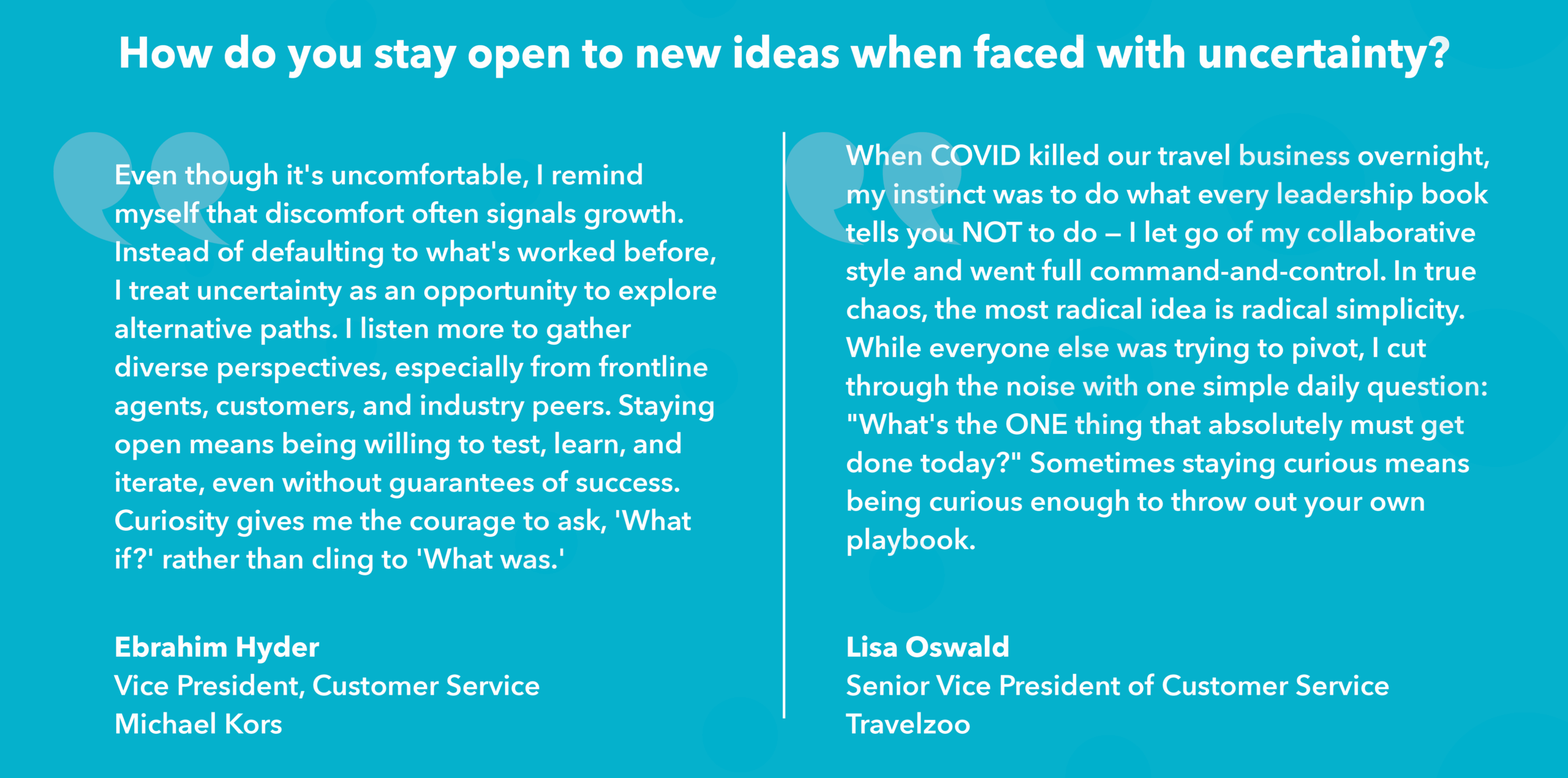
Imagine a senior CX executive at a Fortune 500 organization pausing in front of a glowing dashboard showing rising customer satisfaction scores. To most, a gentle upward arrow would signal the mission accomplished. But this leader is asking a different question: “What story lies behind those smiles?” It’s not enough to celebrate growth; they needed to unearth the drivers. Was it a software patch? A seasonal lull in support volume? Or had customers, fatigued by faceless online exchanges, simply rallied around a newly minted “human touch” initiative?
That instinct to probe, which Harvard Business Review1 defines as “the motivation to learn, be open to new ideas, and explore novel environments,” distinguishes reactive leaders from proactive innovators
Business Curiosity: Tying CX to the Bottom Line
In organizations where curiosity thrives, data isn’t just reported; it’s questioned. Every quarterly Net Promoter Score (NPS) becomes a springboard for inquiry: Which interactions delighted? Which left customers puzzled? And, how can those insights seed future experiments?
It’s one thing to tinker with chatbots and user interfaces; it’s another to ask how those innovations reshape lifetime customer value. Business curiosity demands this deeper lens. A curious CX leader won’t stop at asking, “How does this feature work?” but will dig into, “Why are we doing this?” and “What does it change for the business?” Every touch point tweak should connect back to revenue, retention, or operational efficiency goals.
Let’s say a subscription streaming service notices a slight uptick in free-trial conversions. Rather than chalking it up to chance or a clever user interface (UI) tweak, the CX team asks: “What kind of content is driving this behavior?” That line of questioning leads to a shift from categorizing by genre to curating by mood.
Over time, engagement increases, recommendations become more emotionally relevant, and churn begins to drop, not because of a flashy new tool, but because someone asked a better question and followed the trail of curiosity.
McKinsey & Company research2 underscores the power of such cultures. Firms in the top quartile for cultural strength where curiosity is baked into norms outperform median companies by 60 percent and bottom-quartile peers by 200 percent. In volatile markets, that edge can mean the difference between leading the pack and scrambling to keep up.
But curiosity alone isn’t enough. To turn insight into action, CX leaders also need something just as critical. They need courage.
From Wonder to Fearlessness
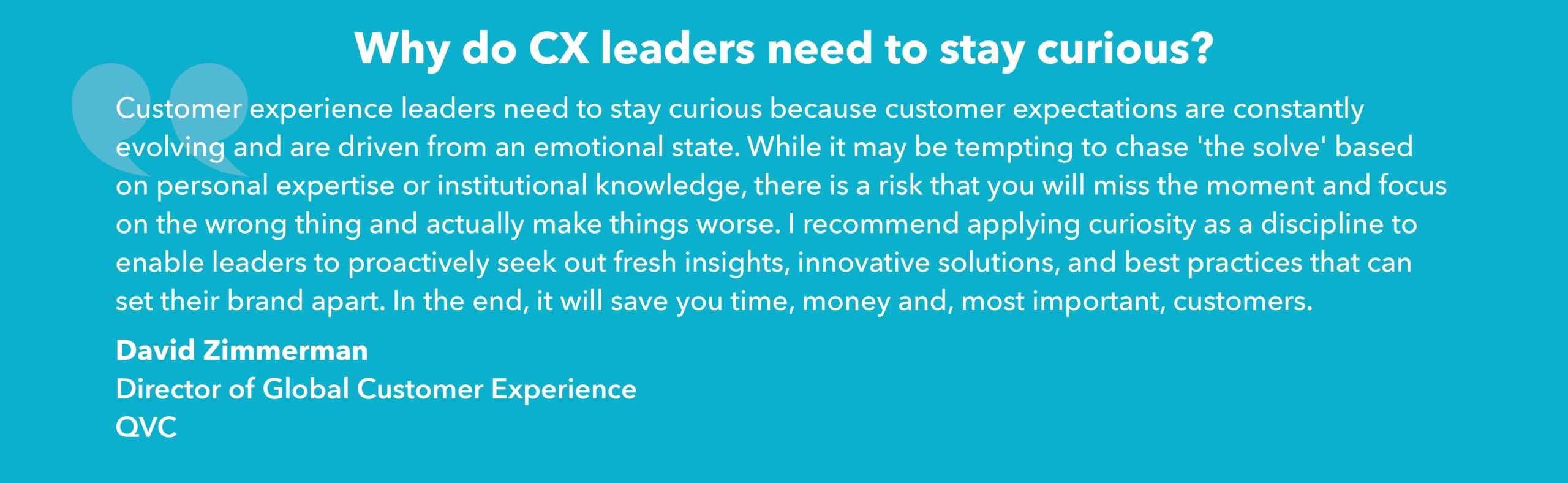
If curiosity shines the light, courage powers the journey. It’s one thing to question why legacy customer relationship management (CRM) underperforms. It’s another thing to stand up in a boardroom and propose sunsetting everything, betting on a cloud-native platform the organization hasn’t fully envisioned yet. Courage in customer experience isn’t loud. It’s often quiet and persistent. It appears to involve speaking uncomfortable truths, challenging entrenched systems, and pushing for transformation in the face of doubt.
At Bank of America, that courage took form in Erica®, its their AI-powered virtual financial assistant. When Erica launched in 2018, it was a pioneering move, one met with natural skepticism. Could AI handle sensitive financial questions? Would customers use it? What would go wrong?
 Plenty, at first. But that didn’t stop the team. They embraced the friction, treating each misunderstanding or awkward interaction not as a failure, but as feedback. With time, patience, and a relentless improvement mindset, Erica evolved from a promising tool into a cornerstone of the bank’s digital ecosystem.
Today, more than 20 million clients actively use Erica3 to help manage their finances. In 2024 alone, users engaged with the assistant 676 million times, bringing the total number of interactions since its launch to a staggering 2.5 billion. Erica doesn’t just answer balance inquiries. It now serves as a personal concierge and financial command center, helping clients make smarter everyday decisions. In moments of crisis, like during Hurricanes Helene and Milton or the California wildfires, Erica even guided clients to relief resources through the bank’s Client Assistance Program.
Behind this success story wasn’t just technical innovation. It was leadership willing to champion a risky idea, weather the rough patches, and see it through to completion. Erica has become more than a digital tool. It’s a reflection of what happens when boldness meets persistence and when customer experience leaders are brave enough to not only ask, “What if we tried this?” but to keep going when the answer isn’t immediately clear.
Sometimes, the difference between stagnation and transformation isn’t a system — it’s the bravery to build one and the grit to see it through.
But even the boldest ideas can’t thrive in a vacuum. To turn curiosity and courage into lasting impact, leaders must create the right environment.
 Creating the Conditions for Curiosity and Courage to Thrive
Curiosity and courage flourish only in environments where team members feel safe to question and push boundaries. Amy Edmondson’s concept of psychological safety, recently revisited in Harvard Business Review,4 reminds us that teams high in psychological safety “feel safe to take risks, voice dissenting views, and admit mistakes without fear of punishment.”
In CX functions, this translates to agents flagging odd customer complaints, analysts proposing radical workflow overhauls, and junior staff feeling empowered to remind seasoned leaders that what worked yesterday may falter tomorrow. When safety erodes, when the cost of being wrong feels too steep, curiosity is muzzled, and courage retreats.
Leaders must, therefore, model vulnerability: sharing personal missteps, inviting critique of their pet initiatives, and publicly rewarding those who dared and failed. Celebrating near-misses gives people permission to experiment rather than hiding lessons in a drawer.
Once teams feel safe to take risks, the next step is channeling that safety into purposeful exploration, starting with better questions.

The Power of Inquiry
In late 2023, Domino’s was navigating a familiar challenge: momentum was slipping, foot traffic was slowing, and quarterly sales were flatlining. Loyalty numbers showed participation, but something was missing: real, emotional engagement. That’s when a curious team member proposed asking customers not just what they liked but why some stayed, and what would make others return.
Instead of launching another survey, the team led by Domino’s CMO Kate Trumbull, designed a bold and unconventional experiment: the Emergency Pizza promotion.5 Here’s how it worked. Loyal members who’d made a single purchase got a digital voucher for a free two-topping medium pizza within 30 days of their purchase. A simple gesture, yes — but one with a deeper ask: “What if we could win you over again?”
It worked better than anyone expected. When the initiative rolled out in October 2023, two million new members signed up, representing roughly two-thirds of all loyalty additions that year.
Beyond sign-ups, the campaign ignited repeat business: U.S. same-store sales climbed 2.8 percent by year-end, outpacing competitors, as both new and existing customers redeemed their emergency pies and returned for more.
More than just a giveaway, Emergency Pizza was a strategic probe into customer mindset, a way for Domino’s to hear what really mattered: reassurance, convenience, and the feeling that the brand cared. The payoff was clear: loyalty membership surged, sales rebounded, and Domino’s leadership had evidence that small, risk-taking experiments could yield a significant impact.
This transformation began with one question: “What if we asked and listened instead of assumed?” Instead of redesigning the loyalty program from the ground up, they turbocharged what worked and tested it bravely.
Cultivating a Culture of Continuous Discovery
 Embedding curiosity and courage into an organization’s DNA isn’t a one-time initiative. It’s a leadership mindset reinforced through intentional, everyday practice. For CX leaders, this means moving beyond the buzzwords of “innovation” and “agility” to operationalize exploration through the conversations and decision-making behaviors that shape how teams work and think.
A culture of discovery begins where most CX insights do: with frontline conversations and unfiltered feedback. But instead of waiting for quarterly reports or retroactive debriefs, progressive CX teams are making curiosity a reflex. Performance reviews include space not only for outcomes but also for questions asked. KPIs are paired with “learning metrics” — what was tried, what was learned, and what unexpected insight surfaced.
Daily team huddles kick off with prompts like, “What surprised you this week?” or “What customer behavior challenged your assumptions?” These micro-moments foster psychological safety, inviting team members at every level to raise their hands, flag a pattern, or suggest a hypothesis.
Some organizations host recurring failure forums, where well-intentioned initiatives that didn’t work are unpacked openly, not to assign blame but to extract lessons from what didn’t go as planned. The message is clear: failure isn’t the end of the story. It’s the beginning of better questions.
Even executive offsites are evolving. Instead of strategy in isolation, top brands are bringing customer stories into the room. Some play unfiltered call recordings and others invite frontline agents to present their most challenging customer cases. A few go further, hosting live customer panels to challenge leadership’s assumptions in real-time. These moments shift culture, humanize metrics, and reinforce that leadership starts with listening, especially when the answers are uncomfortable.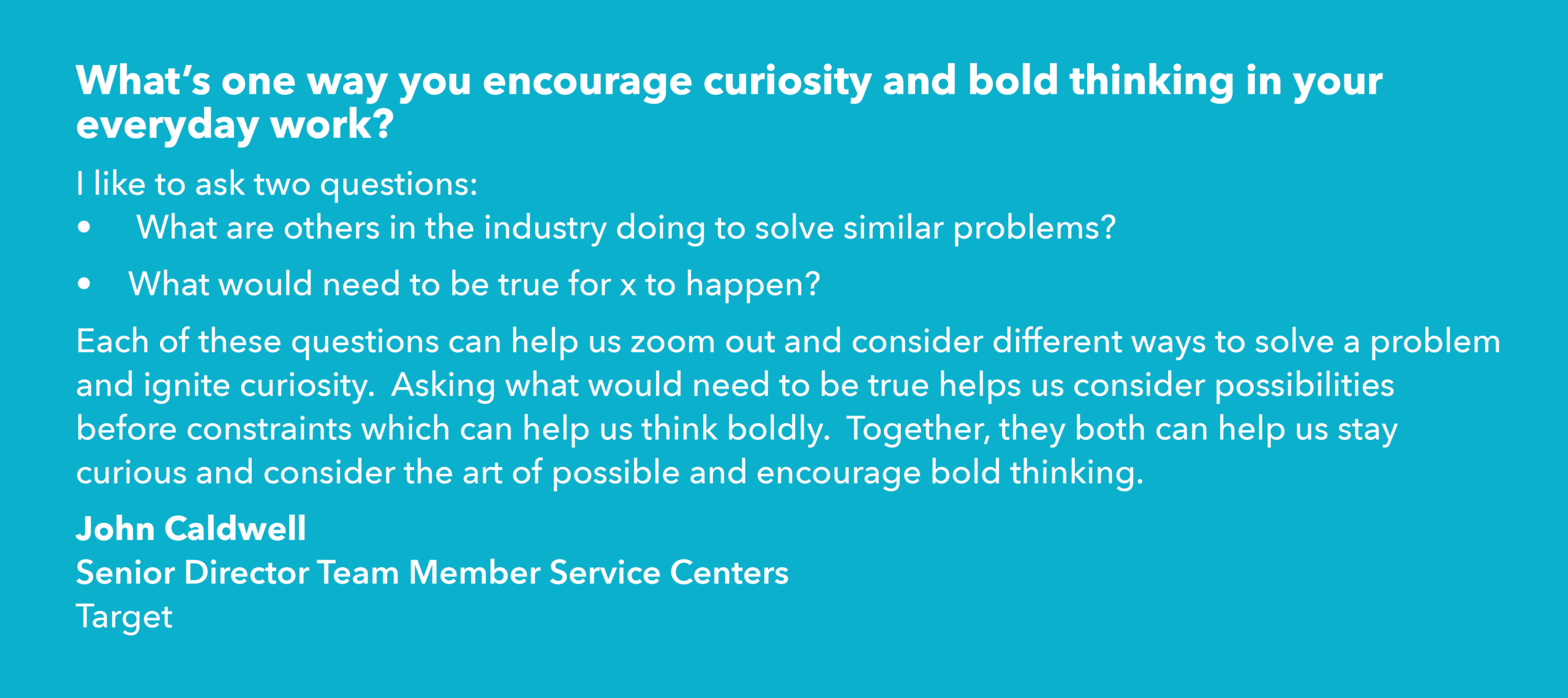
When done right, discovery doesn’t feel like a disruption; it feels like momentum. It builds teams that aren’t just reactive or efficient but relentlessly curious, constantly sensing, adapting, and pushing forward. In a world where customer expectations evolve faster than playbooks can be written, that mindset may be the most strategic asset a CX leader can cultivate.
With curiosity and courage embedded into culture, CX leaders are uniquely positioned to not just respond to change, but to shape what comes next.
Looking Ahead: The Competitive Edge of the Incurably Curious
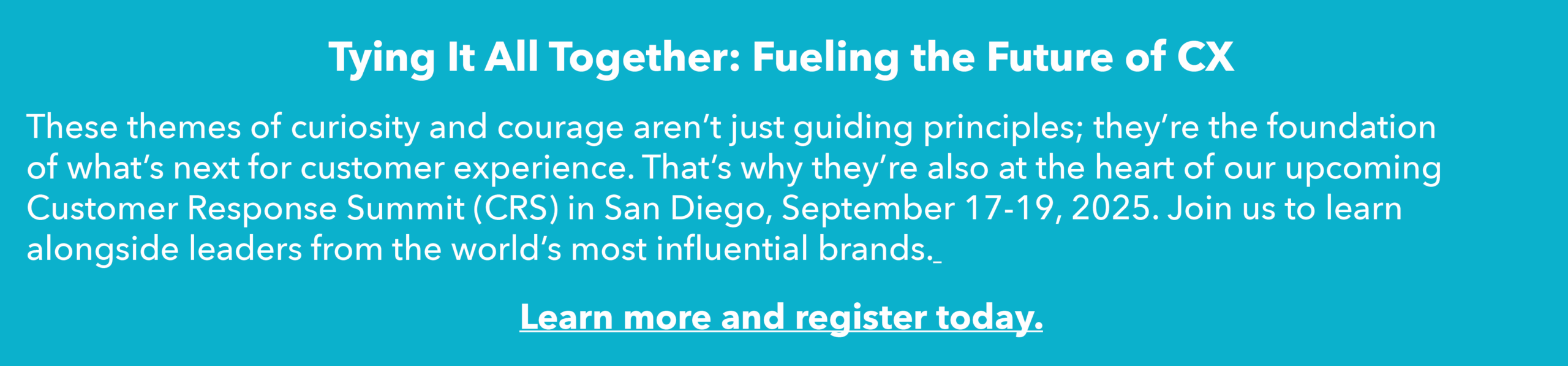
The future of CX won’t be built overnight and it won’t be perfect. But it will belong to the teams who stay open to learning and bold enough to try. Whether it’s rethinking a support flow, exploring a new AI tool, or simply asking customers what’s not working, curiosity is how we uncover what really matters. When paired with the courage to act, it becomes a quiet superpower, one that helps CX leaders build trust, adapt faster, and make lasting impact.
Conversely, those who rest on past achievements risk slipping into irrelevance. When your frontline clings to dated processes and defensive mindsets, they cede to challengers unafraid to ask, “Why not?” and “What if?” and then leap.
In a world where change is the only constant, the most enduring competitive advantage lies in the human capacities to wonder and act. CX leaders who cultivate insatiable curiosity and have the courage to follow their trail forge organizations that don’t merely react to change but anticipate and shape it.
 |
 |
Article Links:
- https://hbr.org/2023/11/how-to-strengthen-your-curiosity-muscle
- https://www.mckinsey.com/capabilities/people-and-organizational-performance/our-insights/the-organization-blog/culture-4-keys-to-why-it-matters
- https://newsroom.bankofamerica.com/content/newsroom/press-releases/2025/02/digital-interactions-by-bofa-clients-surge-to-over-26-billion–u.html
- https://hbr.org/2025/05/what-people-get-wrong-about-psychological-safety
- https://www.wsj.com/business/hospitality/dominos-emergency-pizza-promotion-033aa247