
in this issue

Leveraging the Benefits of AI Without Compromising Customer Trust
by Execs In The Know
Artificial intelligence (AI) is this century’s most notable technology innovation with far-reaching impacts across every industry. Advancing technology, increasing data availability, and the growing recognition of AI’s potential to improve efficiency and outcomes drive its widespread adoption. It transforms the customer experience (CX) industry like no previous innovation. CX is enjoying significant positive impacts from AI, including enhanced personalization, improved service efficiency, and deeper insights into customer behavior.
These dramatic improvements come with an obligation to the customer: data and personal privacy protection. Organizations’ responsibility to meet this obligation requires investment. This article explores ways to design and deliver an AI strategy that keeps customer privacy and confidence at the forefront. The customer-centric roadmap is ideal for integrating privacy and trust measures into AI strategy.
The Importance of Trust in AI
Trust is critically important in AI and impacts various aspects of development, deployment, and adoption. Here are some key points for consideration.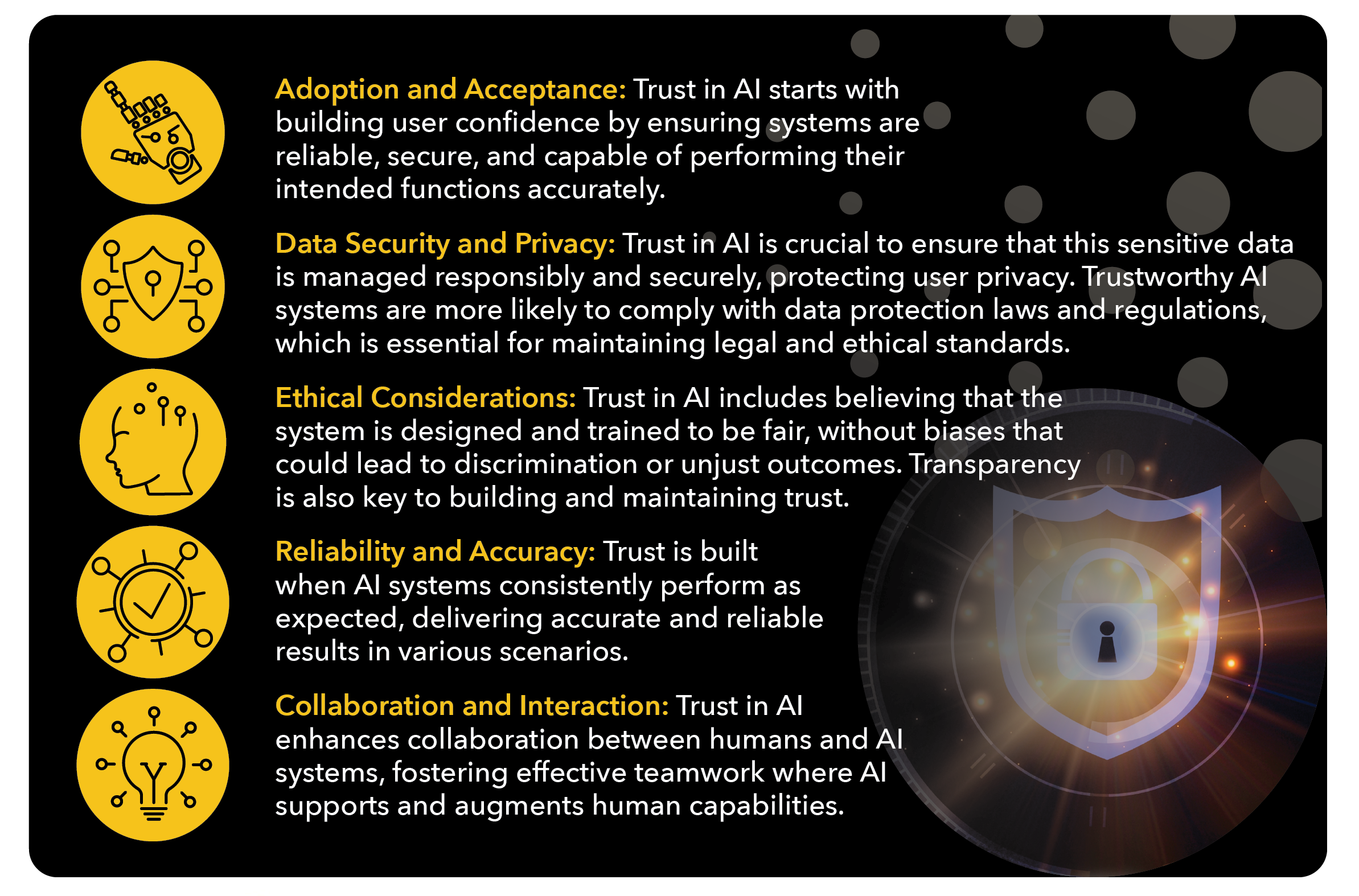
Establishing a Foundation of Trust
As tempting as it is to jump right in and develop and deploy operationally important AI initiatives, the best CX leaders know that the customer comes first. Incorporating the voice of the customer (VOC) as the technology roadmap is developed is the paramount first step. Leaders who create a customer-centric roadmap that includes AI privacy measures ensure customer data is handled responsibly and transparently, which helps build trust and loyalty.
Organizations can take several steps to integrate AI privacy measures into the technology roadmap. This work starts with uncovering and understanding customers’ privacy concerns. Customers likely bring preconceived notions about AI based on what they have read, heard, and experienced. This belief set may be totally unrelated to their interactions with your organization, but their perceptions are a reality, and should be considered and addressed where possible.
One way to understand other perspectives is to engage with customers in surveys and feedback sessions. Leading organizations regularly gather customer feedback to better understand their privacy expectations and concerns. Companies incorporating VOC insights focused on privacy and security are better equipped to address concerns, design services that build trust and loyalty, and stay ahead of major issues.

With the consideration and addition of these insights into the technology roadmap, organizations can focus on designing privacy-first solutions that consider this customer input. Companies widely known and respected for their CX are led by several best practices when building AI solutions with customer privacy and protection in mind. They follow the “data protection by design” approach, a fundamental requirement of the General Data Protection Regulation (GDPR). Data protection by design is an approach that ensures organizations consider privacy and data protection issues at the design phase of any system, service, product, or process and then throughout the lifecycle.1 This is particularly relevant to AI solutions.
For example, companies should consider anonymization and pseudonymization to safeguard customers.2 This work entails implementing techniques to anonymize or pseudonymize customer data to protect identities and personally distinguishing characteristics. It removes contextual elements so data can no longer be linked to a specific customer. This also protects data in the event of a breach; access is useless without the keys to unlock the code and connect this data to actual customers.
Data minimization is another effective tactic in customer data management.
Organizations should thoughtfully determine necessary data and collect only that information for AI functions to operate effectively. Taking the less is more approach can help promote transparency with customers, who won’t find themselves wondering why unrelated data is being captured during interactions.
Brands that integrate privacy considerations into the development lifecycle from the outset are more successful in developing solutions that protect customer data while delivering the benefits of AI. Some of these principles are not new; however, they are more important than ever with the swift introduction of AI solutions across the customer lifecycle. With a strong foundation, organizations can shift focus to ensuring that AI remains at the forefront of operations.
Maintaining Trust in Daily Operations
As these solutions go live, brands can adopt responsible and transparent practices that leverage AI’s benefits while maintaining and enhancing customer trust. Several strategies can help achieve this balance. An important first action is prioritizing transparency and providing clear, believable customer explanations. Privacy policies should offer clear information about why data is collected and how it is used. In addition, brands should provide explanations of processes and decisions to help customers understand how AI is improving their experience. AI systems that can provide clear justifications for decisions and actions also help customers feel more in control and informed when interacting with machines.
Building trust through compliance with regulations and industry standards is another critical practice. Data protection regulations (e.g., GDPR, California Consumer Privacy Act), industry standards, and third-party audits and certifications are important to the organization and the customer. Keeping the customer informed about this important work is a great way to increase confidence in AI practices.

Brands should consider ways to share with customers how they adhere to regulations and monitor emerging trends. As organizations stay informed about privacy trends, legal requirements, and industry standards, keeping customers aware of this important work will build confidence in the practices and encourage the use of AI. In addition to regular customer communications about these efforts, ensuring that employees know and understand the importance and seriousness of this work is another leading practice in building trust in
AI technology.
Empowering customers with control over their data is crucial for building trust in AI and ensuring compliance with data privacy regulations. A customer portal can offer options and give people control over their personal data. The portal is a central hub for customers to manage access and information. Perhaps the most important thing is consent; offering easy-to-understand options and obtaining explicit consent before collecting and using data is a positive practice that puts the customer in control. Data access and opt-out options are also key. When customers can access, change, or delete personal information and preferences, they have a more personalized experience and are more trusting of what data AI has and uses in interactions.
Fairness and bias mitigation measures also build trust. Companies must ensure these measures are in place to prevent discrimination and ensure equitable customer treatment. Using diverse and representative datasets, regularly auditing AI systems for bias, and implementing corrective measures when biases are detected are crucial to successful AI implementation.3 AI governance protocols and an organization’s ability to direct, manage, and monitor AI activities are important to identify and address bias.
Finally, adherence to ethical practices is a non-negotiable aspect of leveraging AI’s benefits without compromising trust. Organizations should ensure that AI systems are designed with respect to the diverse customer base and aligned with brand values. Leaders should ensure systems are regularly checked for biases and fairness in AI-driven decisions when operational.

Realizing the Benefits of Privacy and Personalization
Investing in building an AI foundation that establishes trustworthy practices can deliver ample rewards, with personalization chief among them. AI-powered personalization offers enhanced customer experiences and drives business growth.
Specific benefits to the customer include:
- Tailored recommendations provide personalized product or service suggestions, improving the relevance and satisfaction of customer interactions.
- Customized content (e.g., emails, articles, videos) based on user preferences and behaviors increases engagement and retention.
- Targeted offers in marketing campaigns ensure messages reach the right audience with the right content at the right time, leading to higher conversion rates.
- Loyalty programs that tailor rewards and offers based on individual customer behaviors and preferences are more relevant and effective.
In addition to the many customer benefits, personalization powered by AI can positively impact the business. From an operational perspective, AI streamlines processes and increases efficiency. AI can automate personalization, reducing the manual effort required and ensuring real-time updates based on the latest data.
AI also drives scale — typically a difficult yet important challenge to address — and makes cumbersome manual personalization an outdated effort. It can also identify opportunities for upselling, cross-selling, and dynamic pricing based on customer purchase history and preferences, contributing to increased revenue.
Brands will also benefit when AI delivers keener insights and sharper analytics. AI can analyze vast amounts of data to uncover patterns and insights that traditional analysis may miss. AI-powered predictive analytics can forecast customer needs and behaviors, enabling proactive and personalized engagement to support customer retention and other initiatives. This includes predicting when customers might churn and triggering personalized retention strategies to keep them engaged. The efficiency and effectiveness of this AI-powered work are unsurpassed.

Achieving the Perfect Blend
Seventy-three percent of organizations are currently investing in AI for their CX operations.4 Incorporating AI into CX strategy and operations powers personalized experiences, improved efficiency, and deeper insight into customer behavior. As CX leaders implement AI across the customer journey, they must work hard to achieve the perfect blend of technology innovation while maintaining and enhancing customer trust.
A winning approach involves building a foundation of trust from development to deployment and listening to and empowering the customer throughout the process. This work should also focus on the company’s most important asset: its employees. Great brands invest in employee training and awareness of corporate AI practices and processes. In addition to sharing insights revealed from customer research, companies should train employees on data privacy principles, regulations, and best practices. They should also foster a culture of privacy awareness and accountability within the organization.
Educating customers about AI’s benefits and risks and actively seeking their feedback can enhance trust. Offering control over personal data through user-friendly privacy settings and opt-out options empowers customers and respects their autonomy. By embedding these principles into their AI strategies, organizations can harness the power of AI to enhance customer experiences and operational efficiency without compromising trust. This ethical and transparent approach safeguards customer relationships and drives long-term success in an increasingly AI-driven world.
Links:
- https://ico.org.uk/for-organisations/uk-gdpr-guidance-and-resources/accountability-and-governance/guide-to-accountability-and-governance/accountability-and-governance/data-protection-by-design-and-default/
- https://www.dataprotection.ie/en/dpc-guidance/anonymisation-pseudonymisation
- https://www.ibm.com/blog/shedding-light-on-ai-bias-with-real-world-examples/
- https://execsintheknow.com/the-2024-cx-leaders-trends-insights-corporate-edition-report/