
in this issue
Customer Support as a Business Application of Psychology
KIA Online Community Member Spotlight: Daniel McFadden
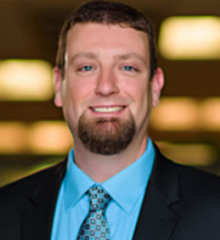
DANIEL McFADDEN Daniel has been with PAR, a leading publisher of psychological assessment materials, for more than 21 years, where he began his career as a Customer Support Specialist I, then led the Technical Support department. Today, as the Director of Customer Support, Daniel is responsible for ensuring that PAR provides unparalleled Customer Service and Technical Support for all the products they sell. His team works to answer every call live, with a goal of delighting every customer in each interaction. Daniel is also an internal Product Champion for PARiConnect, responsible for gathering customer feedback and providing recommendations for improvements and delivering monthly webinars. He has a bachelor’s degree in Psychology and an MBA from the University of South Florida. In mid-June, we had a chance to catch up with Daniel and ask him about his career, about PAR, and about his experiences within the Execs In The Know community. |
EXECS IN THE KNOW (EITK): Daniel, your entire career has been focused on customer support. Can you talk about what drew you to this career path initially and what has kept you so engaged?
DANIEL McFADDEN: I have always been fascinated by the study of the human mind and behavior. My bachelor’s degree was in Psychology, and I fully intended to go for a PhD in Industrial/Organizational Psychology, but I wanted to take a year or two off as a break from school.
There aren’t exactly a ton of job options for someone with a bachelor’s degree in Psychology, but I discovered PAR, which specifically targeted Psychology graduates for entry-level customer support positions. I thought I’d work for a couple years, then go back and get my Doctorate.
Once I started at PAR, I just loved the people and the culture. I instantly recognized it as an organization that truly cared about its employees and would give talented and ambitious people opportunities. In many ways, I’ve come to view customer support as a business application of Psychology. What makes a customer happy or unhappy? What motivates your team members to give their all? That’s all Psychology, and all of it fascinates me!
EITK: Not only did your career start in customer support, it also started with PAR. Can you share a little bit about your role with the company, how it’s evolved over the years, and provide some insight into the culture, especially as it applies to customer service?
DANIEL: Sure. As I mentioned, I started out in our entry level Customer Support position. Over the years, I was promoted to various positions in our Customer Support Team, including Senior Technical Support Specialist. In 2015, I took over as the Manager of our Support team. My current role as Director of Customer Support is oversight of our customer experience, including serving as an internal Champion of our online assessment platform, PARiConnect.
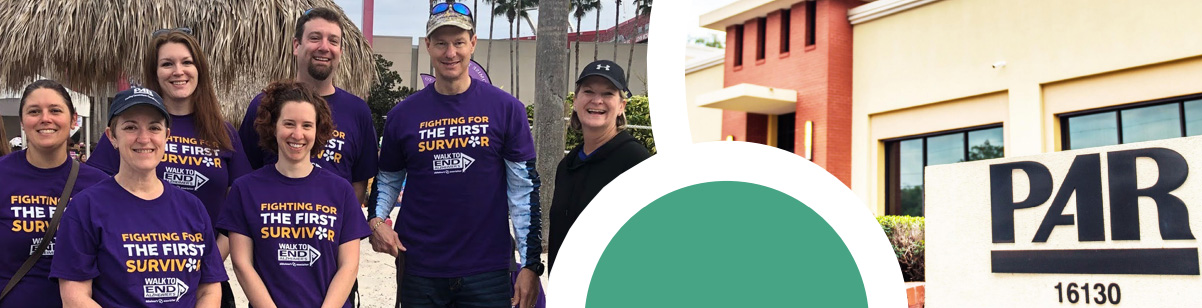
The culture at PAR is really all about working as a team and helping others. In 2021, we completed an ERP system implementation. And, while it was one of the most challenging projects I’ve ever been a part of, every single person on the team was solely focused on working together and solving problems. We are also big on giving back to the community through volunteer events and fundraisers. Our commitment to the community starts at the very top, with the company leadership dedicating significant amounts of their own time and money. Every year, we do a United Way Week event designed to raise money and awareness of the people in our community who need help. Not only is it for a great cause, it’s also
a fantastic team-building event that everyone looks forward to!
EITK: PAR is committed to providing the absolute best Customer Service to its customers, and this is enshrined in one of the Customer Support department’s special mottos: Be a Duck! Can you share what this motto means to you?
 DANIEL: Yes! We adopted the “Be a Duck” motto because even though we’re working our tails off, we want it to look effortless to customers. Ducks seem calm as they glide through water, but underneath, they are paddling furiously. This attitude — to do whatever it takes to make our customers happy — is shared by everyone at PAR. We’ve got a huge collection of rubber ducks in the CS department, as people have started giving us unique ones when they find them!
We really try to cut away as much red tape as possible and just focus on giving the customers what they need. It’s never easy, and requires a lot of training before our new team members are ready to contribute. However, it pays off with our customer satisfaction numbers, which are consistently world-class.
 EITK: Agent experience is just as critical as customer experience. In your experience, what does a great agent experience look like, and what are the most important things to get right?
DANIEL: First and foremost, I think it’s about finding the right fit between the person and the role. It doesn’t matter how well you treat your employees if they’re not a good fit for the role and don’t enjoy working with your customers. Beyond that, we believe strongly in empowering our frontline staff to make decisions. I worked the frontline roles every day for the first 15 years of my career, so I know how frustrating it can be to have a customer who needs help but you’re not able to help them. Having an upset customer and having to always ask for permission to fix their issue (or worse, always escalating those calls to someone else) is so deflating. That’s why our entire staff is empowered (within reason) to do whatever is necessary to make the customer happy.
Once you get past that, I think good communication is crucial. What are your expectations for your team? What is coming down the road that impacts them? What do they need to know to help the customer? Put good people in a position to succeed, and they will. If you’re not giving them enough information, you aren’t putting them in a position to succeed.
Lastly, I think you have to find creative ways to recognize and encourage exceptional work. One way we do this is through our customer feedback tool. Each week at our team meeting, I pull in the top three or four new customer quotes regarding one of our team members, then I have the team vote (names removed to make the voting anonymous) on the “best” quote, with the winner receiving a gift card. There’s something very powerful about seeing customer feedback in their own words rather than just summary data. We have a lot of exceptional people, and they deserve to know how exceptional they are.
EITK: Like many companies, PAR has recently made the shift from 100% work-from-home to a hybrid model. Can you share what that transition has been like … in which ways is it working well, and in which ways could it work better?
DANIEL: I think we’ve found a very solid balance with our current hybrid model. We allow everyone up to two days a week work-from-home (WFH), and then three days in-office. We stagger those days so that we always have some staff in the office, and everyone is required to join on Thursdays, which is when we have our weekly team meeting. This provides the benefits of working from home (Hello, gym shorts and pets!) while allowing us to build strong relationships and trust. It also helps to ensure that our people really get to experience the PAR culture, which is all about the fantastic individuals we have working here. Being connected to that culture and the people helps us dramatically limit turnover. Our average tenure in customer support is over 10 years, and that’s after we lost several team members in the last year.
As far as how it could be better, I think the real question will be, how WFH evolves in the future. As companies move further into WFH, how will that impact culture and relationships? Trust is crucial, and that’s more difficult (but not impossible) to build when you never interact with someone in person.
EITK: When you’re not immersed in creating a better experience for PAR customers and customer service agents, what are some of your personal interests and passions?
DANIEL: I love to travel. I love meeting new people, experiencing new cultures and new foods. I’ve traveled all over Europe and have been to parts of Asia and South America. The pandemic obviously put a damper on that, but we’ve got a trip to Ireland and Scotland planned for later this year!
I’m a huge music lover, too, and enjoy going to concerts when I can. I enjoy movies and video games, really, anything that I’m able to connect with emotionally or to use as a way to connect with friends. I’m also a craft beer nerd and love to visit new breweries when I travel.
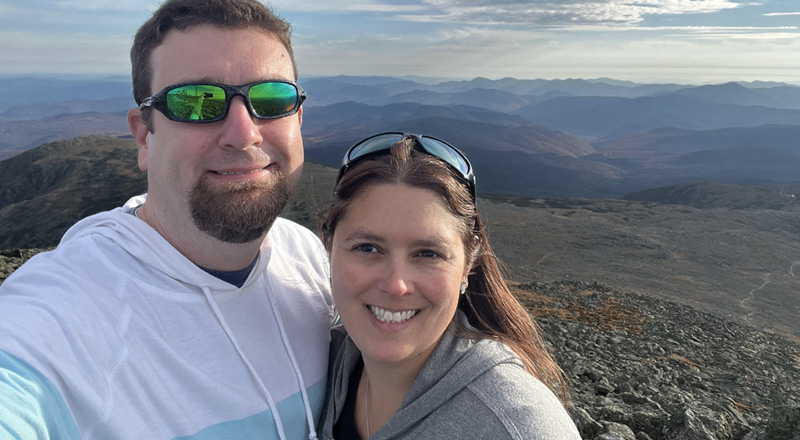
EITK: You became a member of the Know It All (KIA) Community earlier this year. You also attended your first Execs In The Know Customer Response Summit event in March. Can you talk about what the community has meant to you so far, and what the experience in Clearwater, FL was like?
DANIEL: The KIA Community has been amazing so far. For years, I struggled to find effective ways to track industry trends, share and learn new ideas and approaches, etc. The KIA Community does exactly that, allowing for open and honest discussion between thought leaders in all types of industries.
The CRS event in Clearwater was fantastic. It was well organized and brought together a really fun and committed group of people. Everyone was there to share and connect with others, and I really learned a lot!

Thank you to Daniel McFadden, Director, Customer Support at PAR, for his leadership, participation, and insights. To connect with Daniel, or to participate in the wider conversation, consider joining the Execs In The Know “Know It All” (KIA) Community. The KIA Community is a private, online community designed exclusively for CX Leaders at consumer-facing brands. Come learn, share, network, and engage to innovate. LEARN MORE.