
in this issue

BPO Site Insights: Up and Coming BPO Locations Around the Globe
By: Execs In The Know
The landscape of the Business Process Outsourcing (BPO) industry is continuously evolving. India and the Philippines have long been attractive outsourcing destinations for brands, and there is little doubt they will continue to occupy a significant percentage of the BPO sector. The great news for brands is that there are many appealing outsourcing markets, with BPOs expanding their footprint in emerging countries. In this year of change, many companies are revisiting their current strategy and researching potential new markets to service their customers. This article highlights the benefits and challenges of just a few of these BPO markets including Jamaica, Egypt, Nicaragua, and Guatemala. It should be noted, that while we are referring to these as “emerging,” some of these markets have been offering BPO services for many years and all are at different levels of maturity.

JAMAICA:
Jamaica is perhaps the most mature BPO Caribbean country and continues to grow. The market is valued at approximately $450 million with a population of 2.9 million. The industry employs approximately 26,000 English-speaking call center workers and is expected to grow to 50,000-75,000 by 2023. With this market size, growth, and maturity level, there are many benefits, but also some challenges to keep in mind.
BENEFITS:
- Government investment and infrastructure – The Jamaican government recognizes the importance of the BPO industry to their country and continues to support and invest in it. For example, the Inter-American Development Bank (IDB) agreed to lend Jamaica US15 million, which the country will use to develop a pipeline of BPO talent. This is just one of several programs being implemented to continue to invest in growth and talent development.
- Proximity to the U.S. – For U.S. based companies, Jamaica offers a near-shore, convenient location in the Eastern time zone with plenty of flights from major US cities, facilitating ease of management and more involvement as needed.
- English as official language – Having a large workforce with English as the official language offers obvious benefits when supporting English-speaking customers. Additionally, it should be noted that other languages are available including Chinese, Spanish, Portuguese, and Arabic, making Jamaica a bilingual option depending on needs.
- High maturity level – As stated above, Jamaica’s BPO sector has grown quickly (three-fold in the last five years) and is likely the most mature of the Caribbean countries. From a technology, infrastructure and management perspective, this is attractive.
- Skilled talent pool – With more than 26,000 active call center employees and 75,000- 100,000 expected by end of 2023, BPOs (and their clients) have access to a large workforce. Furthermore, if programs are successful in training and developing talent, the pool will only continue to increase.
- Cost savings – It is reported that cost savings can be up to 50% compared to U.S.-based companies, but as noted in the challenges below, these savings may shrink due to rising costs.
CHALLENGES:
- Workforce supply – While there is a large talent pool, that pool could reportedly hit a ceiling in the near future. The country is implementing programs to increase talent supply such as offering a degree in BPO management to nurture and develop talent. The country also recognizes that some foundational skills are missing from high school graduates, so the education system needs to ensure the skills and knowledge required in the industry are taught at an earlier age.
- Rising costs – Compared to some other countries in the region, costs have risen, and wages have increased, potentially reducing the cost benefits realized in prior years. As Jamaica becomes more saturated, other countries have (or will begin to) compete at lower costs, reducing the cost savings potential.
- Management skills – Because of the explosive growth of the BPO industry in the country, the number of managers required has tripled. There is a reported gap in management talent that needs to be addressed, along with the education and training required to address the overall talent pool challenge.

NICAURAGUA
Since first launching in the mid- to late-2000s, Nicaragua is a growing BPO market in Central America, valued at over $150 million with a population of 6.3 million and a labor force of 3.2 million, of which approximately 10,000 are employed by the BPO industry.
BENEFITS:
- Proximity to the U.S. – For U.S.-based companies, Nicaragua is a 2.5-hour flight from most southern U.S. cities and is also in Central time zone, facilitating ease of management and oversight.
- Affinity for the U.S. – The country has long had economic ties and a cultural affinity with the U.S., making it an attractive option for many BPO companies looking to expand their footprint.
- Bilingual capabilities – Spanish is the official language, but English capabilities have been growing. Investment to accelerate capabilities is a constant.
- Young and educated talent pool – Seventy-six percent of the labor pool are under 40 years old and digitally/technically savvy. According to reports, there is a large pool of under-utilized, highly educated people coming out of universities, and highly motivated for a career in the BPO industry.
- Local leadership – For many years, sites were managed by expatriates, but now the original agents have been mentored and trained to take the reins. Knowing the local culture, wages, attrition, and trends allows for a much shorter cultural learning curve.
- Cost savings – It is reported that cost savings can be up to 40-60% compared to U.S.-based companies.
CHALLENGES:
- Civil unrest at times – For example, in 2018, violent protests against the president created a level of unrest and instability that was reportedly the worst it had been in decades. This created issues (both real and perceived) for the BPO industry, specifically with regards to transportation and safety of workers. As with some other countries in Central America, there are travel advisories at times, but that is also the case with many countries from time to time.
- Experience levels – While the young age of the workforce has its benefits, there are also challenges that come with that. As staff are promoted to leadership positions, they have little previous experience in management or in representing brands, so extensive leadership training is required.
- English and technology education are lagging – There are reports that English education levels are lagging, so more investment into bilingual programs at schools are needed. Additionally, while customer service skills are a strength, some believe that more technical skills are needed to provide more value to clients.

EGYPT
Egypt has established its position as a popular and fast-growing BPO destination with a projected IT and BPO workforce of 240,000 in 2020. Customer care call center agents are estimated to be approximately 95,000. The International Data Corporation projects that Egypt’s information and communication technologies exports, which include BPO and knowledge process outsourcing, will expand to $4.7 billion in 2020. In 2018, Egypt provided BPO services to approximately 100 countries in 20 languages.
BENEFITS:
- Government investment in telecommunications and technology – The Egyptian government has invested heavily in upgrading the country’s telecommunications network for the implementation of 5G commercial services, resulting in efficient connectivity with more than 60 countries. Government investment has also supported the focus to develop services related to artificial intelligence (AI), the internet of things, and big data. For those aggressively pursuing digital transformation, Egypt is an attractive option.
- Young, educated, and tech savvy talent pool – It is reported that more than 500,000 students graduate annually from the country’s 35 universities and 100 technical institutes, and almost half of these graduates pursue their studies in a field related to the BPO. Government and educational institutes have been focused on creating a sustainable and growing talent pool in information technology, BPO, and knowledge process outsourcing. With a population of 98,000,000 there is little risk in a saturated talent pool.
- Bilingual capabilities – Egyptian students are increasingly multilingual with most speaking English and a growing number have skills in French, German, Italian, Spanish, and Arabic.
- Location – Egypt is uniquely located between Europe, the Middle East, and Africa. This makes it an appealing location depending on customer location and coverage needs. From an accessibility standpoint, Cairo
is much closer to key U.S. and European locations than some competing markets, in some cases by more than 10 hours. - Cost savings – BPOs in Egypt offer up to 40%cost savings compared to U.S. English call centers. Per a recent pricing study (2018) by Ryan Strategic Advisory, Egypt is roughly on par with India and the Philippines for inbound voice care, while lower than other North African and European nearshore destinations. It also remains notably lower than key demand markets including the U.K. and North America.
CHALLENGES:
- Location – While Egypt may be an attractive location for many reasons, it may also represent a challenge depending on specific circumstances. Obviously, it is geographically further from the U.S. than other nearshore options, but closer than other competing offshore options.
- Transportation infrastructure – Egypt’s transportation infrastructure is a current priority for the government, specifically related to refurbishing roads, ports, and railways. Reportedly, private sector partners are also involved, as outlined in the Transport Master Plan, which details plans for improvement through 2027.
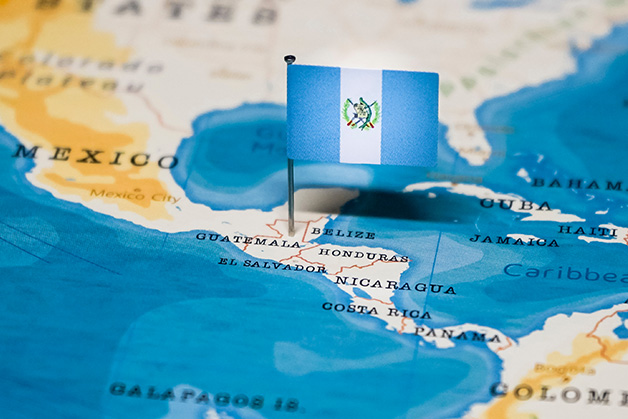
GUATEMALA
Guatemala has a population of 17 million and the largest student population in Central America. The BPO industry employs approximately 42,000 workers and is valued at $700 million.
BENEFITS:
- Proximity to the U.S. – For U.S. based companies, Guatemala is a short three-hour flight from many southern U.S. cities and is also in the Central time zone.
- Affinity for the U.S. – Similar to Nicaragua, the country has long had economic ties and cultural affinity with the U.S., making it an attractive option for many BPO companies expanding their footprint.
- Bilingual capabilities – Neutral accent Spanish and English capabilities, with government and business focus on developing English skills with courses available through private institutions, public universities, and Guatemala Institute for Technical Training.
- Young and educated talent pool – With the largest workforce in Central America, 70% of the population are under 30 years old. There are 15 universities with more than 170,000 enrolled students. Call center agents are highly educated and mostly bilingual.
- Cost savings – It is reported that cost savings can be up to 50% compared to U.S.-based companies.
CHALLENGES:
- High crime rates – Guatemala has one of the highest violent crime rates in Latin America. Some reports indicate that there are issues with police understaffing and corruption, and at times travel advisories exist for travel to the country. But the fact remains that the country is growing in popularity as a desirable market for many BPO companies and one should do their own research as to not rely solely on media reports.
- English fluency – Although bilingual, the level of fluency may not be where BPOs might want it. However, as noted above, there is investment and focus on this area to improve and advance fluency languages. English proficiency may not yet be as high as other regions.
A Good Time to Research Your Options
The Americas, Asia, and Europe all offer unique options for outsourcing needs. This is just a snapshot of a few countries you may be considering, with some commonalities and as well as unique differences. As always, the market you choose to support your business is based on many factors, cost being only one of those. Security/data privacy, technology, work-from-home capabilities, business continuity planning, flexibility, attrition, talent pool, language capabilities, performance, channel support, transportation, safety, and management strengths are all critical factors to consider in your decision-making process for the market you choose and your specific provider. Additionally, as emerging BPO markets continue to grow in popularity, some challenges exist just as they do in any market, such as risk of labor pool saturation, costs, and travel/in-country safety. But with so many emerging markets, it is a good time to do the research and identify potential opportunities that will best meet your customer experience needs.

Looking for additional BPO site ideas? Check out this recent Execs In The Know blog post with bonus coverage of Colombia.