
in this issue

Agent-Facing AI: Strategic Deployment in CX Operations
Discover how organizations use agent-facing AI to enhance efficiency, reduce risk, and build a strong foundation for future customer-facing AI deployments.
by Execs In The Know
As a customer experience (CX) leader, you’re no stranger to the transformative potential of artificial intelligence (AI). Our industry is evolving at breakneck speed, with AI at its core, driving efficiency and innovation. However, in the race to adopt AI, one thing is becoming increasingly clear — brands are being thoughtful and cautious even about how and where they deploy AI. While AI’s role in customer-facing applications continues to grow, most companies are opting first to prioritize agent-facing AI to minimize risk, refine systems, and build a solid foundation for future growth.
This measured, pragmatic approach is strategic. Agent-facing AI allows companies to crawl, walk, and eventually run with AI, ensuring that they’re building effective and scalable capabilities. This article will explore why brands start with agent-facing AI, the key trends shaping this space, what brands are doing, and how you can leverage AI to drive meaningful organizational change. We’ll also touch on what’s next for AI and how brands can evolve from agent-facing to customer-facing tools, all while offering actionable insights for immediate application.
Why Agent-Facing AI First?
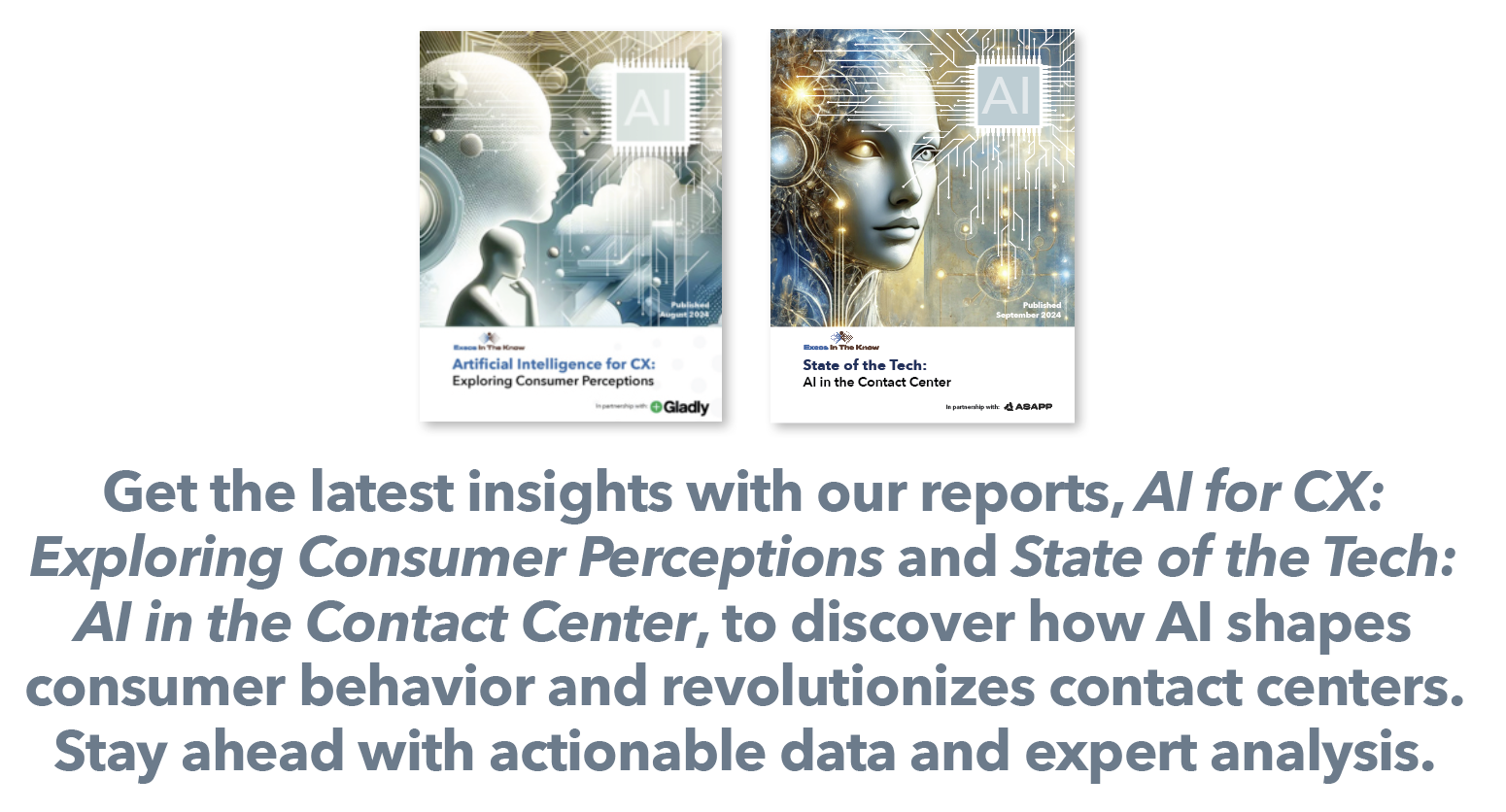
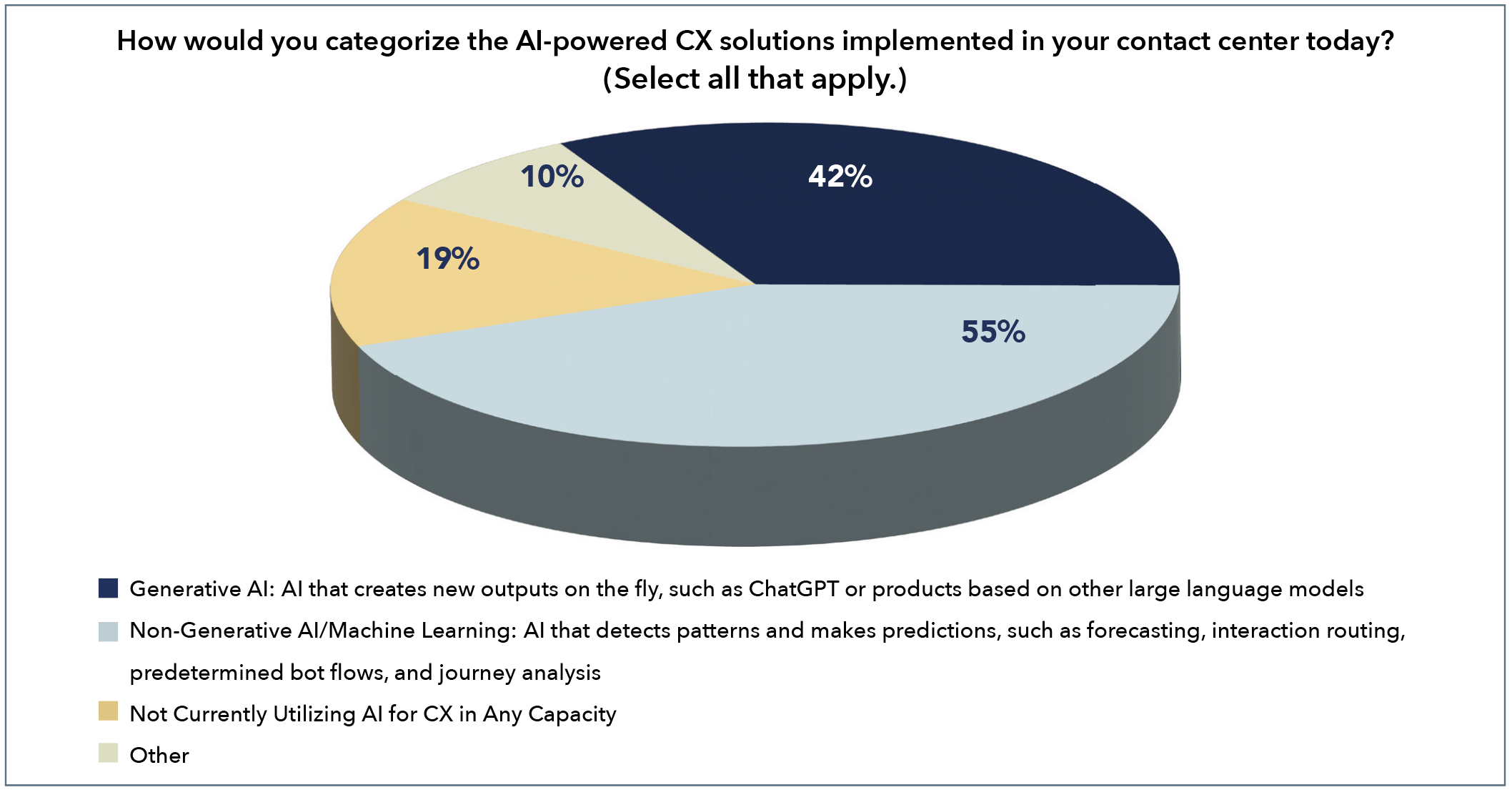
According to our State of the Tech: AI in the Contact Center1 report in partnership with ASAPP, 42 percent of organizations are using generative AI (GenAI) for agent support, while only 29 percent are applying it to customer-facing scenarios. Are you part of the growing 42 percent already using GenAI to support your agents?
The decision to prioritize agent-facing AI is intentional and strategic. Deploying AI solutions that support agents before customer-facing interactions offers several advantages, with risk management being one of the most significant. Any misstep with customer-facing AI can directly harm the customer experience, eroding trust and damaging your brand’s reputation. Seventy-one percent of CX leaders we surveyed plan to continue focusing on agent-facing AI in the next 12–24 months due to the higher risk of deploying AI in customer-facing roles.
The absence of emotional intelligence in AI limits its ability to manage certain types of transactions that require empathy and nuanced human understanding. By starting internally, brands can test AI’s capabilities, gather feedback, and refine their systems in a controlled environment. Agent-facing AI allows for errors to be caught and corrected before they reach the customer, providing a safer testing environment.
 Build Feedback Loops for AI Development
To further mitigate risks, it’s essential to create strong feedback loops between your AI systems and internal teams. This allows for continuous improvement, ensuring that issues are addressed early. Regular testing and iteration prepare AI systems for customer-facing applications, giving brands the confidence that their AI tools are ready for prime time — refined, trustworthy, and effective from the start.
The Value Chain in the AI Conversation: Crawl, Walk, Run
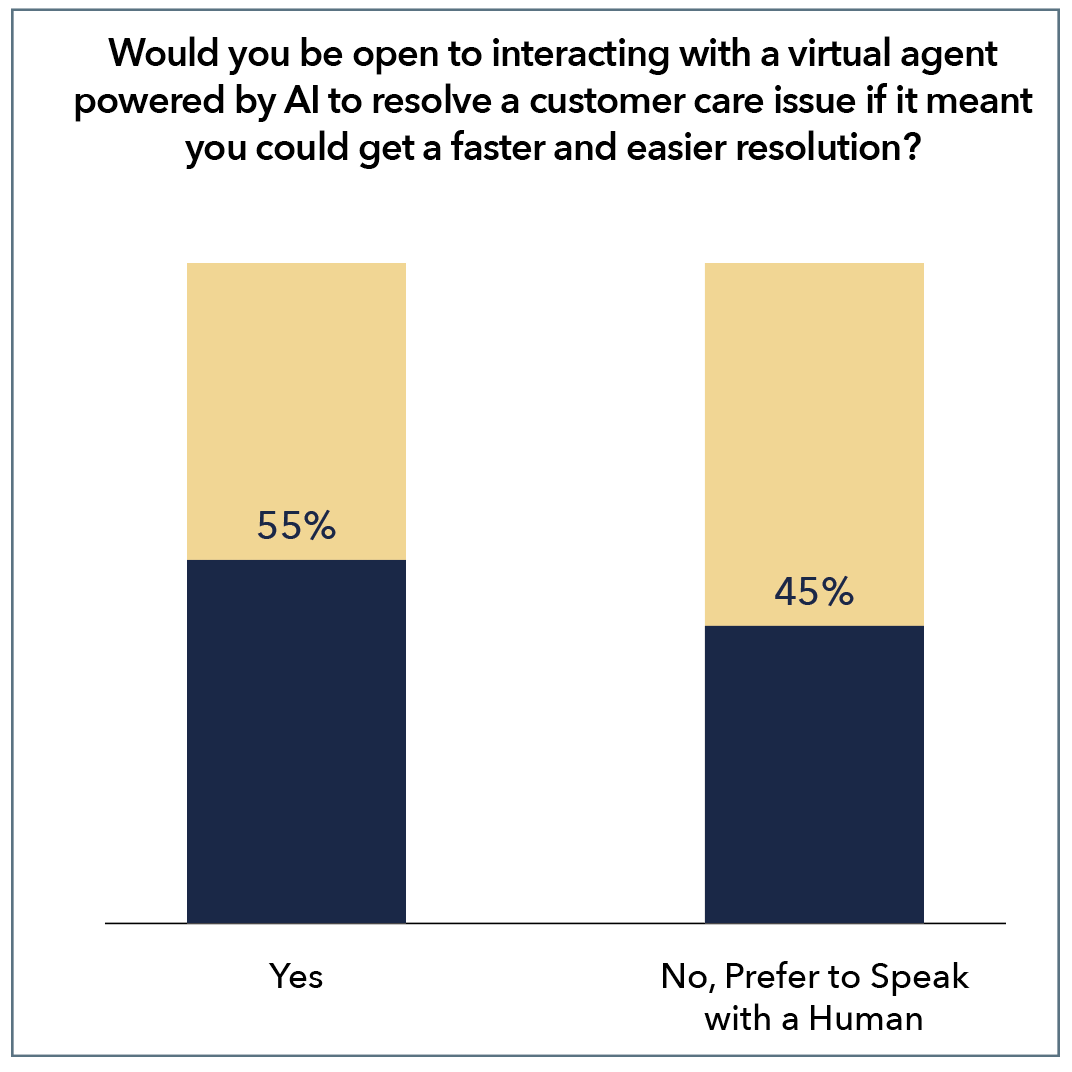
AI’s role in the CX value chain is evolving, but it typically starts with handling foundational tasks — order-taking, gathering insights, and problem identification — before moving on to more complex functions. Many companies are adopting a crawl, walk, run, or start small and scale gradually approach to AI deployment. In our Artificial Intelligence for CX: Exploring Consumer Perceptions report in partnership with Gladly, fifty-five percent of consumers are open to AI-powered interactions for quicker resolution but still prioritize accuracy.2
Integrating AI tools can streamline workflows by handling basic tasks like gathering insights, automating routine administrative functions, or providing support to agents. Focus on areas where AI can enhance efficiency without exposing the company to high risks. By starting with simple tasks, AI is allowed to prove its value in controlled environments before being scaled to handle more complex customer interactions.
The progression from basic automation to real-time decision-making support is where AI can start delivering true value. For instance, after successfully deploying AI for data entry and order processing, the next step is to use it for proactive problem-solving — identifying potential issues in real time and providing solutions before they escalate.
Prioritize AI for Order Processing and Error Detection
Start by deploying AI in roles that are less visible to customers but critical to internal operations. Order processing, data gathering, and error detection are excellent places to begin. Once the AI demonstrates its value in these areas, you can move on to more visible applications like customer interaction support or issue resolution.
 Start with AI for Real-Time Assistance
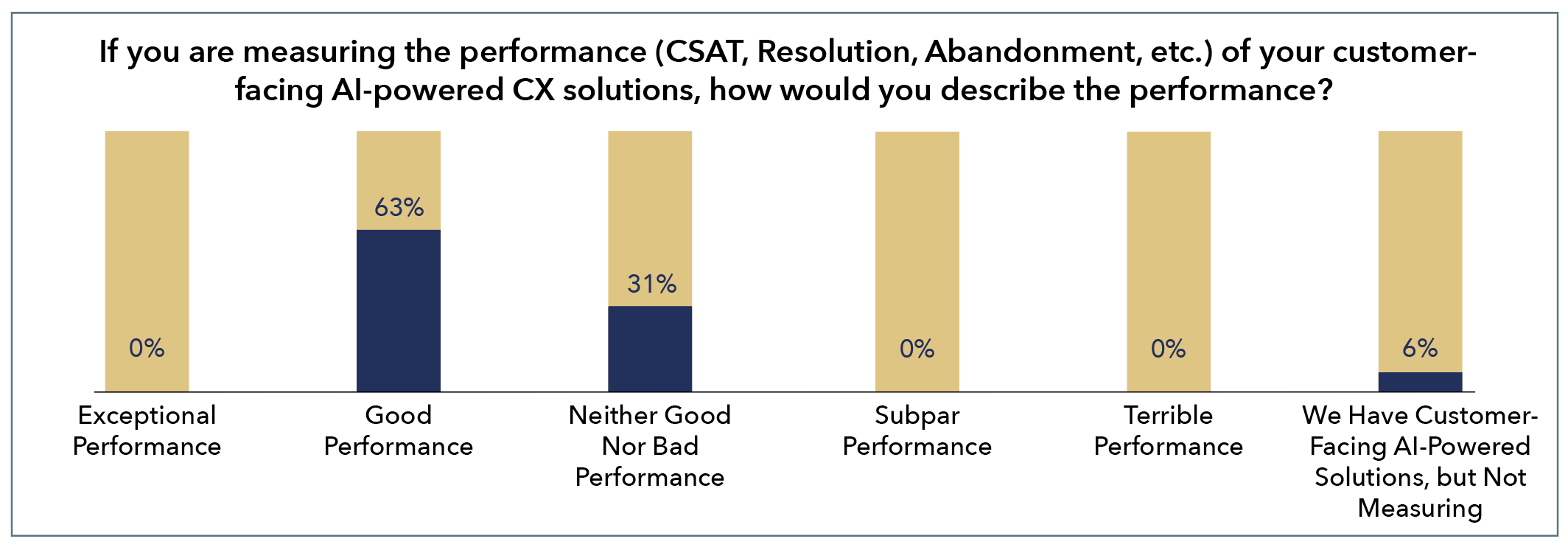
For CX leaders looking to improve agent productivity, you can implement AI tools that assist with real-time support. Sixty-three percent of organizations found AI has improved agent workflows,3 suggesting real-time guidance enhances performance. GenAI, such as natural language processing (NLP) tools, has become increasingly popular in agent-facing applications. These tools can help agents craft responses, identify customer sentiment, and predict the next steps in the conversation. AI-driven tools that support agents result in faster problem resolution and improved operational efficiency.4
Not only will this enhance your team’s efficiency, but it will also ensure that they are better equipped to handle more complex, high-stakes customer issues.
AI as a Performance Enhancer, Not a Replacement
One of the primary roles of agent-facing AI is to enhance human performance, not replace it. AI tools can augment an agent’s capabilities by providing real-time knowledge, suggesting solutions, and offering guidance based on historical data. This reduces the cognitive load on agents, allowing them to focus on more nuanced and complex customer interactions.
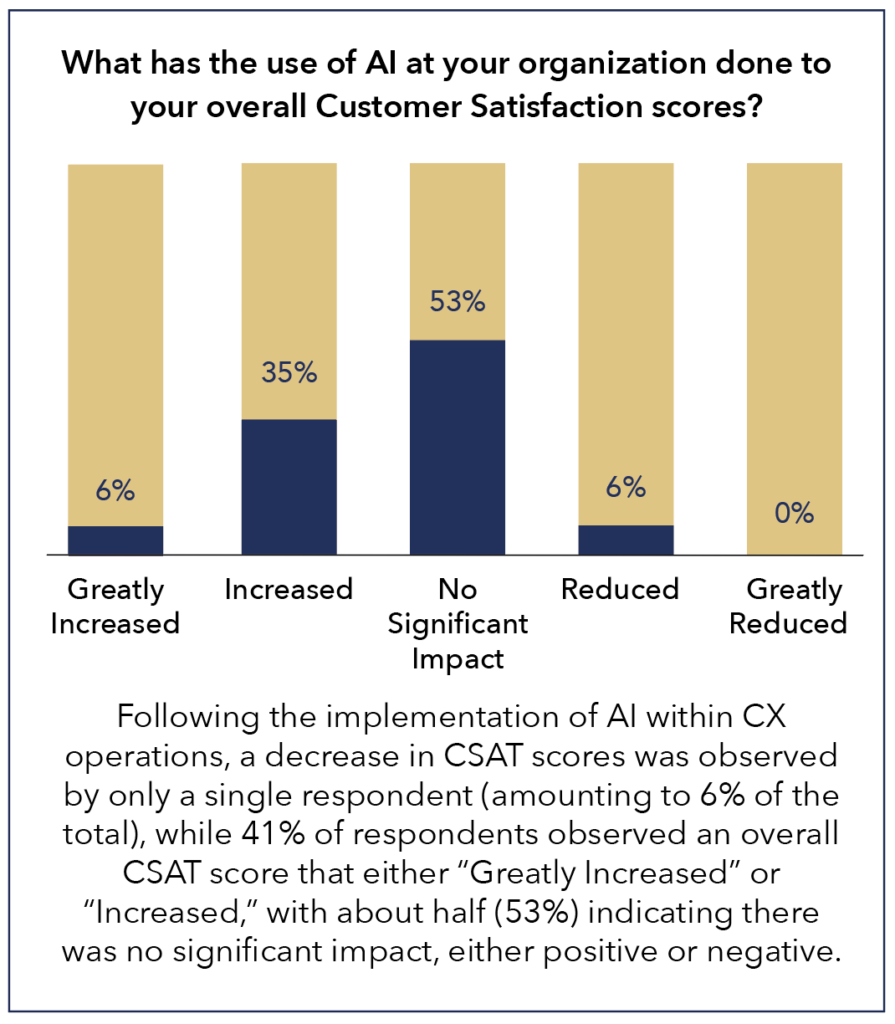
For example, many companies use AI to automatically populate customer details, gather relevant case history, and suggest the next best action. This ensures that agents are better prepared to handle customer requests quickly and accurately, improving both agent performance and customer satisfaction.
 Reducing Agent Cognitive Load
AI isn’t just about efficiency — it’s about creating a better work environment for agents. AI reduces the mental strain on agents by taking on mundane tasks such as data entry, ticket creation, and routine troubleshooting. This allows them to focus on more strategic aspects of their role, leading to improved job satisfaction and, by extension, better customer interactions. Forty-five percent of consumers5 still prefer interacting with human agents over AI, even if AI offers speed. This reinforces the idea that agent-facing AI should complement agents by handling routine tasks.
Once these systems are fine-tuned and your team is confident in their capabilities, you can expand their use to more complex functions, potentially involving customer interactions.
What Brands Are Doing with Agent-Facing AI
Brands across various industries leverage these tools to streamline operations and enhance the customer experience. Below are a few examples of how top companies are deploying agent-facing AI to great effect.
GoodLeap is an excellent example of how AI can transform internal operations. Their AI assistant, Gabby, acts as a co-pilot for agents, offering real-time access to SOPs, training materials, and policy documents. This tool enables agents to find information within seconds, reducing time spent on searches and allowing them to focus on solving customer problems. As Paul Brandt, Chief Experience Officer at GoodLeap mentioned, this tool has significantly improved agent satisfaction and performance.6
Similarly, BODi launched its AI tool, which deflects 36 percent of initial contact requests to the AI bot, allowing human agents to focus on more complex inquiries.7 This tool improved operational efficiency and provided valuable insights into common customer issues, which helped BODi refine its knowledge base and further optimize its AI capabilities.
Empowering Frontline Employees
AI is increasingly viewed as a powerful tool for enhancing customer and employee experiences. From 2023-2024, the perception of AI shifted from a potential threat to an enabler for frontline workers. Forty-two percent of organizations8 use GenAI to support agents, leading to faster problem resolution and improved efficiency.
Organizations are leveraging AI to provide real-time assistance, deliver one-on-one coaching, and conduct group training, thus boosting employee engagement and improving customer outcomes. For example, 46 percent of organizations use AI to provide real-time guidance during customer interactions.9
 Streamlining Agent Workflows
AI is transforming customer service teams by automating routine tasks and allowing human agents to focus on complex, expertise-based work. Human agents can now seamlessly take over conversations from AI agents,10 with full context on the customer and issue at hand, without requiring the customer to repeat themselves. This integration accelerates resolution times and improves satisfaction.
Enhancing Productivity
AI technology supports employee productivity by offering suggestions, automating ticket management, and optimizing help center operations. For instance, Zendesk AI copilots assist human agents by merging similar tickets and managing intelligent routing,11 thereby boosting operational efficiency.
Shift Toward AI-Driven Quality Assurance
Nearly two in five organizations (39 percent)12 have adopted AI to provide unbiased scoring of agent performance during customer interactions. This allows for more objective employee performance assessments and helps tailor training to improve specific areas of need.
 Benchmark Your AI Strategy
Benchmark your AI strategy against other industry leaders to stay ahead of the curve. Look at what top brands do with agent-facing AI and assess how your organization can incorporate similar tools. Track key performance indicators (KPIs) such as deflection rates, agent satisfaction, and time-to-resolution to measure the success of your AI initiatives.
What’s Next for AI in CX?
AI will continue to play a pivotal role in transforming the workplace. As AI technology advances, we can expect to see a shift from primarily agent-facing tools to broader customer-facing applications. However, this transition will require significant improvements in AI’s ability to handle complex customer needs, especially in areas that require empathy and emotional intelligence.
As AI becomes more sophisticated, brands can deploy it across multiple customer touch points, creating seamless omnichannel experiences where AI supports agents and customers in real-time. According to Zendesk,13 over the next three years, agents will need to become more comfortable using AI, as they will depend on it for faster, more personalized resolutions.
Unified Workspaces: AI will enable streamlined work environments where agents can handle all tasks from a single, unified interface. This will significantly reduce the need for agents to juggle multiple tools or tabs, improving both productivity and efficiency.
GenAI’s Expanding Role: AI is expected to revolutionize customer service by handling an increasing volume of interactions. Eighty percent of all interactions will be resolved by AI within the next three years. This shift will free up human agents to handle more complex issues, allowing businesses to scale efficiently without increasing staffing levels.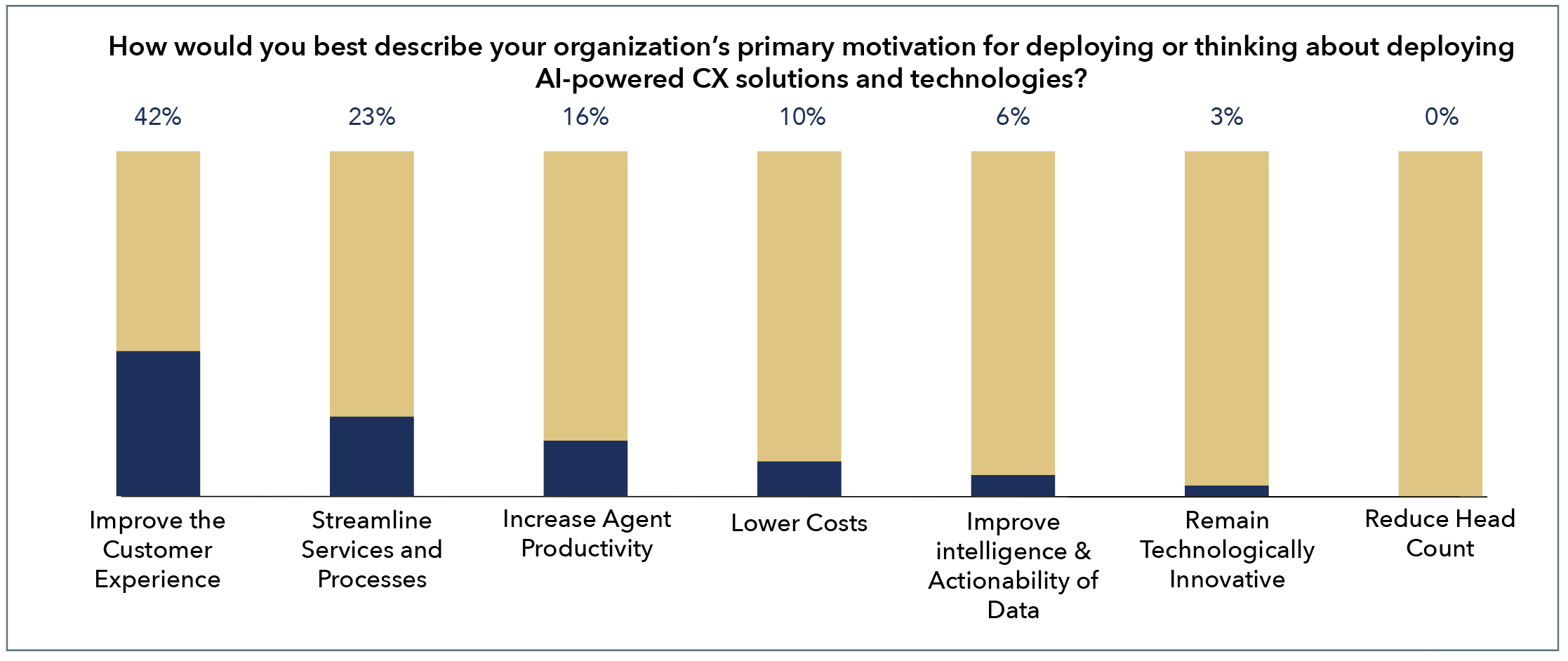
Personalization and Proactive Engagement: AI will continue to drive personalized and proactive customer engagement by leveraging real-time data to anticipate customer needs. GenAI will enhance self-service options, enabling AI agents to deliver accurate, real-time solutions across multiple channels, such as chat, voice, and visual content.
Align AI Tools with Long-Term CX Goals
As you prepare for the next wave of AI, ensure that your tools align with immediate operational needs and long-term CX goals. Focus on AI solutions that can grow with your organization, scaling from internal support to customer-facing applications. Partnering with companies that you trust and have a proven history is essential, as you want to work with people who can help you navigate growth, learning, and change. This will ensure your AI deployment is not only future-proof but also flexible enough to adapt to evolving customer expectations.
A Path Forward
For CX leaders, the journey to AI adoption starts with strategic deployment. By focusing first on agent-facing AI, you mitigate risk, improve operational efficiency, and build a solid foundation for the future. This approach gives your teams the tools to succeed in a controlled environment where mistakes can be corrected before they impact customers. It also provides a valuable feedback loop that allows you to fine-tune your AI systems before rolling them out to a broader audience.
As you move from crawling to walking and eventually to running, remember that the goal is not just to adopt AI for the sake of technology, but to enhance both customer experience and operational outcomes. Start by integrating AI in critical but low-risk areas, such as order processing, agent support, and data gathering. From there, expand AI’s role gradually, ensuring that it aligns with your broader CX goals.
 The Future of AI with a Customer-Centric Approach
Looking ahead, AI will undoubtedly become a cornerstone of customer experience strategies. However, it’s crucial to maintain a customer-centric approach as you evolve your AI capabilities. AI can be a powerful tool, but its success ultimately hinges on how well it complements human intelligence and empathy.
By preparing now, you position your organization at the forefront of AI-driven innovation, ready to deliver meaningful, personalized experiences that strengthen customer loyalty and set your brand apart. The journey may be incremental, but the long-term benefits of a well-executed AI strategy are clear. Stay focused on delivering value at every stage, and you’ll keep pace with AI advancements and take charge of transforming the customer experience for the future.
AI is the future. But we must take a deliberate and thoughtful approach to get there successfully. Start with agent-facing AI, refine, test, and optimize, and only then will you be ready to unlock its full potential for customer-facing applications. By doing so, your organization will walk, then run, into a future where AI plays a pivotal role in delivering exceptional CX.
Links
- https://execsintheknow.com/state-of-the-tech-ai-in-the-contact-center/
- https://execsintheknow.com/artificial-intelligence-for-cx-exploring-consumer-perceptions/
- https://execsintheknow.com/state-of-the-tech-ai-in-the-contact-center/
- https://execsintheknow.com/state-of-the-tech-ai-in-the-contact-center/
- https://execsintheknow.com/artificial-intelligence-for-cx-exploring-consumer-perceptions/
- https://execsintheknow.com/state-of-the-tech-ai-in-the-contact-center/
- https://execsintheknow.com/artificial-intelligence-for-cx-exploring-consumer-perceptions/
- https://execsintheknow.com/state-of-the-tech-ai-in-the-contact-center/
- https://learning.callminer.com/c/whitepaper-us-cx-landscape-24
- https://cxtrends.zendesk.com/reports/the-future-of-cx
- https://www.zendesk.com/blog/employee-experience-trends-report/
- https://learning.callminer.com/c/whitepaper-us-cx-landscape-24?x=CFl8z6&lx=amFxJO
- https://cxtrends.zendesk.com/reports/the-future-of-cx