
in this issue
Inside the CHEP U.S. CX Vision: Predictive Service, Circularity, and Customer Value
Discover how CHEP blends predictive insights, circularity, and visibility to deliver smarter, more resilient supply chain experiences.
 |
James Glover Vice President, Customer Experience and Quality, CHEP U.S.  |
In today’s increasingly complex supply chain landscape, customer experience has become as critical as operational efficiency. Few leaders sit at that intersection more clearly than James Glover, Vice President of Customer Experience and Quality at CHEP U.S., the largest global share, repair, and reuse network of pallets and containers.
With over two decades of experience across functions in CHEP U.S., James has played a key part in supporting the organization’s evolution, expanding from a pooled platform provider and logistics partner to a strategic enabler of visibility, sustainability, and data-driven decision-making. His perspective reflects not just the mechanics of a global supply network, but the human and operational nuances required to deliver experiences that feel effortless, transparent, and genuinely value-adding.
In this KIA Spotlight, James shares what it takes to build customer journeys that are predictive rather than reactive, the metrics that matter in a network where goods move constantly, and how sustainability and circularity are reshaping expectations across the industry. From harmonized data foundations to AI-driven insights and the growing importance of human-centered design, his reflections offer a blueprint for CX leaders navigating rapid change. Whether you’re in logistics, manufacturing, retail, or any data-rich operation, this conversation sheds light on what it looks like to deliver smarter, more resilient, and customer-first supply chain experiences.

Execs In The Know (EITK): As Vice President of Customer Experience & Quality at CHEP U.S., how do you define a “best-in-class” customer journey in the supply chain space?
James: I wholeheartedly believe a best-in-class journey should be effortless, transparent, and value-driven. In my role at CHEP, this means designing systems and processes that truly put our customers first, delivering the end-to-end visibility and real-time insights they expect. These capabilities enable faster, smarter decisions and help us move beyond transactions to build trusted partnerships. And this approach aligns with the industry’s shift toward connected, circular supply networks, where data-driven collaboration reduces waste and drives efficiency at every stage.
 EITK: What KPIs or outcomes matter most when evaluating the impact of CX in such a complex, global logistics network?
James: Customer experience is a multi-faceted journey. While traditional measures like NPS and satisfaction scores are essential, they only tell part of the story. From my experience in B2B logistics and with pooled platform programs, it’s important to pair these metrics with operational measures such as DIFOT (delivered in full, on time) and CIFOT (collected in full, on time). Together, these insights give a more complete view of how well we’re supporting customers and how efficiently goods are moving through the network.
Going the extra mile means looking beyond service and delivery metrics to include sustainability outcomes, like emissions reduction and waste elimination. These measures also build future-readiness, as efficiency and environmental impact become increasingly inseparable in today’s supply chains. In this way, we help contribute to our customers’ goals of staying competitive and resilient in a changing market.
EITK: You’ve led the CHEP movement toward predictive service. What lessons have you learned about anticipating customer needs before they arise?
James: The strength of your data can either enable or impede progress, and we’re fortunate to have a strong foundation. What we’ve discovered along the way is that predictive service works best when systems are connected and consistent (unified), as well as when the same methodology is used across platforms (harmonized). When everyone works from the same playbook and shares a single version of the truth, projections become far more accurate and reliable.
We’ve worked hard to build and continuously improve these strong data fundamentals. Now, we’re exploring predictive tools that can identify potential needs early, such as inventory fluctuations or temperature changes in cold chains, so customers can act quickly and confidently. Looking beyond CHEP, I see these tools positively impacting the future of supply chains, where data helps prevent disruptions rather than simply respond to them
EITK: CHEP helps global CPG and retail leaders deliver goods seamlessly across the supply network. How do you ensure customers feel the total value of CHEP’s services beyond the pallet?
James: CHEP is in the unique position of having end-to-end supply chain visibility because of the nature of our circular business model. It allows us to identify inefficiencies, uncover opportunities and foster collaboration both within and beyond our customers’ networks — seeing every touch point from field to retail shelf.
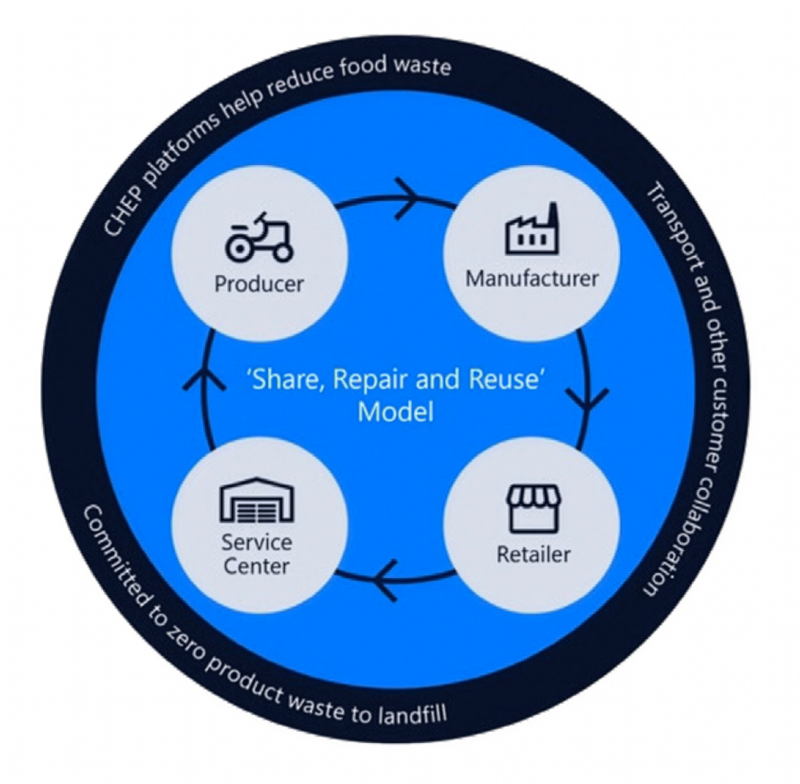
The real magic happens when we turn those insights into action. Whether it’s eliminating empty miles through optimized transport solutions or strengthening resilience with data-driven intelligence, we deliver measurable value that goes far beyond our shipping platforms. Ultimately, our goal is to help customers achieve cost savings, environmental gains and operational excellence in various ways that make their supply chain smarter and more connected.
EITK: CHEP leads the way in sustainable pooling solutions. How do sustainability and circularity shape CX today?
James: Sustainability and circularity are reshaping customer experience by influencing how companies build trust and deliver value.
In the U.S., our model fosters engagement beyond a single transaction through ongoing data transparency, collaborative solutions and measurable impacts that align with customers’ ESG priorities. By embedding sustainability into nearly every touch point of a customer’s journey, we help them reduce waste, optimize costs and share personalized, verified results that elevate their brand. This approach moves sustainability from a compliance checkbox to a powerful driver of loyalty and long-term partnership.
EITK: From FMCG to retail to manufacturing, your customers are navigating rapid change and evolving expectations. Where do you see the greatest opportunities for innovation in the supply chain CX?
James: One of the biggest opportunities lies in increasing supply chain visibility. Disruptions often happen because something goes unnoticed, like temperature fluctuations in
a cold chain. By leveraging data from smart devices, we can detect issues early and help customers act fast. For example, monitoring temperature and dwell time for fresh produce can prevent spoilage, reducing unsaleables and food waste. These advancements turn data-driven insights into meaningful action, making supply chains more resilient and efficient.
EITK: How do you see AI and automation transforming supply chain CX in the next 3–5 years, and how is CHEP preparing for that shift?
James: AI and automation will make supply chains smarter, faster and more connected than ever before. These innovative solutions enable real-time visibility, predictive insights and streamlined workflows, reducing manual steps and helping organizations make informed decisions more quickly. Beyond speed, AI can support better forecasting and personalization, while automation enhances consistency and safety across operations.
This combination of technologies really positions supply chains to move from manual—and often siloed processes to fully integrated and intelligent networks.
At CHEP, we’re exploring these technologies through pilots and partnerships, while strengthening fundamentals like data integrity and harmonization. Like any business, our efforts aim to make insights reliable and scalable long-term.
EITK: What advice would you give other CX leaders about striking the right balance between digital transformation and maintaining human-centered service?
James: I encourage other CX leaders to think in terms of ‘both,’ not ‘either / or.’ Some customers want self-service tools, while others value a phone call or face-to-face support, so it’s important to consider their preferences and meet them where they are. At the end of the day, digital tools should make things easier and support a human-centered program. The best approach combines automation with empathy, so technology handles routine tasks while people focus on what matters most: building trust, solving complex issues and strengthening relationships.
EITK: What core values or principles guide you when leading teams through change and transformation?
James: I remind myself and my teams that change can feel uncertain, so it’s important to explain why it’s happening and what the benefits are. Keeping communication open and consistent builds trust and helps everyone feel part of the process. Plus, similar to customer experience, relationships are key. By creating a space for dialogue and encouraging collaboration, teams can feel more supported and connected during transformational periods.
EITK: When you step away from supply chains and customer strategy, what passions or hobbies help recharge your creativity and leadership?
James: Creativity often comes from stepping away from the desk. For me, that means sport fishing to clear my mind, reset and give myself space to think differently. Recently, I’ve also started learning dance styles like salsa and bachata. It’s a challenge, but it reminds me that growth often starts with trying something new and stepping outside of your comfort zone. Both activities teach patience and adaptability, which are useful in leadership, too.
EITK: Can you share the best customer experience you’ve ever had as a customer yourself, and what made it stand out?
James: One experience that really stood out was with a subscription apparel company. They noticed my sizing needs were changing and proactively adjusted my orders without extra cost. Even better, they followed up monthly to check in. That level of personalization and proactive care was impressive. It reinforces that great customer experience isn’t just about fixing problems; it’s about anticipating needs and making customers feel genuinely valued.
 Thank you to James for his leadership, participation, and insights. To connect with James or participate in the wider conversation, consider joining the Execs In The Know “Know It All” (KIA) Community. The KIA Community is a private, online community designed exclusively for CX Leaders at consumer-facing brands. Come learn, share, network, and engage to innovate.Want to learn more about the KIA online community? Click here. Interested in taking part in a future KIA Spotlight feature and sharing your story? Visit our Get Involved page. |