
in this issue

Are Legacy Systems CX’s Biggest Roadblock?
Innovating beyond legacy systems creates new opportunities for customer experience excellence.
by Execs In The Know
In today’s hyper-connected world, customers expect seamless interaction with brands, whether they’re reaching out through social media, live chat, or a phone call. But behind the scenes, many brands are struggling with the very systems designed to support these interactions. Instead of agility and efficiency, outdated technology forces agents to wrestle with slow-loading screens, fragmented customer data, and rigid workflows that can’t keep up with evolving expectations.
 Picture this: A customer dials into a support line, frustrated after multiple failed attempts to resolve an issue online. They’re transferred three times, forced to repeat their information at every stop. The agent on the other end, well-intentioned but handcuffed by an outdated interface, struggles to piece together the customer’s history. By the time the issue is resolved (if it even is), frustration has soured what could have been a seamless interaction.
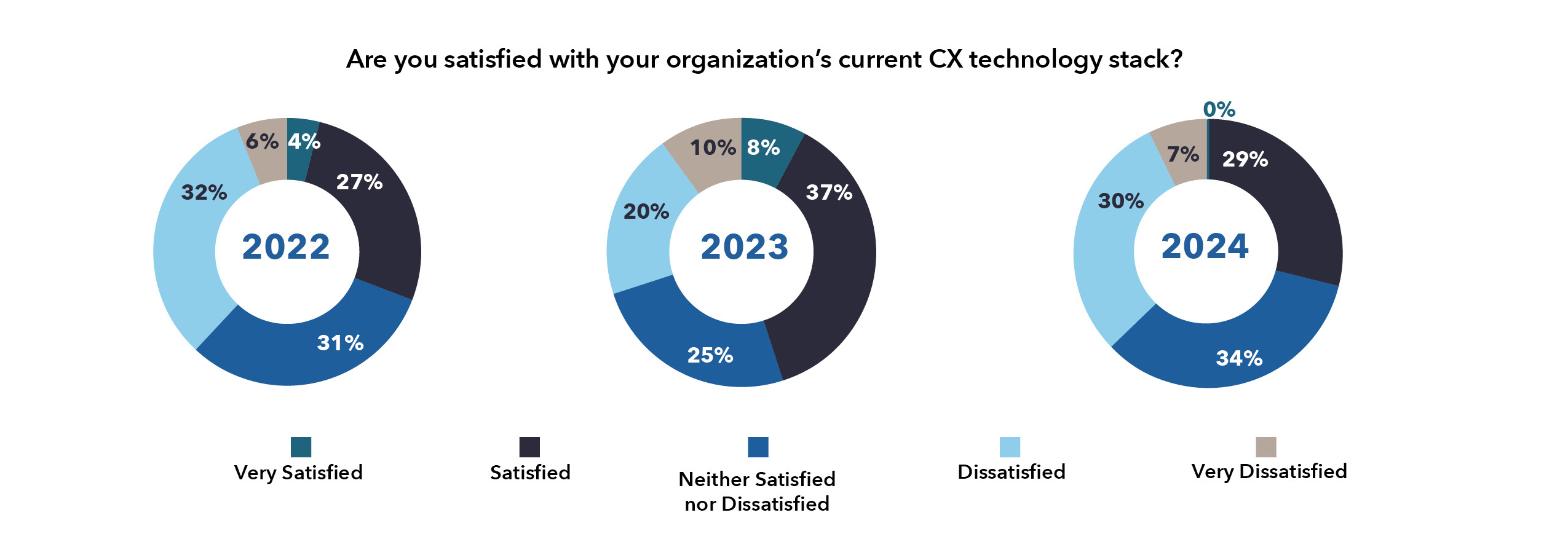
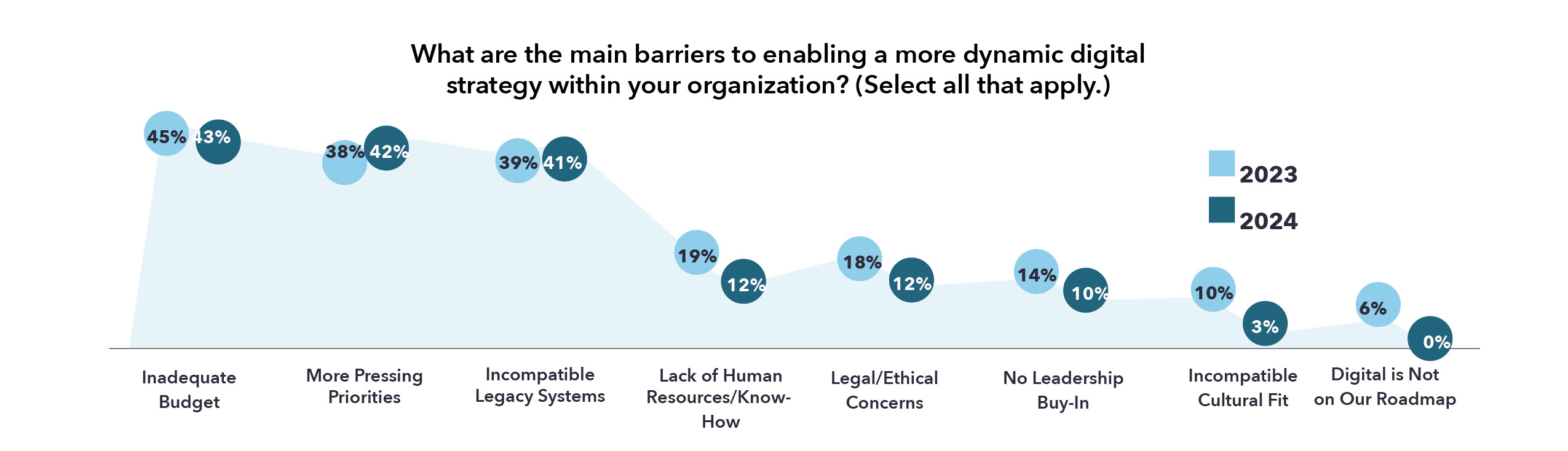
Sound familiar? For 42 percent of customer experience (CX) leaders, legacy systems are the single biggest operational hurdle in delivering exceptional service. According to our latest 2025 CX Leaders Trends & Insights: Corporate Edition1 report, not a single CX leader reported satisfaction with their current tech stack.
The customer experience landscape is changing faster than most systems can keep up with. The demand for seamless cross-channel engagement, automation, and artificial intelligence (AI)-powered insights is higher than ever. Yet, many brands remain trapped in outdated, fragmented infrastructures, unable to keep pace with evolving customer expectations. The question isn’t if modernization is necessary; it’s how much longer can companies afford to wait?
A System in Crisis: Why Legacy Tech Is Holding CX Back
Legacy systems aren’t just an inconvenience, they’re a financial and strategic liability. According to the research, 74 percent of CX leaders plan to invest in new technology to improve cross-channel consistency, yet outdated infrastructure continues to undermine these efforts.
The Numbers from Our Report Speak for Themselves:
- 0 percent of CX leaders are satisfied with their current tech stack. (p. 59).
- 74 percent recognize the need for better cross-channel integration (p. 52).
- 54 percent say that 21-60 percent of customer interactions are too complex for automation due to system limitations (p. 71).
- 90 percent of brands have deployed AI, but legacy technology is slowing implementation (p. 66).
Every inefficient system, every clunky interface, every manual workaround adds up, not just in wasted dollars, but in eroded customer trust. Worse, it handicaps frontline employees who are forced to navigate inefficiencies while delivering service in real-time.
For decades, companies have relied on legacy software — including IVRs, outdated CRMs, and antiquated ticketing systems — to manage customer interactions. While these tools once revolutionized service efficiency, they now serve as a primary roadblock to meeting modern customer expectations.
 The biggest pain point in customer experience today isn’t a lack of innovation, it’s the weight of outdated systems that hinder seamless interactions, prolong wait times, and complicate employee workflows. Technology like AI is magnifying inefficiencies due to outdated tech. For companies still tethered to outdated infrastructure, the choice is clear: modernize or risk irrelevance in a world where customers demand instant, frictionless, and hyper-personalized service. If your customers experience more friction than fluidity when engaging with your brand, what’s stopping them from leaving in search of a competitor that gets it right?
The financial sector provides a stark example: More than 53 percent of bank executives acknowledge their dependence on outdated systems,2 and legacy technology is slowing AI adoption, increasing operational costs, and limiting omnichannel integration. According to an IDC survey, 83 percent of customers now expect seamless interactions across mobile, online, and in-person channels. Yet banks (and many customer-facing businesses) are struggling to meet this standard due to fragmented, outdated infrastructure.
The path to modernization varies, from incremental updates to full system overhauls, but the lesson is clear: companies that delay modernization risk falling behind in an era where customers demand speed, efficiency, and hyper-personalization. Whether in banking, retail, or customer service, the firms that proactively invest in modern infrastructure will be the ones that define the future of customer experience.
Why CX Leaders Are Struggling to Move Forward
If everyone agrees legacy systems are a problem, why aren’t more companies fixing them?
 1. The Weight of Technical Debt
Replacing decades-old infrastructure isn’t cheap. Organizations face massive budget constraints, with 59 percent of leaders citing cost as a primary barrier. IT teams are often stuck in a cycle of maintaining outdated systems rather than innovating, patching leaks instead of building a new foundation.
2. Fragmentation and Integration Nightmares
A major theme from this year’s research is the struggle with integration. Legacy systems don’t talk to each other, creating data silos that prevent seamless interactions. Customers move between channels expecting continuity, but instead find themselves starting over at every touch point.
3. The Complexity of Customer Interactions
AI has been heralded as the future of CX, yet 54 percent of CX leaders say their customer interactions are too complex for full automation. They’re saying legacy systems can’t support AI’s potential. Instead of augmenting human agents with real-time data and intelligent recommendations, AI deployments are stunted by outdated databases and disconnected workflows.
4. The Misalignment Between Investment and Impact
While 74 percent of leaders say they’re prioritizing new tech investments, many aren’t seeing the return they expected. Why? Because pouring new technology into old systems is like upgrading the engine of a broken-down car while ignoring the transmission and brakes. A true transformation requires a full reallocation of resources toward scalable, cloud-based solutions that enhance (not hinder) the customer experience.

What CX Leaders Actually Want: The Path Forward
Companies are eager to integrate AI, to undergo digital transformation, and to deploy greater personalization, yet outdated infrastructure remains a stubborn obstacle. The shift from passive systems of record to systems of action is a defining moment in CX evolution.
Modern platforms must move beyond simply storing data; they need to orchestrate real-time, AI-driven insights that enhance interactions across every touch point. However, businesses can’t afford to “rip and replace” legacy systems overnight.3 Instead, the key is interoperability, investing in platforms that integrate seamlessly with existing infrastructure while enabling the agility today’s customers demand. In 2025, brands that prioritize CX innovation will be the ones that bridge the gap between old and new, ensuring technology enhances, rather than hinders, the customer journey.
CX leaders need modern, scalable, customer-centric solutions that work. According to our research, here’s what they’re prioritizing:
 1. Cloud-Based, Scalable Systems
The ability to scale and integrate across platforms is no longer a luxury; it’s a necessity. Brands that fail to modernize will not only lag in customer expectations but lose the competitive advantage.
2. AI and Automation That Actually Reduce Friction
When done right, AI can streamline operations, predict customer needs, and empower agents with real-time insights. But AI is only as strong as the systems it’s built on. Investing in AI without first addressing underlying infrastructure issues is a wasted opportunity.
3. True Cross-Channel Integration
Customers don’t think in silos, so why do brands still operate in them? A customer who starts a conversation on live chat should be able to seamlessly continue it over the phone without repeating information. This is what customers already expect.
4. Budget Reallocation Toward Innovation
The excuse of limited budgets is running thin. Organizations should think about reallocating spending from maintaining outdated systems to implementing solutions that drive long-term ROI. The most forward-thinking brands aren’t waiting for permission to innovate, they’re making transformation a top priority.
 The Call for Change: Why Brands Can’t Afford to Wait
 There’s no sugarcoating it. Legacy systems are the roadblock preventing companies from delivering next-level customer experiences. And the risk of waiting too long? Losing customers to brands that got ahead of the problem.
Brands that hesitate on modernization will soon find themselves at a disadvantage, not just in CX, but in overall business growth. Customers will continue demanding frictionless, personalized, and responsive experiences. The brands that deliver will win. The ones that don’t? They’ll become case studies in what happens when businesses fail to adapt.
If your tech stack is frustrating your customers more than serving them, it’s time to change. So, the real question is: how long will brands continue to let outdated technology stand in the way of exceptional customer experience?
Links