
in this issue
Brand Spotlight: Lovevery

EMILY SARVER Emily Sarver is the Vice President, Customer Experience for Lovevery, a subscription-based early learning company with a focus on child development. Now in its eighth year, Lovevery has more than 350,000 active subscribers and is one of Fast Company’s Most Innovative Companies. Emily has over 10 years of experience in CX leadership, specifically in startups and direct to consumer spaces, and has a passion for building and scaling world-class support teams. |

Every Interaction Is an Opportunity to Build Better Relationships with Customers
Execs In The Know (EITK): Emily, you’ve been instrumental in Lovevery’s evolution of customer experience. Could you share with us the foundational principles that have guided you in crafting Lovevery’s unique customer experience strategy?
Emily Sarver: First, every interaction is an opportunity to build a better relationship. We have a ‘people-first’ mentality as a core value of our customer experience. First off, that means that we take good care of our support team–we recruit and retain the best of the best, and we nurture a strong internal community. Our program is subscription-based, so retention is a key factor for success. Our team does as much as they can to drive loyalty and retention through relationship-building with Lovevery subscribers.
Out of those relationships, continue seeking out moments to learn. These moments happen frequently, and in big and small ways, but they also require a leader to commit time, space, and energy. Data can (and should!) tell you a lot, and building a clean dataset is essential for a thriving CX organization. But without digging into the stories behind that data, you might miss some of those pivotal, ‘a-ha’ moments.
EITK: Lovevery places a strong emphasis on agent education and empowerment. How does the brand ensure that agents are fully equipped to provide the level of service expected by customers?
 Emily: First of all, we recruit top talent. We look for people who are willing to learn, problem-solve, and innovate. From there, we’ve invested in thorough onboarding, continuing education, and effective resource building, to make sure that our team truly feels empowered to do their best work. Our Quality Assurance program was also constructed to help coach and train our team members in the areas of brand voice and tone, consistent processes, and resolution. When it comes to constructing the associate experience, we’re in a cyclical process of learn-build-iterate-learn.
EITK: Lovevery’s commitment to sustainability and ethical manufacturing is notable. How does this commitment translate into the customer experience, and how do you communicate these values to your customers?
Emily: As part of our core mission, Lovevery is focused on offsetting environmental impact to improve climate outcomes for future generations. All of our products ship carbon neutral with efficient packaging to reduce waste. Our products are crafted from materials like FSC sustainably harvested wood, organic cotton, OEKO-TEX® fabrics, handcrafted felt from a supplier committed to fair trade, recycled paper, soy-based ink, and water-based paints. Even certain products—like our Super Sustainable Sink and Turtle Hatch Game—contain bio-based plastic. Biobased plastic is sourced from sugarcane rather than petroleum, which significantly reduces these products’ carbon footprints.
We design our products to be timeless, built to last, and so they will grow with your child. If a part does go missing, our lost parts program will work to make playthings whole again. To date, our lost parts program has fulfilled over 44,000 part requests to save incomplete products from going to the landfill.
This is a core part of who we are as a brand and the work we do to create brighter futures for children. We highlight this information for the families that we serve across our website, packaging materials and other customer touchpoints.
EITK: Can you tell us more about how the subscription model at Lovevery caters to the evolving needs of growing children and their parents and how you maintain personalization at scale?
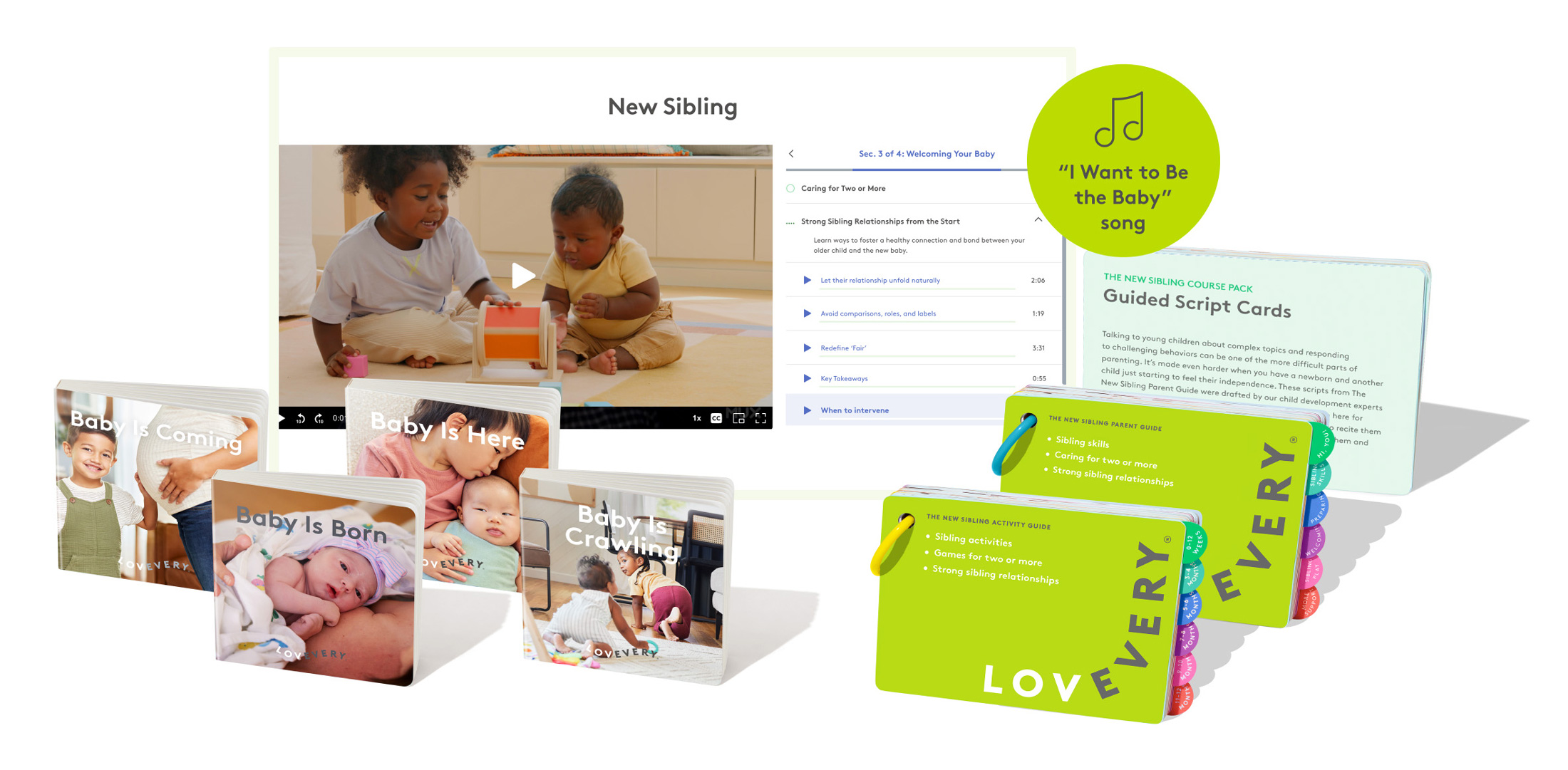
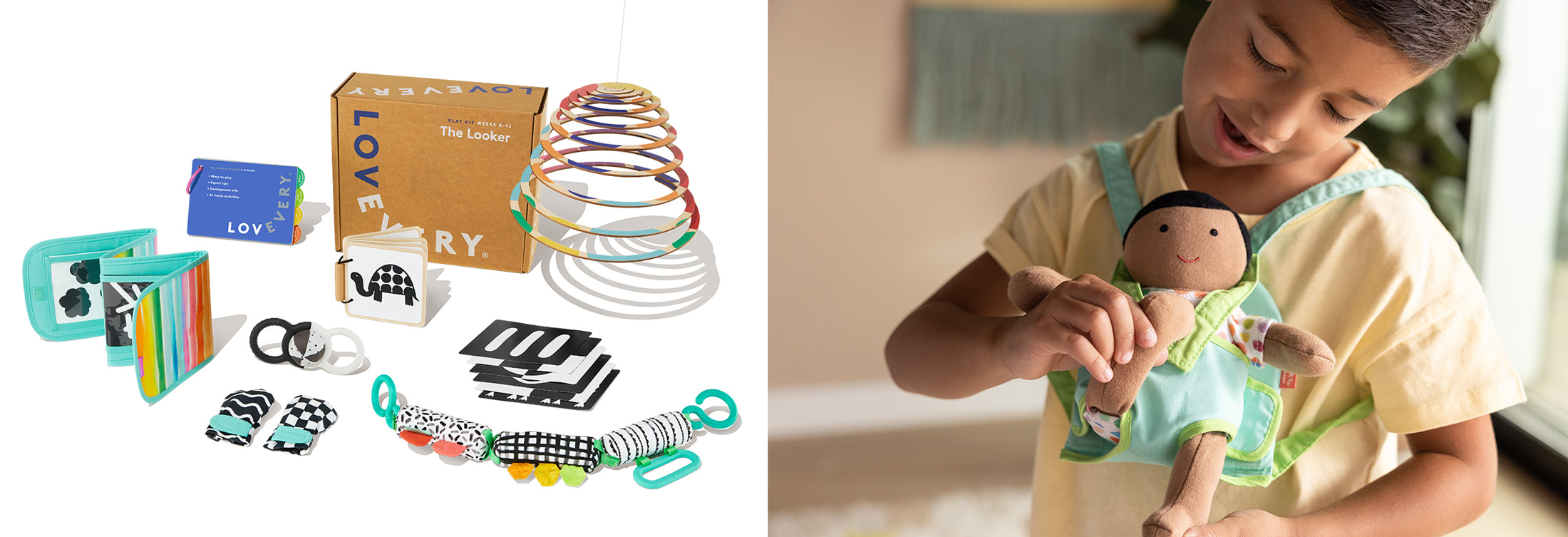
Emily: It’s been a privilege to be a part of the evolution of our product offerings for families, specifically with our Play Kits subscription. Each Play Kit hones in on specific developmental milestones, so every piece has a purpose and many ways to play. But we also know that each child develops at their own unique pace, and with their own interests, and our CX team is always happy to help adjust schedules so that Play Kits arrive on specialized timelines, or skip a Play Kit if it seems like it’s not a good fit.
Along with this, The Lovevery App offers personalized, day-to-day guidance for parents and caregivers, with new ideas for playtime and expert guidance about specific developmental topics. We’ve truly created a holistic support system to bring more connection and purpose to families as their little ones grow.
EITK: The pandemic brought about a hypergrowth phase for Lovevery. How did the customer experience team adapt to the surging demand while maintaining quality support, and how has this level of support continued?
Emily: Even as so many families were isolated at home, Lovevery became the answer for how to facilitate meaningful, screen-free play. As a result, our customer base skyrocketed, as did the demand for customer support. We had to become the most nimble versions of ourselves in almost every way: we recruited more quickly, we prioritized onboarding efforts, and we did many ‘on-the-spot’, ad-hoc trainings to keep team members constantly acquiring new knowledge and skills. Out of this, we’ve now taken huge strides to refine all of the tools, resources, and empowerment that our team needs to do its best work–for example, a robust and navigable knowledge base.
EITK: What role has technology, particularly artificial intelligence/automation, played in managing and enhancing the customer experience?
Emily: We’ve looked at AI and automation in an internal capacity first, focusing on where and how it can help our team become more efficient or effective. One of the specific platforms we’ve incorporated (FlowEQ) lets us build out guided and automated workflows that sit directly inside our helpdesk. We’ve also leveraged AI to detect customer sentiment and intent, which has resulted in better handling and more accurate analysis of customer insights.
EITK: Could you discuss Lovevery’s measures to build and maintain high customer satisfaction and loyalty, especially through personalized service?
Emily: We want to support customers throughout their entire Lovevery journey. As part of this, we employ an omnichannel support strategy to keep customer touch points all in one place, so that associates can understand the touch points within that journey. Also, maintaining high service levels across channels, as well as consistent attention to detail (which we specifically coach through QA), ensures that we are able to focus on each interaction and tailor it to the customer.
EITK: How does the brand maintain a cohesive team culture and high levels of employee engagement?
EMILY: There’s been a lot of intentionality in creating the culture of our CX team, starting with a clear vision for what defines us. We’re a team of learners, a team that thrives on collaboration and problem-solving, and a team with exceptional written communication skills. That foundation sets the tone for everything else that follows, from what kind of questions we use during recruitment, to what we emphasize during team huddles, to how we’ve constructed our QA program. Genuine connection is key!
 EITK: Looking ahead, what innovations or improvements can customers expect to see in Lovevery’s customer experience, particularly in the digital space?
Emily: We’ve just gone live with offering SMS as a support channel for Lovevery customers, which is an exciting new endeavor for us. We’re also currently exploring the powerful capabilities of AI, and how we might best leverage it. It takes careful consideration of ‘the right time and the right place’ for knowing how to utilize AI at the moments that really matter, both for our support team and for customers. We want to continue building an experience that nurtures loyalty for Lovevery customers, and we’re excited to see what’s next.

Execs In The Know partners with brands that are providing outstanding customer service (CX) experiences. The Brand Spotlight Series showcases innovations and solutions to CX challenges faced by today’s leading brands.
Thank you to Emily Sarver and the entire team at Lovevery for contributing to the Execs In The Know Brand Spotlight.
Interested in taking part in a future Brand Spotlight feature and sharing your story? Contact us at [email protected].