There is a question that gets asked in nearly every post-event debrief. It surfaces after the conference booths come down, after the briefing chairs are stacked, after the dinner receipts are submitted. Someone pulls up a spreadsheet and says, “So how many leads did we get?”
The people asking it are doing their jobs; they are trying to justify spending, demonstrate ROI, and connect investment to outcome. But the question itself is built on the premise that events are solely a direct-response channel, and that their value can be measured the same way you measure a paid search campaign or a targeted email sequence.
Measurement is not the problem. The measurement framework is. CROs and CMOs are right to demand accountability for event spend, but the metrics that reveal event value are fundamentally different from those that reveal campaign value. The argument here is not that events should escape scrutiny. It is the right measurement approach that reflects what events actually do: deepen relationships, accelerate expansion, and drive retention. When organizations hold events to the wrong standard, they systematically undervalue them, cut them first under budget pressure, and lose one of the most powerful long-term growth drivers available to them.
At Execs In The Know, we have spent 15 years convening the customer experience (CX) community of executives, practitioners, and the partners who support them. And one of the clearest patterns we have observed is this: the partners who show up with a relationship mindset almost always win. It is worth saying plainly: events are not for leads. And understanding what they actually are for changes everything about how you approach them.
The 97% Problem
At any given moment, roughly 97% of your potential customers are not in an active buying cycle. They are not comparing vendors, not requesting demos, not reading RFPs. They are running their organizations, managing priorities, and building mental models of the landscape in which they operate, including who is worth paying attention to when the time comes.
That remaining three percent? They are in the market. They will talk to sales, respond to outreach, and show up in pipeline reports. Direct-response marketing (email sequences, retargeting campaigns, SDR outreach) is optimized for that three percent. You need to reach people who are ready to buy.
But events reach everyone. They reach the VPs who are two years away from a major platform decision or the COO who is three months from a budget cycle that will open up new discretionary spend. These are not leads. They are relationships in formation. And the only way to reach them (the only way to exist in their consideration list before they are ready to consider anyone) is to show up consistently, add value without an agenda, and build the kind of familiarity that makes you the obvious call when the moment finally arrives.
Events, when done well, are the most efficient mechanism organizations have for doing exactly that.
What Trust Requires
Trust, in a business context, is a very specific thing. It is the accumulated belief that you understand someone’s problems, that you are competent to address them, and that your interests are sufficiently aligned with theirs that working together makes sense. Trust is not built through a 30-second elevator pitch or a well-designed landing page. It is built through repeated exposure to evidence; evidence that you know what you are talking about, that you are genuinely interested in their success and not just their budget, and that you will still be there tomorrow.
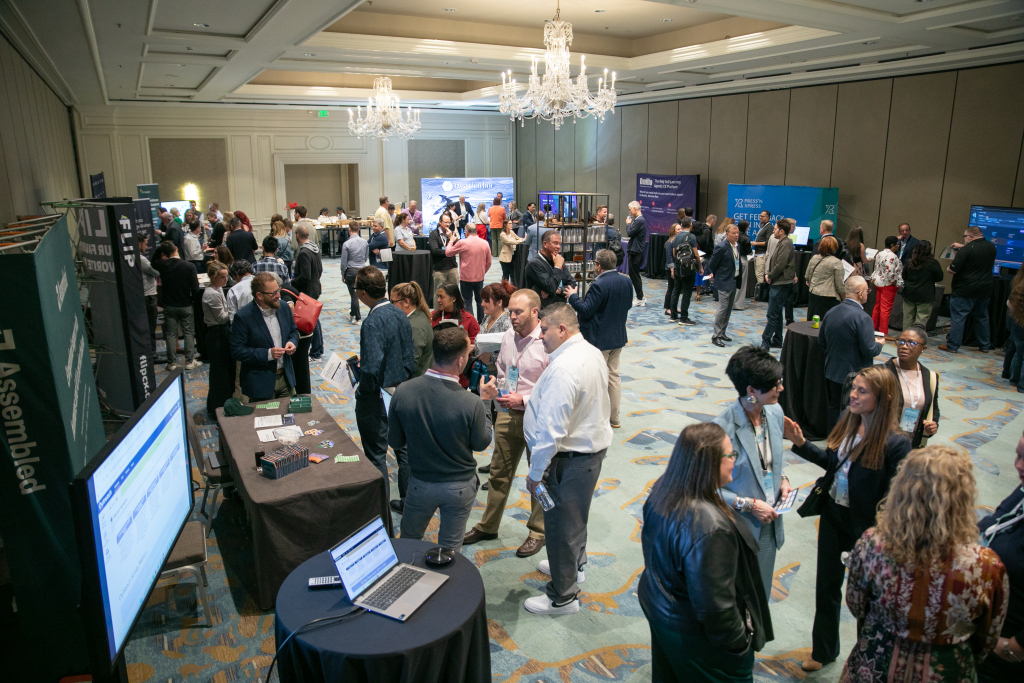
Events are the trust infrastructure. They are the venue where that evidence is transmitted and accumulated at scale. Consider what actually happens at a well-run conference, briefing, or executive dinner. Your people sit across from CX leaders, and conversations take place that have no agenda. You learn something about their business that no amount of market research would have surfaced, and they learn something about your thinking that no white paper would have conveyed. You are no longer a vendor, a logo, or a line item in someone’s evaluation matrix. You are a familiar voice with a perspective they have encountered before and found worth remembering.
Why does that matter? When the buying moment arrives, and it always does, CX leaders do not start from scratch. They call the organizations they already know. They shorten the list before the formal process begins, and they use trust as a filter. And organizations that have been showing up consistently and adding value without demanding anything in return find themselves on the short list.
The Six Things Events Actually Do
If events are not primarily lead-generation tools, what are they? Across the hundreds of events Execs In The Know has hosted and the thousands of conversations we have had with CX leaders and their partners, we have observed six things that events do exceptionally well (none of which are captured in a badge-scan report).
1. Brand building at depth. There is a difference between awareness and recognition, and a further difference between recognition and resonance. Events create resonance. When a CX leader has heard your perspective in a session, had a genuine conversation with your team in a hallway, or sat at a dinner your organization hosted, they carry a richer and more durable mental model of who you are than any ad impression or email sequence could create. That depth compounds over time. After showing up to multiple events, you are no longer a vendor; you are part of the fabric of the CX community.
2. Relationship deepening with existing accounts. The most underappreciated return on micro event investment is not new business; it is retention and expansion. Bringing a key customer into a thoughtfully curated experience, or creating the conditions for a genuine conversation between your leadership and theirs, does something that quarterly business reviews simply cannot replicate. It signals investment and conveys that you consider their success even when no immediate transaction is at stake. That signal carries significant weight when renewal conversations arrive.
3. Account expansion. Micro events create the conditions for conversations that do not happen in formal sales motions. The customer who joined for one reason discovers that you do three other things directly relevant to problems they have been trying to solve for months. That discovery rarely happens through outbound outreach. It happens through the organic, unhurried conversation that only events make possible.
4. Customer retention. At a time when switching costs are lower and competitive alternatives are more numerous than ever, the organizations that hold on to their best customers are usually the ones that have built genuine relationships, not just good contracts. Events are one of the most reliable mechanisms for making customers feel genuinely valued rather than merely managed.
5. Product and market intelligence. A well-run event will surface more actionable insight in two hours than six months of survey data. The candid, peer-influenced conversation that happens in a room of CX practitioners reveals what people actually care about, what is genuinely broken, and what the next generation of challenges looks like. That intelligence has compounding organizational value that almost never gets attributed back to the event budget.
6. Strategic positioning. Where you show up and what you contribute when you get there shape how the market categorizes you. Organizations that consistently convene meaningful conversations around the right topics become associated with those topics. They are seen as credible, forward-thinking participants in the community, not vendors seeking transactions. That positioning is extraordinarily difficult to purchase through advertising and nearly impossible to manufacture. It has to be earned over time through a consistent and generous presence.
The Lead Measurement Trap
If events do all of these valuable things, why does the “how many leads” question persist? Because it is genuinely difficult to measure what events actually produce, organizations default to what they can count.
Badge scans are countable. Meetings booked are countable. A pipeline attributed within a 30-day window is countable. These three things do not fit neatly into a marketing dashboard: The brand equity accumulated over 18 months of consistent community presence, the retention driven by a customer who felt genuinely valued, or the upsell that was won years later but began as a conversation over dinner before there was ever a deal.
This creates a systematic bias toward undervaluing events. The costs are visible and immediate; the returns are diffuse and delayed; and when budget pressure hits, the line items with the most ambiguous ROI are the first to be cut, even when they quietly do some of the most consequential work in the organization. There is also a cultural dimension. Many organizations have reinforced a specific kind of short-term accountability for so long that their event teams have internalized the lead-generation framing without questioning it. The badge scanner becomes a security blanket. The count of “qualified contacts” becomes the number that justifies the budget. And slowly, the event program begins optimizing for the metric rather than the mission: collecting contacts rather than building relationships, filling a funnel rather than building a community.
The result is an event program that is not effective as a direct-response channel. Why? Because events are simply the wrong tool for that job and not an effective trust-building channel.
The solution is not to abandon measurement. It is to measure what events actually produce. That means tracking relationship depth, not just contact volume, over time. It means monitoring how many initiate conversations that eventually enter the pipeline and tracing expansion and retention outcomes back to relationship touchpoints, even when the timeline is long, and the path is not linear. A CRO who insists on event accountability is not wrong, and how they measure over time for their particular business parameters is critical to realizing the true value of event participation.
What Better Looks Like
Reorienting an event program around trust rather than leads requires changes at multiple levels in how success is defined and how the function is understood internally. A panel that exists to showcase your executives is not the same as a conversation that helps a CX leader solve a problem she has been wrestling with for months. A sponsored session that serves as a product demo is not the same as a peer exchange that provides practitioners with new language and frameworks to bring back to their organizations. The test is straightforward: would people come to this event if your brand were not attached to it? If the answer is no, the event is built for you, not for them.
The partners who extract the most value from events have developed frameworks that account for longer time horizons and less tidy signals. They track relationship quality alongside contact volume, monitor re-engagement, including how many people from a given event remain active in the community over the following year, and they trace closed deals, noting when the first meaningful relationship touchpoint occurred, not just when the opportunity entered the CRM. And they are honest about the limits of attribution, accepting that some of the most valuable things events produce will never be cleanly measurable and that this is acceptable.
This is the measurement shift that matters most: moving from reach to depth, from pipeline-in-X-days to lifetime customer value influenced, from contact count to relationship continuity. When the measurement approach reflects what events actually do, the business case for sustained investment becomes far clearer, and the connection to long-term revenue growth becomes undeniable. Event strategy, properly measured, is not a cost center. It is a driver of the retention, expansion, and trusted-partner status that compound into durable growth.
A Final Thought: The Real Value of CX Events
The partners who win the long game in CX are the ones leaders reach for when building teams, evaluating platforms, or benchmarking their programs, and are almost never the ones who showed up most aggressively in a given quarter. They are the ones who showed up most consistently over the years.
Consistency communicates something that no single event, no matter how well executed, can convey alone. It says: we are here because we are genuinely invested in this community, not because we need something from it right now. It says: we will be here next year, and the year after that, because our commitment to your success does not depend on your readiness to buy.
That signal (durable, repeated, credible) is what builds the kind of trust that converts when the moment finally arrives. Not the badge scans, meeting requests sent 24 hours after the conference ends, or the 30-day attribution window. Events are not for leads. They are for something harder to measure and far more valuable: the accumulated credibility that makes you the obvious choice when the 97% finally become the 3%.
That is worth investing in.
Ready to show up where it matters? Connect with Scott Moberly, Vice President, Partner Advocacy, at [email protected] or explore our 2026 Media Kits to find your next opportunity.