The future of customer experience (CX) isn’t just about faster technology. It’s about giving customers more confidence.
As artificial intelligence (AI) becomes a bigger part of the travel experience, airlines face a delicate balancing act: empowering travelers through self-service while ensuring support is there when it matters most. Finding that balance requires more than new technology; it requires a deep understanding of customer behavior.
In this conversation, Michael Crema, Senior CX Researcher, Customer Strategy and Innovation at United Airlines, shares how customer journey research is shaping innovation across the travel experience, why agent-facing AI works best when it empowers employees rather than replaces them, and how reducing uncertainty can strengthen trust from booking to arrival.
Execs In The Know (EITK): Tell us about your role at United Airlines. What does a typical day look like for you as Senior CX Researcher, Customer Strategy and Innovation?
Michael: My work focuses on initiatives across the journey experience, all the way from trip exploration and purchase through the day of travel, including every stage and interaction in between. App interactions, kiosks, airport navigation, you name it. So the role keeps me thinking across the full traveler journey and across a lot of different spaces.
EITK: How did you first get into customer experience research, and what sparked your interest in understanding customer behavior and needs?
Michael: I came to Chicago from Vancouver for graduate school. My goal at the time was to become an academic. But as I finished my doctorate, I also started looking for alternative paths. When I discovered the world of UX and CX research, I found a field where I could apply both my research skills and my subject matter expertise, which was moral psychology. I’ve always been fascinated by how context shapes people’s decision-making, and customer experience turned out to be a perfect place to explore the many ways people navigate everyday choices.
EITK: What are some of the biggest customer experience opportunities you see for the airline industry over the next five years, and how is United positioning itself to meet those evolving expectations?
Michael: Some of the biggest opportunities are going to be figuring out how to empower customers through self-service technologies — including AI agents — while maintaining and building trust at the most critical moments of the travel experience. And that spans the full gamut, from discovery all the way through the day of travel itself. I think United is positioning itself to create a human experience, both through customer empowerment and elevating the human touch where travelers want it most.

EITK: AI is transforming many aspects of customer service. How is United using agent-facing AI to support frontline employees and improve the customer experience?
Michael: We’re focused on AI as something that makes our service agents better, not something that works around them. That means giving agents faster access to relevant context, support during interactions, and tools that reduce the cognitive load, so they can bring more care and attention to the customer in front of them.
EITK: What have you learned so far about agent adoption of AI tools? Have there been any surprises in how employees are embracing, or challenging, the technology?
Michael: Industry research generally shows agents find AI makes their work easier, and that holds in our context too — though the reasons aren’t always obvious. AI lands well where interactions are patterned: recurring questions, familiar shapes of conversation. Human agents already bring real expertise to those moments, and the tool closes a small, well-shaped gap rather than doing the work from scratch.
What’s surprised me is how much value AI offers even when agents don’t end up using it. Knowing the tool is available changes how they approach an interaction — it removes some of the uncertainty that previously required improvisation. It’s a bit like how a visible service agent reassures customers in a self-service environment even when no one asks for help.
EITK: When evaluating the impact of agent-facing AI, what metrics or signals tell you that the technology is truly helping both employees and customers?
Michael: The signals we look for are consistency and accuracy in solutions, and the resolution patterns that emerge. But in more complex or high-pressure moments, AI often plays a smaller role, and that’s not a failure. Human judgment, interpretation, and sensitivity to a specific customer’s situation remain largely human work.
EITK: Trust is a critical part of the travel experience. How do you think about building and maintaining customer trust across the entire journey, from booking to arrival?
Michael: One of the biggest opportunities right now is empowering customers through self-service and AI while making customers feel supported at the moments that matter most. Getting that balance right, at every stage, is what trust-building looks like in practice.
EITK: Travel can be unpredictable. During moments of disruption, what role does customer experience play in preserving trust and confidence in the brand?
Michael: Disruption is where CX really proves its value. We work closely with airport operations and digital technology teams to understand what customers are looking for at those pivotal moments, and just as importantly, how they’re interpreting the information they’re receiving when they’re stressed. Getting that right is one of the harder and most consequential problems we work on.
EITK: How does customer journey research help United identify opportunities to make the day-of-travel experience smoother and more reassuring for customers?
Michael: Journey research is one of the most challenging and exciting parts of the work, because you’re dealing with stages that are tightly intertwined. And the journey isn’t static; we’re always trying to understand not just what it looks like today, but how it’s evolving as we introduce new tools and capabilities. The goal is to remove uncertainties so travelers can focus on the parts of the trip they actually want to be focused on.
EITK: What are some of the biggest shifts you’re seeing in customer expectations today, and how are those changes influencing United’s CX strategy?
Michael: Customers want more agency over their own experience, but that desire for autonomy coexists with a real need for reassurance, especially at high-stakes moments. The shift I’m watching most closely is how those two things interact: how do you empower a traveler and make them feel supported at the same time?
EITK: Customer feedback is often described as a gift. How does United capture feedback at scale, and how do you ensure those insights translate into meaningful action?
Michael: We have teams across the company focused on different layers of it. But as a researcher, the most important thing I can do is put a human face on the data. That requires direct engagement with travelers, sitting with their challenges as they unfold, and translating that clearly for the people building our products.
EITK: Can you share an example of a customer insight or piece of feedback that led to a meaningful change in the customer experience? What did that process look like from research to implementation?
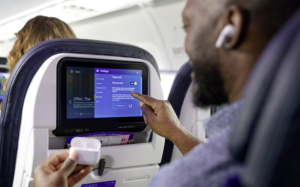
Michael: One example is the security wait times feature in the United app. Security is one of the most consequential stages of the day of travel, but it’s also largely outside of our direct control. What our research uncovered is that the problem wasn’t really wait times themselves — it was the uncertainty around them. When travelers can’t predict what security will look like, they compensate by arriving earlier than they need to, which creates its own challenges downstream. What travelers needed wasn’t certainty, but credible expectation-setting. That insight drove how we framed the information when it surfaces on the day of travel. The feature has since rolled out across the app. It’s a good example of how foundational customer research, when you follow it seriously, can change actual behavior.
About Michael

Michael leads strategic research at United Airlines to inform products that serve more than 180 million annual travelers. His role uniquely requires solving problems across physical, digital, and AI-enabled experiences, often some combination of all three. Michael’s work combines ethnography, data analytics, and behavioral science to understand how customers make decisions and evaluate their experiences, from the earliest trip planning through the actual day-of-travel.
That research has directly shaped United’s customer journey across the terminal, the app, and its emerging AI strategy.