CX leaders are being asked to move faster with AI, deliver greater operational efficiency, and meet rising customer expectations. But how can organizations scale technology without losing the trust and human connection that keep customers coming back?
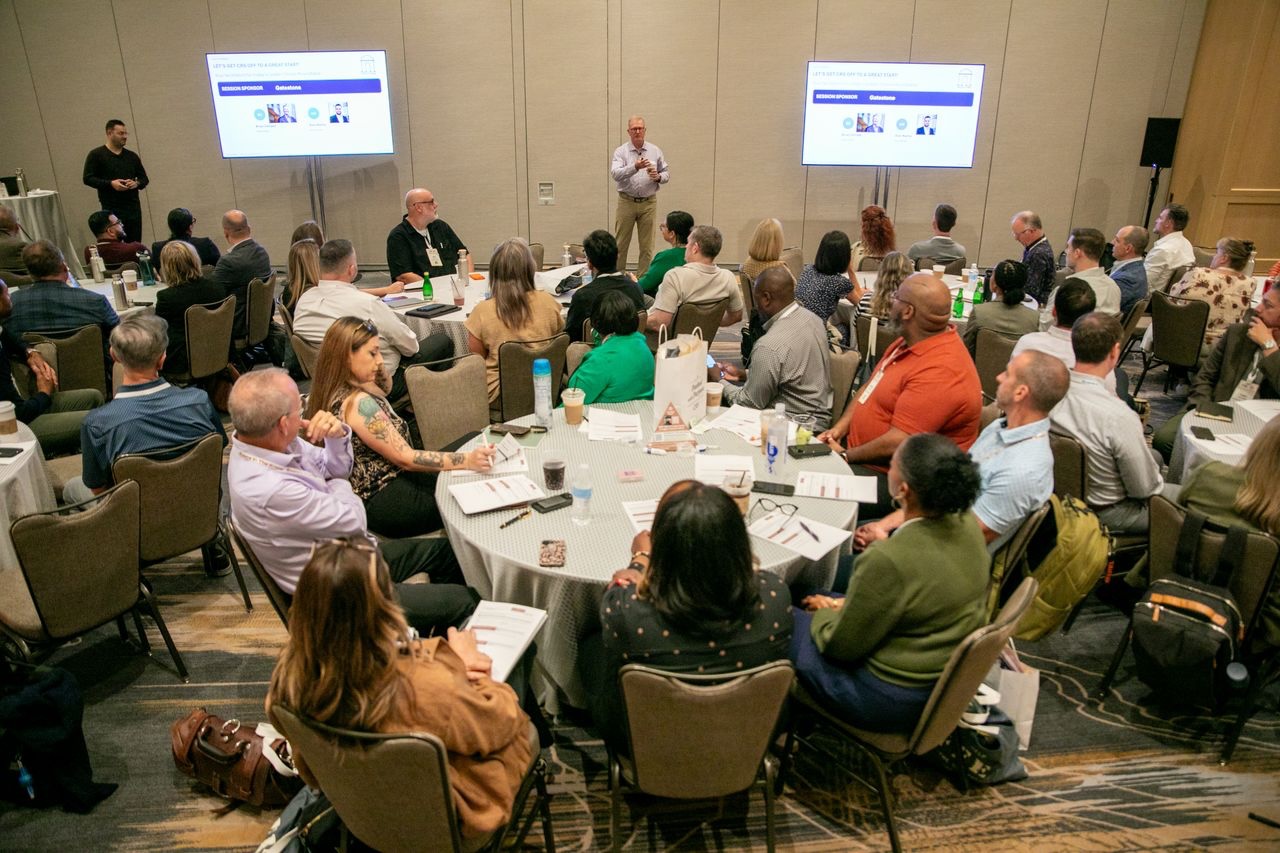
That question shaped the conversations last week at CRS Scottsdale, held Sept. 30–Oct. 2, where customer experience (CX) leaders tackled artificial intelligence (AI) adoption, customer trust, operational performance, and the future of CX.
Under the theme Customer Assurance: Leading the Next CX Advantage, senior CX leaders came together to examine what it takes to build customer confidence in an increasingly automated world.
Through keynotes, panel discussions, practitioner-led case studies, interactive workshops, tech forums, and candid peer discussions, one message emerged: The next CX advantage will depend on how well organizations connect technology, operational execution, and human judgment.
Here are five takeaways from CRS Scottsdale that CX leaders can bring back to their organizations.
1. Customer assurance starts with leadership, not technology
Customer assurance goes beyond customer satisfaction scores or a successful service interaction. It reflects the confidence customers feel when a company communicates clearly, takes ownership, and delivers on its promises.
In the panel discussion, Customer Assurance: A Leadership Decision, Not a Department, CX leaders explored how organizational policies, processes, technology, and accountability shape that confidence.
The discussion reinforced an important distinction: customer trust cannot be delegated to a single department. It results from decisions made across the business, from how expectations are set to how employees respond when something goes wrong.
For CX leaders, this means looking beyond individual touchpoints to identify where inconsistent processes, unclear ownership, and disconnected systems undermine the experience. The opportunity is to make customer assurance an enterprise priority, supported by clear measures and shared accountability.
2. AI must improve the customer journey, not just reduce costs
As organizations accelerate AI adoption, the question is shifting from what can be automated to what should be automated.
This challenge was explored from multiple angles, including the tech forum Human + AI at Scale: The New Operating Model for Customer Experience and the workshop Designing Delightful Customer Experiences. These sessions challenged leaders to focus on the customer outcome first, then decide where AI, human expertise, or a combination can deliver it.
The conversation extended beyond deployment to the operational foundations AI needs to work at scale: connected workflows, reliable knowledge, clear escalation paths, and governance over how work moves between people and technology.
The takeaway for leaders is straightforward. Successful AI implementation requires more than selecting a capable solution. It requires thoughtful experience design, clear boundaries, and a plan to measure whether automation is improving the journey.
As AI takes on more transactional work, human employees must be equipped to handle the complex, sensitive, and high-value interactions where judgment and empathy matter most.
3. Strong metrics don’t always tell the whole story
One of the biggest challenges facing CX leaders is determining whether their performance measures reflect what customers actually experience.
In Green Metrics, Red Flags: Redefining Trust in the Era of AI, keynote speaker Julie Weingardt, Chief Operating Officer at Turo, examined the disconnect that can exist between positive dashboard results and underlying customer friction.
That theme carried into COPC’s and Johnson Controls’ case study, When the Numbers Look Fine, but the Customer Doesn’t: Johnson Controls’ Search for the Lost Caller. The session explored how fragmented service operations and disconnected systems can create gaps across the customer journey, even when traditional satisfaction measures appear healthy.
Together, these discussions highlighted the need to look beyond aggregate scores and examine the experience from the customer’s perspective. Are customers reaching resolution without unnecessary effort? Where are handoffs creating friction? What do unmeasured interactions reveal about the effectiveness of automation?
For leaders, the opportunity is to connect customer feedback, interaction data, and journey analysis to identify the root causes behind performance results, then prioritize improvements based on customer and business impact.
4. Real-world results matter more than AI promises
Moving from experimentation to measurable impact was another recurring theme. The agenda featured sessions that showcased practitioner-led examples of organizations applying AI and automation to specific operational challenges.
Travelzoo explored how Laivly helped the company use automation to absorb a global membership renewal surge without adding headcount. Princess Cruises and harpin AI’s case study examined how the organization evaluated 64 contact center improvement opportunities to identify where limited resources could make the greatest difference.
Meanwhile, BJ’s Wholesale Club and ibex shared their approach to launching AI voice agents, including the decisions involved in bringing the technology into live member interactions.
These examples illustrated a common principle: technology investments need a defined business problem, clear measures of success, and a practical path to execution.
For CX leaders facing competing priorities and constrained budgets, the lesson is to focus on outcomes rather than adoption alone. The most useful AI strategy is one that connects implementation decisions to measurable improvements in customer experience, operational performance, or both.
5. The future of CX depends on how leaders prepare their people
Technology may be changing the work, but leadership remains central to how organizations navigate that change.
In Mental Athlete: Leadership in a Dysregulated World, keynote speaker Todd Sale, Senior Vice President of Customer Experience at Corpay, challenged leaders to examine how their own responses to pressure affect their teams. Other sessions explored how AI is changing frontline responsibilities, workforce planning, training, and performance management.
As transactional work becomes increasingly automated, employees will need different skills, stronger judgment and the confidence to navigate more complex customer situations. That transition requires more than communicating a technology roadmap. Leaders must build trust, create room for experimentation, and support employees as they adapt.
The organizations best positioned for the future will treat workforce readiness as a core part of transformation, not an afterthought.
Continue the Conversation in Dallas
CRS Scottsdale brought CX leaders together around a shared challenge: building customer confidence while navigating rapid technological and operational change.
At Execs In The Know, we believe the most valuable insights come from leaders learning from leaders. That means exchanging practical experiences, challenging assumptions, and learning from what is working, what isn’t, and what comes next.
The conversation continues March 10–12, 2027, in Dallas at The Ritz-Carlton Dallas, Las Colinas. Join us for The Discipline of CX Reinvention, where senior CX leaders will explore how to turn bold ideas into practical strategies that move the business forward.